Everything you need to plan the perfect trip — from sunrise at Angkor Wat to sunset cocktails on Pub Street.
50+
Activities
$0–37
Budget
2026
Updated
Siem Reap is much more than Angkor Wat. Yes, the temples are breathtaking — but this small Cambodian town has become one of Southeast Asia's most exciting destinations in just a few years. From world-class restaurants serving creative Khmer cuisine for under $10, to cocktail bars hidden in lantern-lit alleys, to home-stay cooking classes and countryside yoga retreats — Siem Reap rewards the curious traveler with experiences that go far beyond ancient ruins.
After six years of living here, I've discovered corners of this city that most guidebooks ignore completely. The Tonle Sap floating villages, the Phare circus performers who escaped the Khmer Rouge through art, the morning coffee ritual at Bean Embassy where the barista knows your order — these are the moments that turn a trip from good to unforgettable.
This guide covers every category of activity: temples, food, shopping, nightlife, wellness, tours, and cultural experiences. Every recommendation comes from my personal experience, with links to our directory for bookings and reviews. Whether you have a day or a week, you'll find exactly what to do.
Ancient temples and Angkor complex
Angkor Archaeological Park is the jewel of Southeast Asia. Spanning over 400 square kilometers, it houses more than 1,000 temples built between the 9th and 15th centuries. The $37 one-day pass is one of the best values in the world.
Angkor Wat deserves at least three hours — arrive before 5:30am for sunrise and position yourself near the north reflecting pool for the iconic photo. The crowd thins considerably by 7am. The Bayon temple, inside the walled city of Angkor Thom, features 216 enigmatic stone faces that seem to smile from every direction.
Many visitors find the Bayon more atmospheric than Angkor Wat. Ta Prohm, the 'Tomb Raider temple', is where massive silk-cotton trees have engulfed the ancient stone walls — nature reclaiming civilization in slow motion. Preah Khan is a vast and less-visited complex that rewards exploration: hidden carvings, deserted corridors, and almost no crowds if you visit after 2pm.
For sunset, skip the overcrowded Phnom Bakheng (limited to 300 visitors) and head to Pre Rup, where you can watch the sun set over the jungle canopy in near-solitude. Tip: buy the 3-day pass ($62) even if you think one day is enough. You'll want to come back.
Banteay Srei, 30 km north of the main complex, has the finest stone carvings in all of Angkor — the pink sandstone reliefs are impossibly detailed.
| # | Attraction | Type | Price | Best for |
|---|---|---|---|---|
| 1 | Angkor Wat | Temple | $37 pass | Sunrise & architecture |
| 2 | Bayon Temple | Temple | Included in pass | Stone faces & photography |
| 3 | Ta Prohm | Temple | Included in pass | Jungle atmosphere & Tomb Raider |
| 4 | Phare Circus | Show | $18-38 | Live performance & Cambodian culture |
| 5 | Tonle Sap Lake | Day Trip | $20-35 tour | Floating villages & nature |
1Angkor Wat
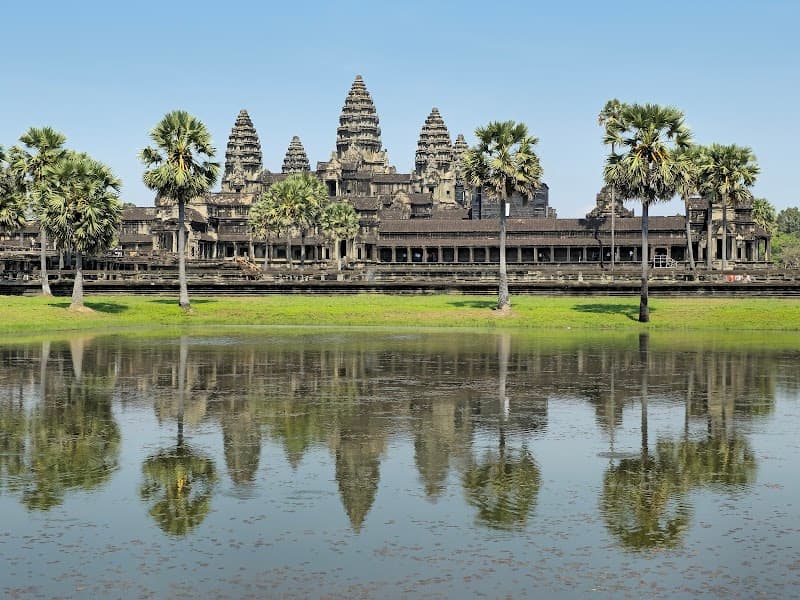
The undisputed star of Angkor. Arrive before 6am for sunrise and plan 3 hours for the visit.
Angkor Wat is the largest religious monument in the world, built in the 12th century by King Suryavarman II. The five lotus-bud towers and 800 meters of bas-reliefs depicting Hindu epics make it a one-of-a-kind experience. The sunrise reflection in the moat is iconic.
2Bayon Temple
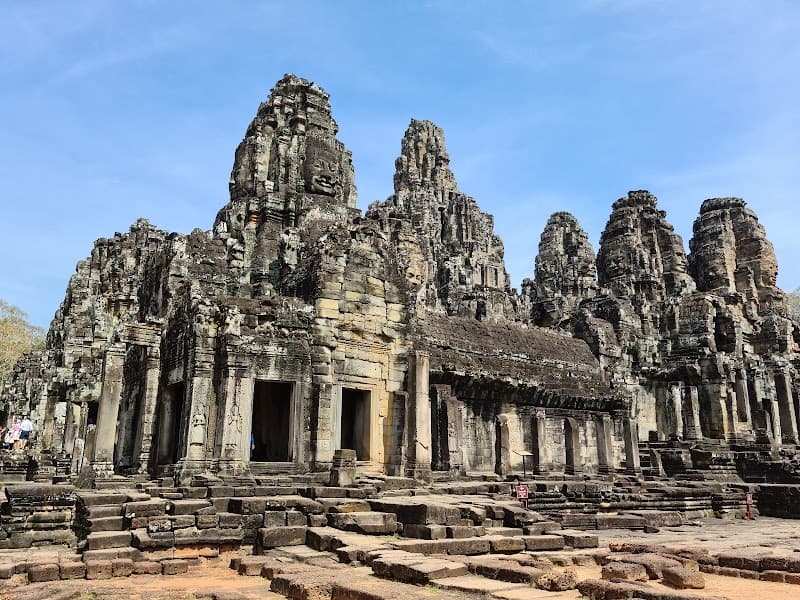
Cambodia's most photogenic temple. The 216 serene stone faces are mesmerizing at any hour.
The Bayon temple sits at the heart of Angkor Thom, the last great capital of the Khmer Empire. Each tower features four enigmatic faces, said to depict King Jayavarman VII or the bodhisattva Avalokiteshvara. The bas-reliefs of the outer gallery show vivid scenes of everyday Khmer life.
3Ta Prohm
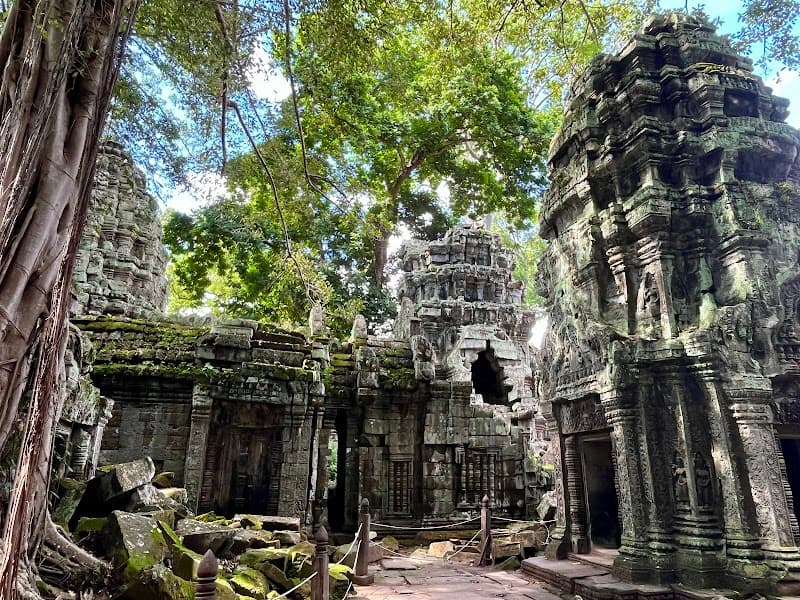
Nature reclaiming stone. The silk-cotton trees growing through the ruins create a unique atmosphere.
Ta Prohm has been left largely as explorers found it, with massive roots wrapping around the sandstone structures. Made famous by the Tomb Raider film, this 12th-century Buddhist monastery preserves a jungle-adventure atmosphere photographers adore.
4Phare Circus
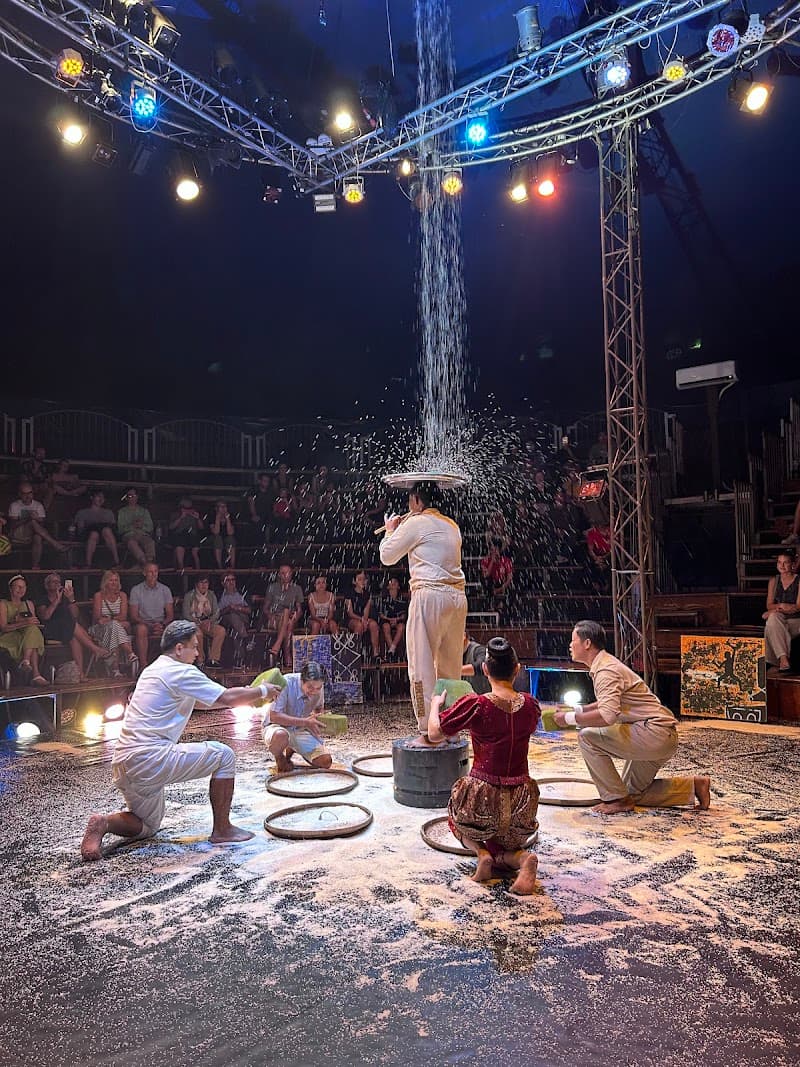
Southeast Asia's best live show. Cambodian performers deliver breathtaking acrobatics set to traditional music.
Phare, the Cambodian Circus, is far more than a circus: it combines theater, music, dance, and acrobatics to tell distinctly Cambodian stories. Founded by former refugees, Phare trains and employs local artists. Shows run every evening and sell out quickly — book ahead.
5Tonle Sap Lake
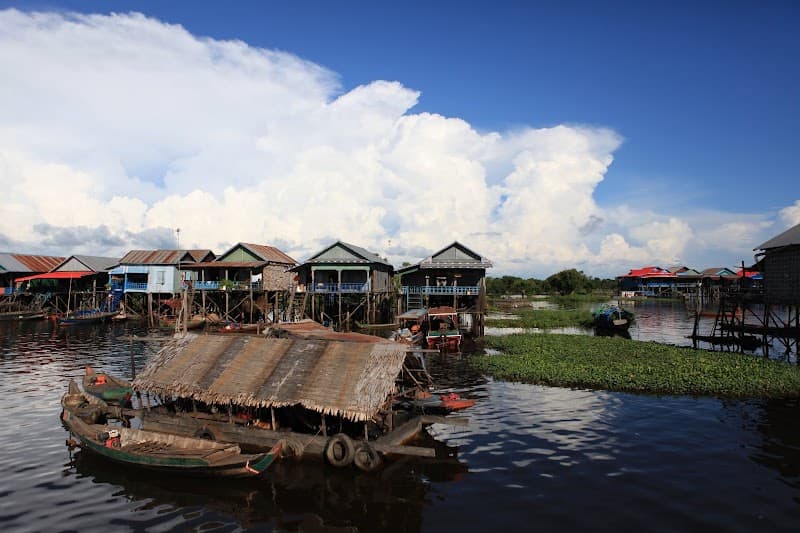
A fascinating half-day excursion to discover the floating villages and Cambodia's vast freshwater lake.
Tonle Sap is Southeast Asia's largest freshwater lake, and its floating villages offer a glimpse of a way of life built entirely on water. Boat trips depart from Chong Kneas or Kampong Phluk. The dry season (December to April) reveals spectacular stilt houses.
Best restaurants and food scene
Siem Reap has had a culinary revolution. What was once a backpacker town serving amok and fried rice now offers restaurants that rival Bangkok and Bali. HAVEN, on Chocolate Road, serves creative brunches and Khmer fusion dishes in a social-enterprise setting — every meal trains vulnerable youth in hospitality.
Mesa offers some of the best brunches in Cambodia with avocado toast, shakshuka, and specialty coffee that would cost three times more in Phnom Penh. For fine dining, celebrity chef Luu Meng's Malis offers refined Khmer cuisine in an elegant garden setting. Budget travelers will love Tevy's Place near the Old Market: $1.50 fresh juices and Khmer curries under $4.
The food scene goes well beyond restaurants. Street food stalls along Pub Street serve lok lak and num banh chok for under $2. The Old Market hall is the best place to taste authentic Cambodian cuisine at local prices.
For a detailed guide, check our complete guide with 14 tested and rated restaurants.
Markets and shopping
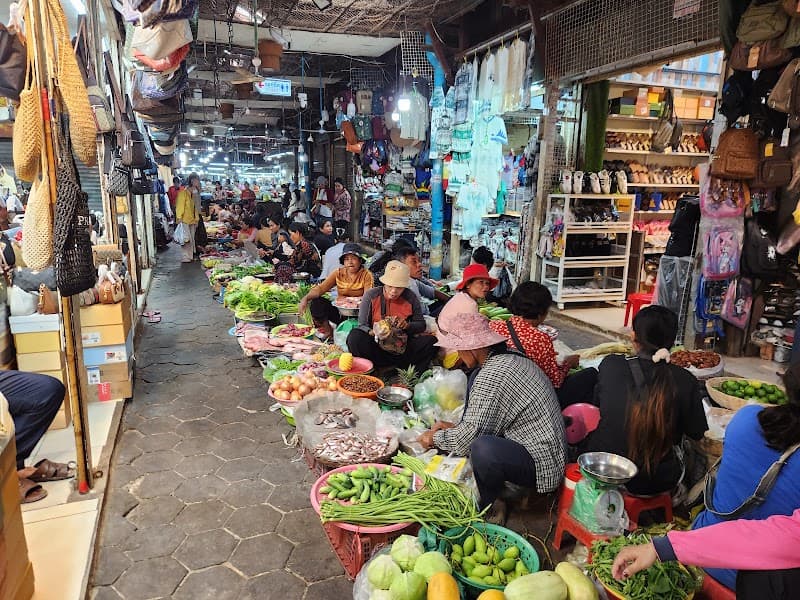
Shopping in Siem Reap ranges from bustling local markets to curated artisan boutiques. Psar Chas (Old Market) is the beating heart of town — a maze of stalls selling everything from silk scarves to fresh spices and temple-shaped magnets. Arrive before 9am for the freshest produce and fewest tourists.
The Night Market, across the river near Pub Street, comes alive after 5pm with hundreds of stalls selling crafts, paintings, clothing, and the inevitable 'Same Same But Different' t-shirts. Bargaining is expected — start at half the asking price. Senteurs d'Angkor, near the Old Market, is the go-to for Cambodian-made souvenirs: organic Kampot pepper, lotus-scented soap, coconut oil candles, and silk products.
Everything is ethically sourced and beautifully packaged. For high-end shopping, The Heritage Walk on Sivatha Boulevard offers air-conditioned boutiques with designer clothing and jewelry. Artisans Angkor, a social enterprise training rural youth, sells stunning stone and wood carvings, silk goods, and lacquerware.
Their workshop near the airport offers free tours. The Made in Cambodia Market, held every weekend on King's Road, showcases local entrepreneurs: handmade bags, organic cosmetics, artwork, and local craft beer.
Nightlife and bars
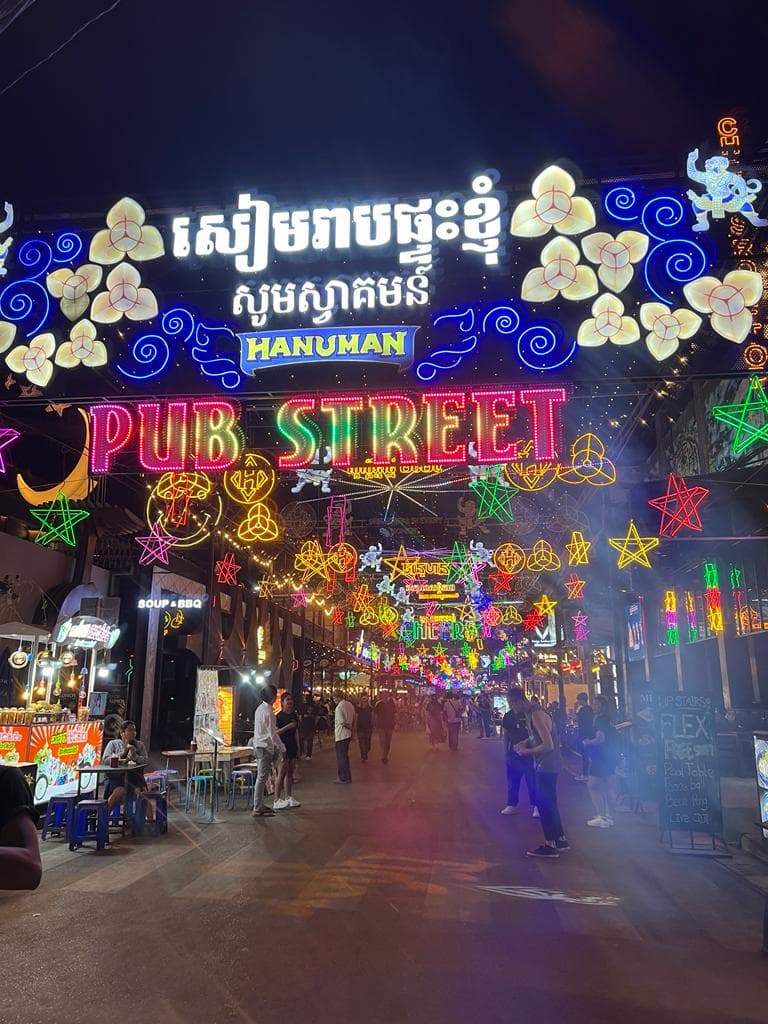
Pub Street is the epicenter of Siem Reap nightlife — a pedestrian street where $0.50 draft beer flows freely and music spills from every doorway. It's loud, chaotic, and undeniably fun, especially for first-timers. But the real gems are off the beaten path.
Miss Wong Cocktail Bar, hidden in a narrow alley called The Lane, transports you to 1930s Shanghai with velvet curtains, soft lighting, and expertly crafted cocktails. Spin Bar in the Wat Damnak district is the hangout for expats and creatives: vinyl records, natural wines, and conversations that last till closing. HomeBrew Siem Reap serves its own craft beer in a relaxed garden — try the Cambodia Pale Ale.
Bensley's Bar at Shinta Mani is the most sophisticated option: a colonial setting with world-class mixology. For something completely different, the Phare Circus bars offer pre-show cocktails in a festive atmosphere. Most bars close between midnight and 2am.
Pub Street stays open later on weekends. The bar scene is remarkably safe — violent incidents are extremely rare, and tuk-tuks are always available for the ride home.
Cafés and brunch culture
Siem Reap has quietly become a destination for specialty coffee. The Bean Embassy on Chocolate Road is the flagship: single-origin Cambodian beans roasted on site, expert pour-overs, and croissants that rival any Parisian bakery. Sister Srey Café, overlooking the river, combines excellent coffee with social mission — training young Cambodian women in hospitality.
Their matcha latte and banana bread are legendary among expats. The Little Red Fox Espresso serves the best flat white in town in a tiny, photogenic space. Mesa also functions as a brunch destination with creative dishes like pulled-pork eggs benedict and house-made granola bowls.
Gelato Lab serves Italian-style gelato with flavors like Cambodian palm sugar and Kampot pepper chocolate. Coffee culture here is surprisingly sophisticated for a small town, with most specialty cafés between $2.50 and $4 — a fraction of Western prices. Many cafés also serve as coworking spaces, making Siem Reap increasingly popular with digital nomads.
Tours and day trips
Beyond the temple circuit, Siem Reap offers tours that reveal a completely different side of Cambodia. Tonle Sap Lake, Southeast Asia's largest freshwater lake, is home to floating villages where entire communities live on the water. Kompong Khleang is the most authentic — less touristy than Chong Khneas and accessible in about an hour by tuk-tuk.
Phnom Kulen National Park, 50 km north, is sacred to Cambodians: a jungle plateau with waterfalls, a sandstone reclining Buddha, and the River of a Thousand Lingas — 11th-century riverbed carvings. Countryside cycling tours take you through rice paddies, sugar palm groves, and into villages where life has barely changed in centuries. Most tours are half-day and cost $15–25 including bike and guide.
Cooking classes are among the most popular activities. Khmer Cooking Class at a Local's Home takes you to the market to choose ingredients, then teaches you to prepare three dishes in a traditional wooden home. Arun Cooking Class and Sambo Cooking Class offer similar experiences.
For thrill-seekers, quad bike tours and the Angkor Zipline offer adrenaline-charged alternatives to temple sightseeing.
Cultural experiences
Phare, the Cambodian Circus, is Siem Reap's must-see cultural experience. It's not a traditional circus — it's a breathtaking show combining acrobatics, theater, music, and dance that tells stories from Cambodian history and mythology. The performers are graduates of Phare Ponleu Selpak, a school that uses art to rehabilitate vulnerable youth.
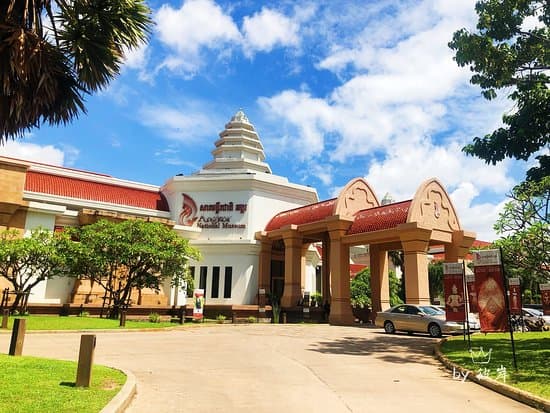
Shows run every evening and tickets cost $18–38. Book ahead: seats sell out regularly. The Angkor National Museum on Charles de Gaulle Boulevard provides essential context before visiting the temples — eight galleries walk you through a thousand years of Khmer civilization with multimedia exhibits and original artifacts.
The War Museum offers a sobering look at Cambodia's recent conflicts, with tanks, weapons, and veteran testimonies serving as guides. Apsara dance shows, the classical Khmer court dance tradition, are offered at several hotels and dedicated venues. Artisans Angkor offers free guided tours of their silk farm and stone-carving workshops.
For pottery enthusiasts, the Khmer Ceramics Centre offers wheel classes where you create your own piece to take home.
Wellness and relaxation
After days of hiking through temples, Siem Reap offers many recovery options. Traditional Khmer massage is available on practically every street — count $8–15 for a full hour at reputable spas. Relax Spa near the river is consistently rated among the best, with professional therapists and impeccable facilities.
The Spa Siem Reap and Devatara Spa offer more luxurious experiences with aromatherapy, hot stone treatments, and couples packages. For yoga practitioners, Hariharalaya Meditation and Yoga Retreat in the countryside offers multi-day silent retreats and drop-in daily classes in a serene garden. Manon Yoga Union downtown offers vinyasa and yin yoga classes focused on alignment.
Several hotels also welcome non-guests for day pool passes — a perfect way to spend a hot afternoon for $10–20 with a drink included. The wellness scene in Siem Reap is remarkably affordable compared to Bali or Thailand, with quality that often equals or exceeds regional competitors.
Suggested itineraries
One day: Start with sunrise at Angkor Wat (5:15am). Explore Bayon and Ta Prohm in late morning. Lunch at HAVEN on Chocolate Road.
Afternoon: browse the Old Market and Senteurs d'Angkor. Sunset cocktails at Spin Bar. Dinner at Mesa.
Evening: Phare Circus (book ahead). Two days: Day 1 follows the one-day plan. Day 2: morning home-stay cooking class, followed by countryside lunch.
Afternoon: Khmer massage at Relax Spa. Visit Angkor National Museum. Aperitif at Miss Wong.
Dinner at Malis for refined Khmer cuisine. Three days: Add a Tonle Sap floating village trip or Phnom Kulen waterfall excursion. Spend an evening on Pub Street for the full backpacker experience.
Cycle through the countryside. Try a yoga class at Hariharalaya. Explore Preah Khan and Banteay Srei on a second temple day.
Five days or more: You have time to truly slow down. Add a silk farm visit, pottery class, quad bike adventure, sunset at Pre Rup, breakfast at Sister Srey Café, and an evening at the Night Market. Consider a trip to the remote Beng Mealea temple — a jungle-swallowed ruin 70 km east that feels like discovering Angkor before the tourists.
Practical tips for visitors
Best time: November to February offers the coolest, driest weather. March to May is scorching (up to 40°C). June to October is rainy season, but the temples are lush, green, and crowd-free — many seasoned travelers prefer this period.
Getting around: Tuk-tuks are the default transport. A full temple circuit costs $15–20. Grab (ride-hailing) works in Siem Reap but tuk-tuks are usually cheaper.
Renting a bike ($2–5/day) is perfect for exploring downtown. E-bikes and scooters are also available, though tourists technically need a Cambodian license. Money: US dollars are accepted everywhere alongside Cambodian riel.
ATMs are plentiful. Credit cards work at upscale restaurants and hotels but most markets and small shops only accept cash. Dress code: Cover your knees and shoulders when visiting temples.
Bring a scarf or sarong. Safety: Siem Reap is generally very safe for tourists. Pickpocketing is rare but secure your valuables at night.
Drink only bottled water. Connectivity: Most cafés and hotels offer free wifi. Local SIM cards from Cellcard or Smart cost $2–5 with generous data plans.
Map of key spots
Published by Siem Reap Hub
The community guide for expats and travelers in Siem Reap, Cambodia.
Built by a French engineer based in Siem Reap since 2025, combining AI analysis (Claude, RAG pipelines) and Google Maps data to assemble the most complete local directory — 5,300+ verified businesses. No sponsored placements, no paid content.
Explore the complete Siem Reap directory
Browse over 1,500 verified businesses: restaurants, hotels, tours, spas, and more — all rated by residents.
Browse the directoryFrequently asked questions
What is there to do in Siem Reap besides the temples?
Siem Reap offers far more than the temples: cooking classes, boat trips through the Tonle Sap floating villages, Phare Circus shows, craft cocktail bars, specialty cafés, traditional Khmer massages, countryside cycling tours, silk farm visits, pottery workshops, and one of the most exciting food scenes in Southeast Asia.
How many days do you need in Siem Reap?
Three to four days is ideal: two days for the temples (the main circuit plus distant sites like Banteay Srei), and one to two days for cultural experiences, food, markets, and relaxation. If you want to include a Tonle Sap trip and a visit to Phnom Kulen, plan five days.
Is Siem Reap worth visiting in 2026?
Absolutely. The new international airport (opened in 2024) makes access easier than ever. The food and nightlife scenes have improved considerably. The temples are undergoing careful restoration. Tourist numbers have recovered from the pandemic lows but the city is less crowded than before 2020, making it an ideal time to visit.
What's the best time to visit Siem Reap?
November to February is the most popular season: cool, dry weather with temperatures around 25–30°C. March to May is very hot (35–40°C). June to October is rainy season — afternoon showers are frequent but mornings are usually clear, the temples are beautifully green, and prices drop significantly.
Is Siem Reap expensive?
Siem Reap is remarkably affordable. Budget travelers can get by on $25–40 a day including accommodation, meals, and transport. Mid-range travelers spend $60–100 a day for comfortable hotels, quality restaurants, and guided tours. The Angkor Pass is the single biggest expense at $37 for one day.
Can you visit Angkor Wat in one day?
You can see the highlights in a day, but it's rushed. A typical one-day circuit covers Angkor Wat (sunrise), Angkor Thom/Bayon, Ta Prohm, and one or two smaller temples. For a more relaxed experience with fewer crowds, the 3-day pass ($62) offers far better value.
How should you dress for Angkor Wat?
Knees and shoulders must be covered at all temple sites. Light pants or a knee-length skirt, and a t-shirt with sleeves. Bring comfortable walking shoes (no flip-flops), a hat, sunscreen, and a reusable water bottle. A light scarf is useful for sun protection and for covering up at temples.
Is Pub Street safe?
Yes, Pub Street is generally very safe. It's well-lit, busy, and tourist police patrol regularly. Usual precautions apply: watch your belongings, avoid heavy intoxication, and take a tuk-tuk home. Violent crime is extremely rare.
Where do expats hang out in Siem Reap?
Expats gather at Spin Bar (Wat Damnak), Bean Embassy (Chocolate Road), Miss Wong (The Lane), Mesa (Road 2), and Fellini (Bamboo Street). The Wat Damnak and Chocolate Road neighborhoods concentrate the most expat-frequented spots. Weekend brunch at Mesa or HAVEN is an institution.
What's the best neighborhood to stay in Siem Reap?
The Old Market / Pub Street area is most convenient for first-time visitors: walking distance to restaurants, bars, and markets. Wat Damnak is quieter and preferred by expats. Sok San Road offers good mid-range hotels. Sivatha Boulevard is central and well-connected. For luxury, the temple road (Charles de Gaulle Boulevard) hosts high-end resorts.
Are there cooking classes in Siem Reap?
Yes, cooking classes are among the most popular activities. Khmer Cooking Class at a Local's Home is the highest-rated: you visit the market, prepare three dishes, and eat together. Prices range from $15 to $30 per person including all ingredients and a recipe booklet.
Can you visit Tonle Sap from Siem Reap?
Yes, Tonle Sap Lake is about 15 km south of Siem Reap. Half-day boat tours visit floating villages like Kompong Khleang (the most authentic) or Chong Khneas (the closest but most touristy). Tours cost $25–50 per person. The best time is September to November when water levels are highest.
Which Khmer dishes should you try in Siem Reap?
Essential Khmer dishes: Fish Amok (steamed fish curry in banana leaf), Lok Lak (peppered beef stir-fry), Nom Banh Chok (rice noodle soup), Bai Sach Chrouk (breakfast pork and rice), Kuy Teav (noodle soup), and Khmer red curry. For dessert, try Num Ansom (sticky rice cake) or fresh tropical fruit.
Is the tap water safe to drink in Siem Reap?
No, don't drink the tap water in Siem Reap. Bottled water is available everywhere for $0.25–0.50. Most hotels provide complimentary bottles. Ice in restaurants and bars is generally made with purified water and is safe.
Do I need a visa for Cambodia?
Most nationalities need a visa. The simplest option is the e-Visa ($36, processed online in 3 business days) or Visa on Arrival ($30, available at the airport and land borders). Both grant 30 days. Bring an ID photo for Visa on Arrival. Extensions are available in Phnom Penh or through local agents in Siem Reap.