Angkor Archaeological Park spans more than 400 square kilometers and houses some of the most extraordinary temples ever built.
25
Temples
UNESCO
World Heritage
$37
1-day pass
5:30
Sunrise
Angkor isn't just one temple. It's a civilization frozen in stone — a vast 400 km² park housing the ruins of more than 1,000 temples and structures, of which around 72 major temples are open to visitors. From the iconic silhouette of Angkor Wat to Ta Prohm's strangler-fig-wrapped corridors, from the Bayon's 216 smiling stone faces to the pre-Angkorian octagonal towers of Sambor Prei Kuk — this guide covers 25 of the best temples around Siem Reap, ranked by architectural importance, visitor experience, and accessibility.
We ranked these 25 temples by architectural importance, visitor experience, and accessibility. Whether you have a day or a full week, this guide will help you plan the perfect Angkor itinerary. Each temple includes GPS coordinates, crowd levels, difficulty, and our honest take.
| # | Temple | Circuit | Difficulty | Duration | Crowds |
|---|---|---|---|---|---|
| 1 | Angkor Wat | Main | Easy | 2–3h | High |
| 2 | Bayon | Small Circuit | Easy | 1–2h | High |
| 3 | Ta Prohm | Small Circuit | Easy | 1–1.5h | High |
| 4 | Banteay Srei | Outer | Easy | 1–1.5h | Medium |
| 5 | Preah Khan | Grand Circuit | Moderate | 1–2h | Medium |
| 6 | Ta Keo | Small Circuit | Challenging | 30–45min | Low |
| 7 | Banteay Kdei | Small Circuit | Easy | 45min–1h | Low |
| 8 | Pre Rup | Grand Circuit | Moderate | 30–45min | Medium |
| 9 | Phnom Bakheng | Main | Challenging | 1–1.5h | High |
| 10 | South Gate of Angkor Thom | Small Circuit | Easy | 15–30min | Medium |
Temple map
Top 10 Angkor temples
1Angkor Wat
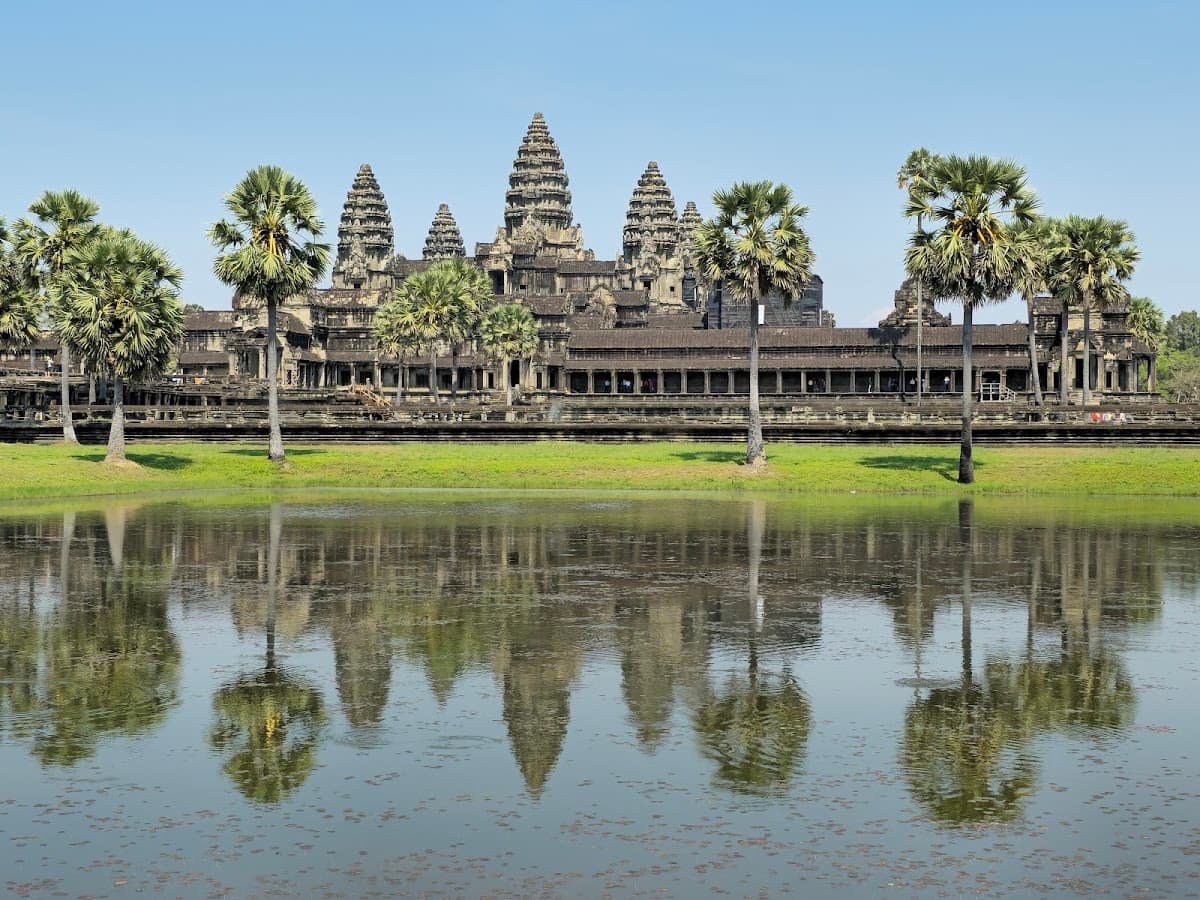
Our take: The undisputed masterpiece of Khmer architecture and the largest religious monument on Earth. No trip to Cambodia is complete without it.
Angkor Wat needs no introduction — it's on the Cambodian flag for good reason. Built by King Suryavarman II in the early 12th century, this Hindu temple dedicated to Vishnu is the largest religious monument in the world, covering 162.6 hectares. The approach via the 190-meter causeway over the moat is one of the great architectural experiences on Earth. The bas-reliefs along the outer gallery span 800 meters and depict scenes from Hindu mythology, including the famous Churning of the Sea of Milk. Arrive at 5am for sunrise — position yourself to the left of the reflecting pool for the classic silhouette photo. After sunrise, explore the inner galleries and climb to the third level (limited to 100 visitors at a time). Afternoon light from 3 to 5pm beautifully illuminates the western façade. Plan two to three hours minimum, and bring water — there's very little shade inside.
2Bayon
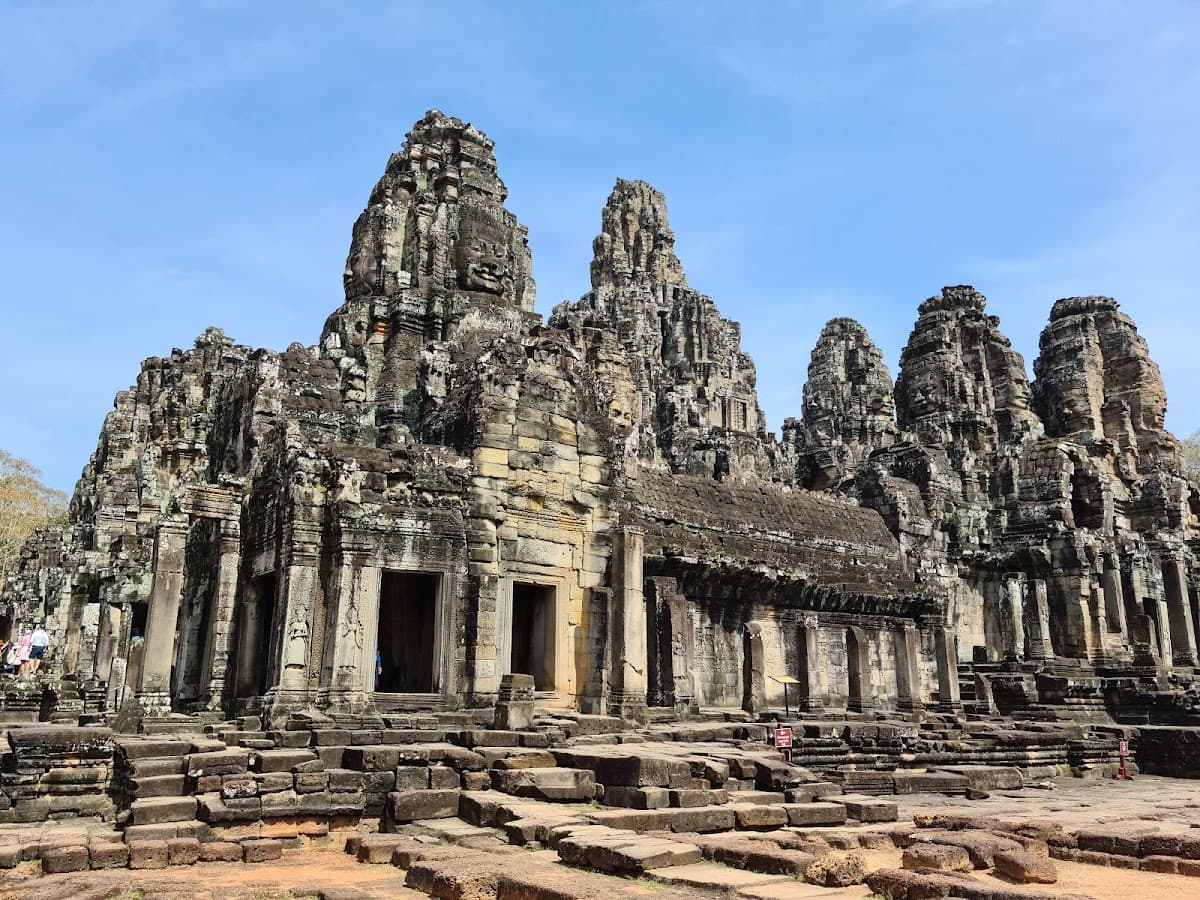
Our take: The temple of 216 smiling stone faces is one of the most mystical and photogenic sites in all of Southeast Asia.
Bayon sits at the exact center of Angkor Thom and is immediately recognizable thanks to its 54 Gothic-style towers, each carved with four serene, enigmatic faces — 216 faces in total. Built by Jayavarman VII in the late 12th century, Bayon was the last great state temple of the Khmer Empire. The bas-reliefs here are unique because they depict daily life rather than mythology: market scenes, cockfights, fishing, and military processions. Visit early in the morning (7 to 8:30am) when the light is soft and the crowds thin — by 9am, tour buses arrive en masse. The upper terrace, where you come face-to-face with the giant stone faces, is the highlight.
3Ta Prohm
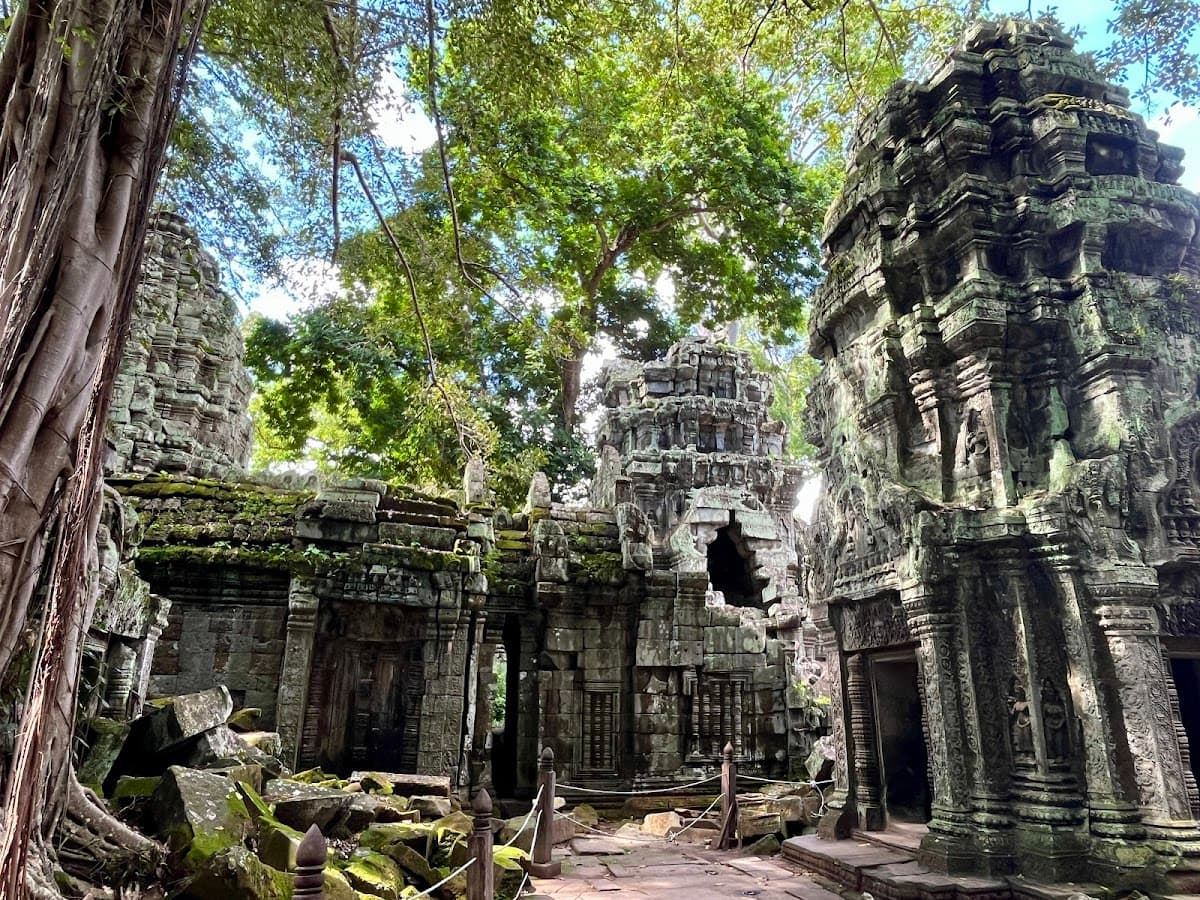
Our take: The famous Tomb Raider temple, where nature slowly reclaims the ancestral stone — absolutely unforgettable.
Ta Prohm is the temple that made Angelina Jolie famous (or vice versa). Left largely unrestored, this Buddhist monastery is gradually being devoured by enormous silk-cotton and strangler-fig trees whose roots cascade over the walls and pry apart the stone blocks. The effect is hauntingly beautiful — nature and architecture locked in a slow-motion embrace. Built in 1186 by Jayavarman VII for his mother, Ta Prohm once housed 12,640 people and was supported by 3,140 villages. To avoid the worst crowds, arrive before 8am or after 3:30pm.
4Banteay Srei
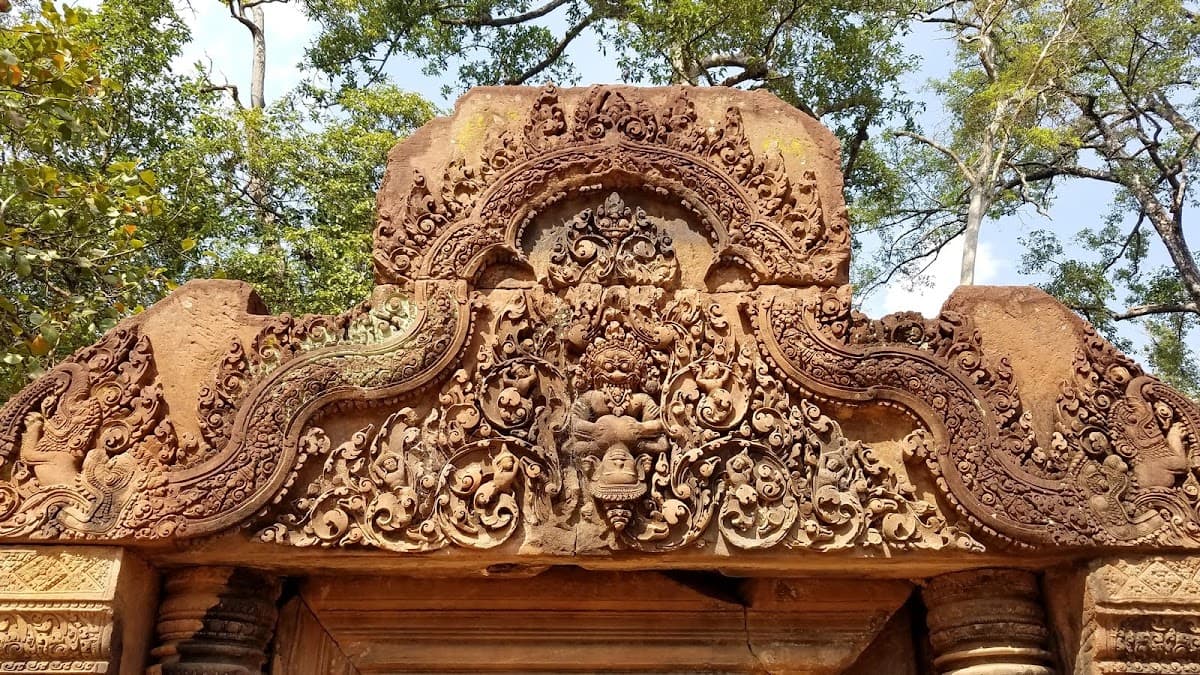
Our take: The jewel of Angkor — pink sandstone carvings of unmatched delicacy in the entire Khmer world.
Banteay Srei is small but perfect. Located 25 kilometers northeast of the main Angkor complex, this 10th-century Hindu temple is carved from pink sandstone with a level of detail that surpasses every other temple in Cambodia. The lintels and pediments depict scenes from Hindu mythology with a precision that feels almost mechanical. The temple is compact and can be explored in an hour, but bring a magnifying glass to appreciate the miniature carvings. The pink sandstone glows in morning light. Combine with Banteay Samré on the way back. The 45-minute trip from Siem Reap crosses beautiful countryside — arrange a round-trip tuk-tuk ($20–25).
5Preah Khan
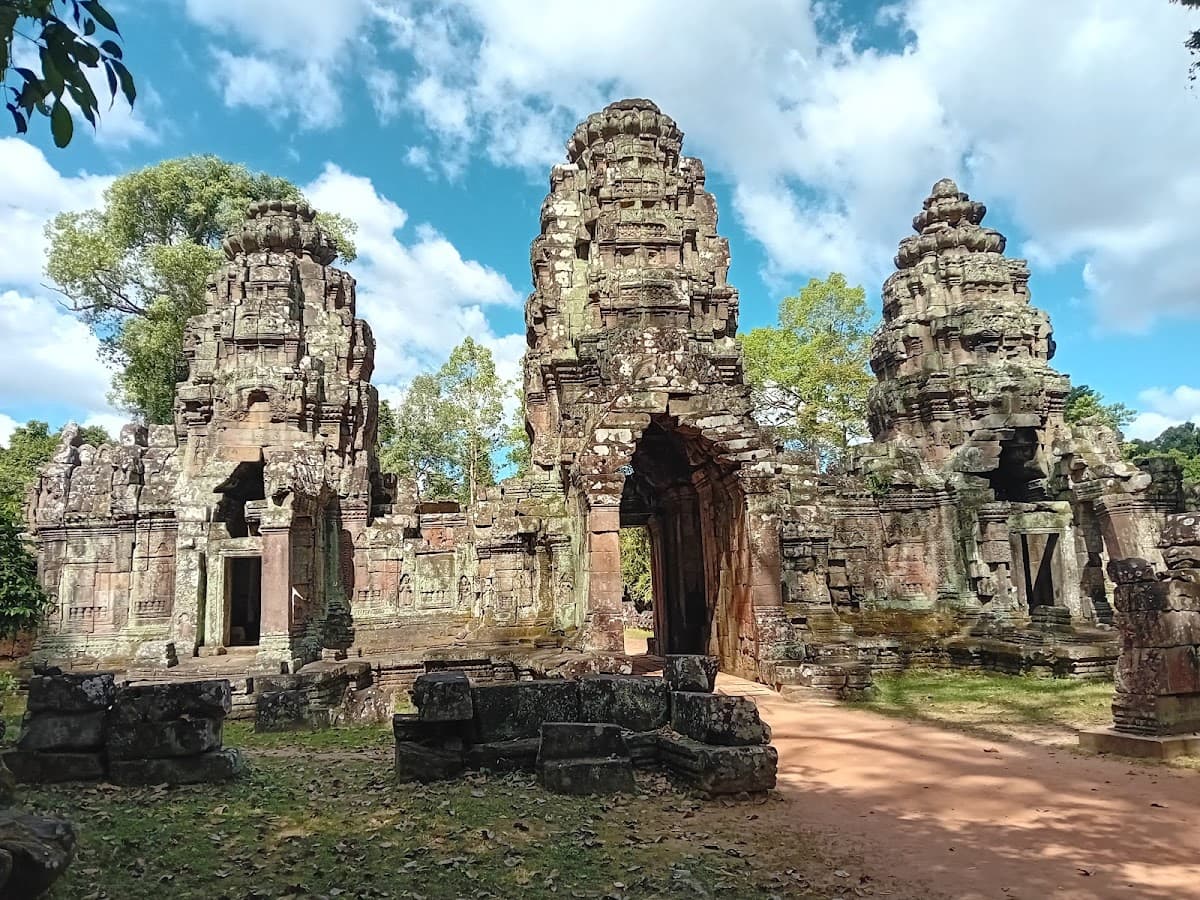
Our take: A vast atmospheric complex that rivals Ta Prohm in beauty but with a fraction of the crowds.
Preah Khan is the temple archaeology buffs adore and casual tourists ignore — which is exactly why you should visit it. This massive complex, built by Jayavarman VII in 1191, served as a Buddhist university and housed 100,000 officials and servants. The long corridors create dramatic light-and-shadow effects. Preah Khan is on the Grand Circuit and pairs perfectly with Neak Pean and Ta Som. Plan one to two hours.
6Ta Keo
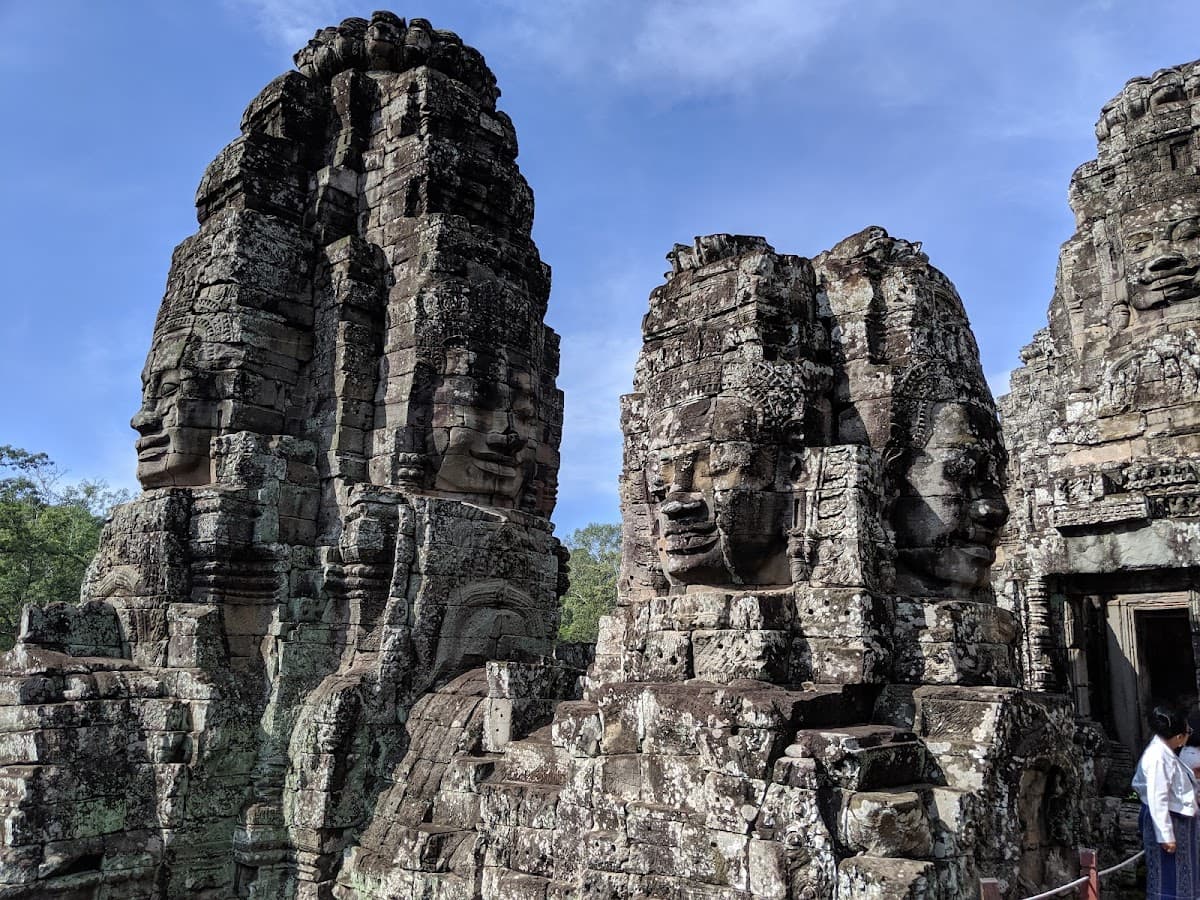
Our take: An unfinished pyramid temple offering steep climbs and incredible views — for the adventurous.
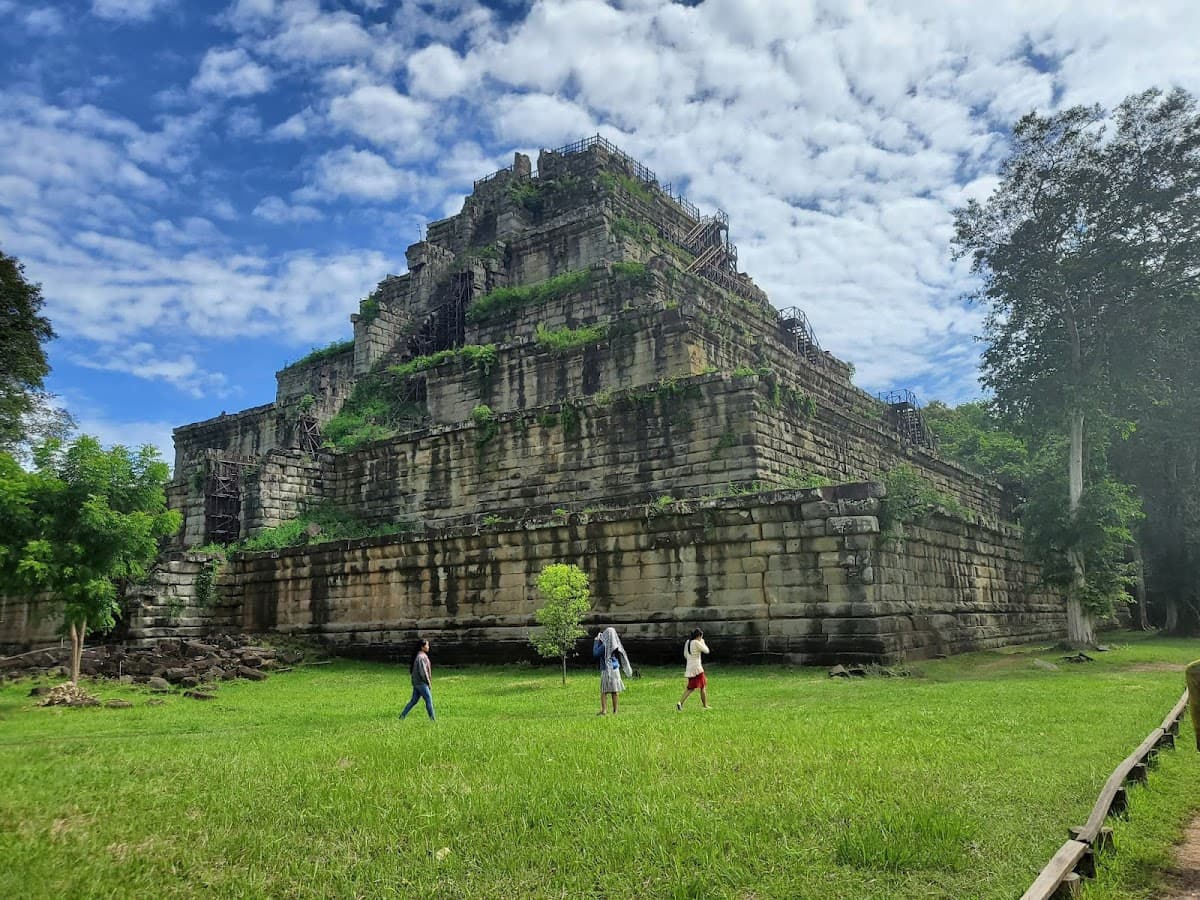
Ta Keo is the temple Angkor never finished. Construction was abandoned in the early 11th century. The result is a raw, undecorated five-tier pyramid that gives a visceral sense of how these temples were built. The climb to the top is steep and exposed (no railings), but the views from the summit are worth the effort. Ta Keo is on the Small Circuit between Ta Prohm and Thommanon. Bring shoes with good grip.
7Banteay Kdei
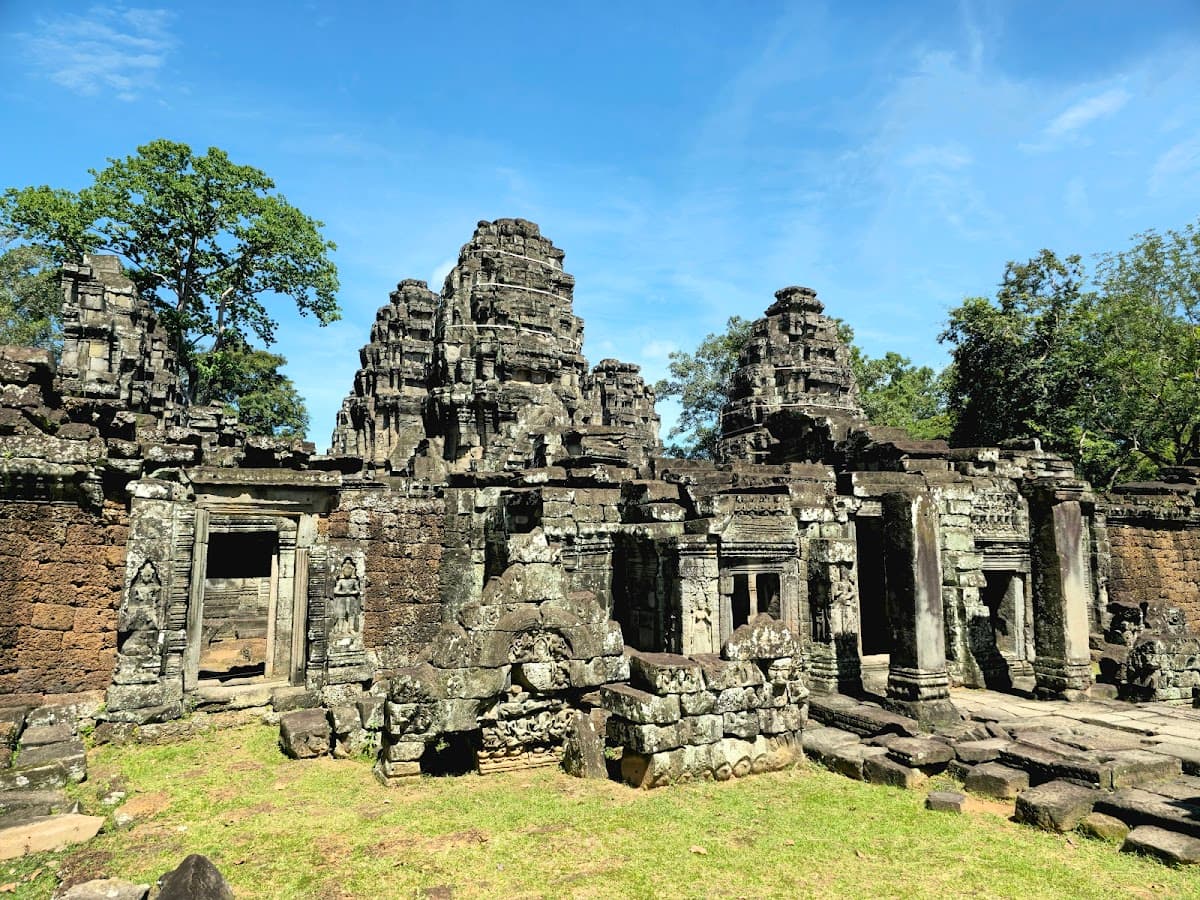
Our take: A peaceful, photogenic monastery that pairs perfectly with the Srah Srang reservoir right next door.
Banteay Kdei is the quiet alternative to Ta Prohm — same era, similar style, but without the Tomb Raider fame and crowds. This Buddhist monastery features beautifully carved devatas and long moss-draped corridors. The Hall of Dancers is the highlight. Cross over to Srah Srang, the royal bath — a stunning sunset spot. Banteay Kdei is on the Small Circuit and takes 45 minutes to an hour.
8Pre Rup
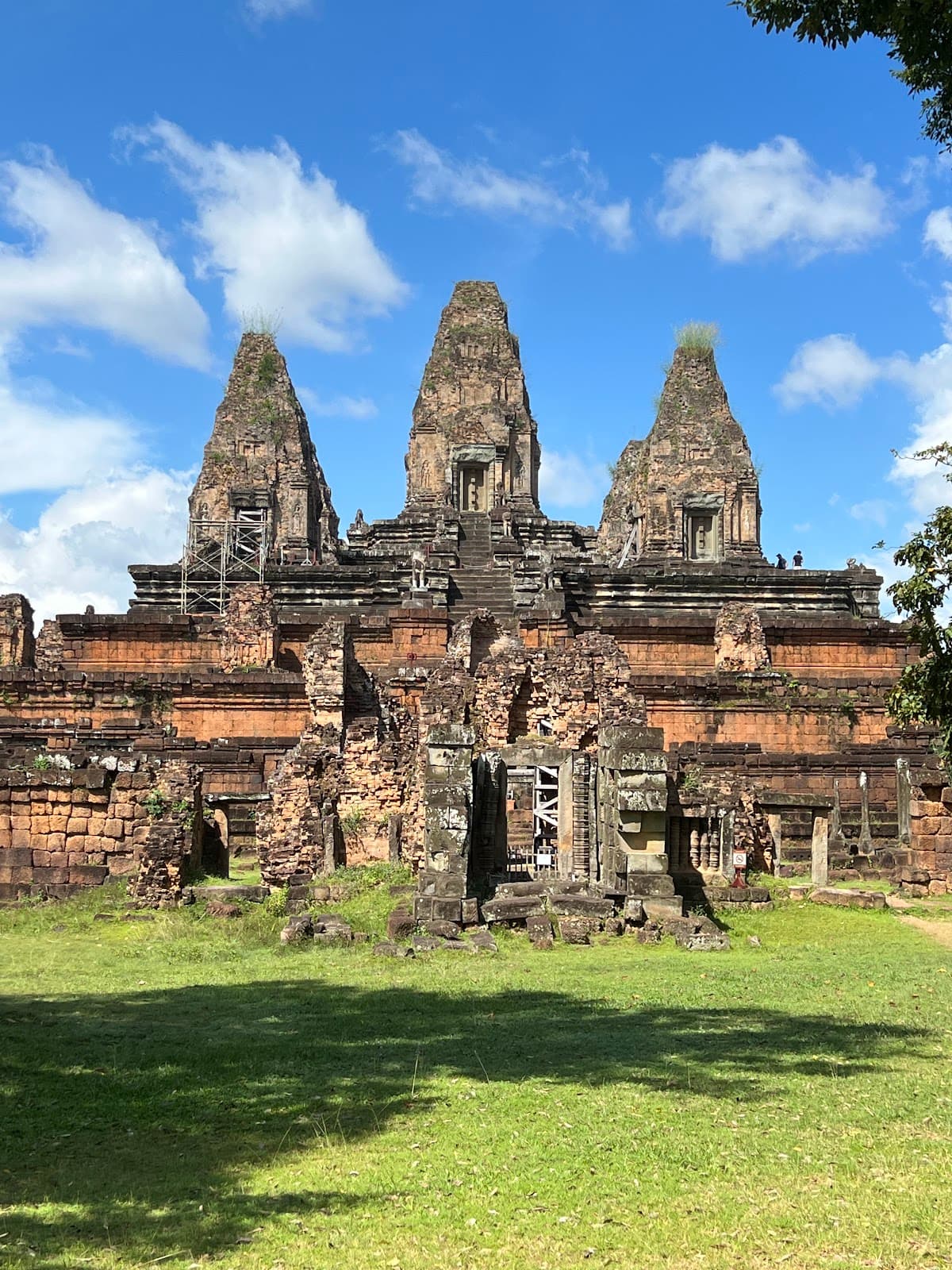
Our take: A spectacular sunset temple with panoramic canopy views from its upper levels.
Pre Rup is a 10th-century Hindu temple that served as a royal crematorium — its name literally means 'turning the body'. The three tiers are built of brick and laterite, giving a warm color that glows golden at sunset. Climb to the top for 360-degree views over the Angkor plain. Pre Rup is on the Grand Circuit and one of the best alternatives to Phnom Bakheng for sunset, with far fewer people. Plan 30 to 45 minutes.
9Phnom Bakheng
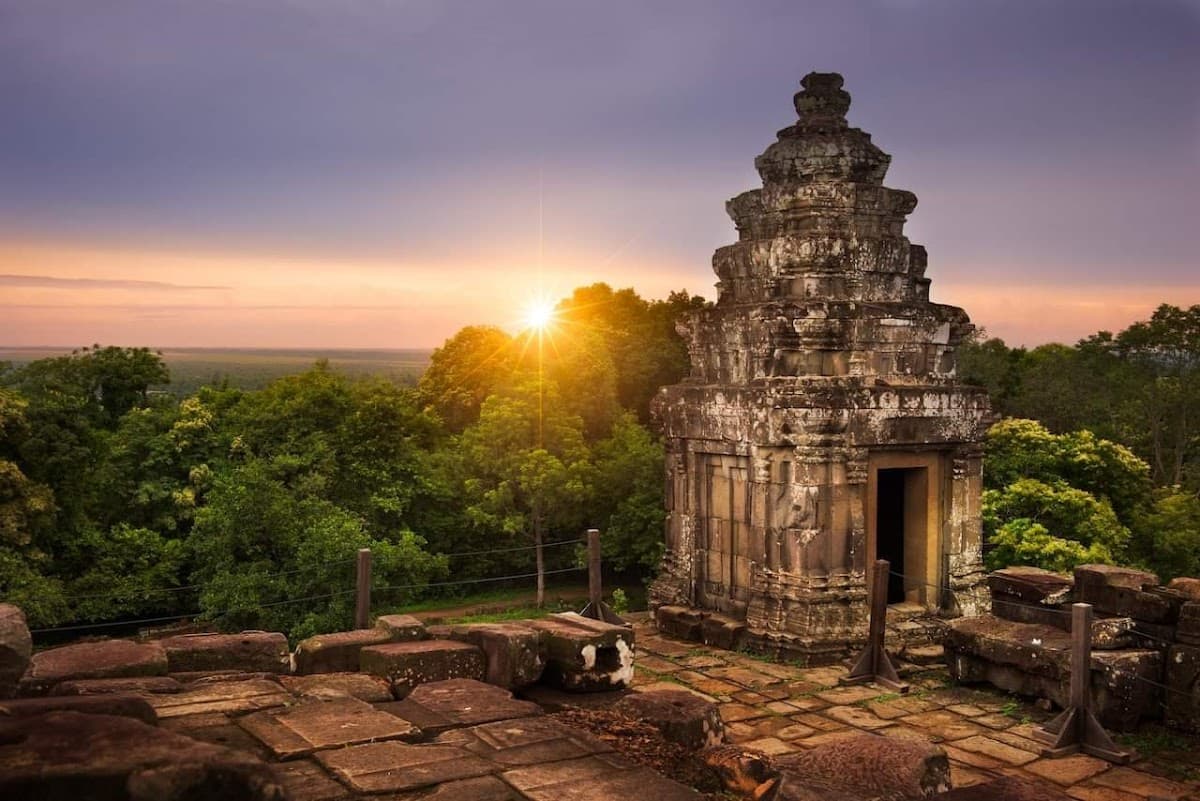
Our take: The classic Angkor sunset spot — arrive early and brace for the crowds, but the view is worth it.
Phnom Bakheng is a 9th-century mountain temple built on a natural hill, making it the highest point in the Angkor area. The view of Angkor Wat from the top at sunset is iconic, but so are the crowds — access is limited to 300 people. The 20-minute climb leads to a five-tier pyramid with 108 towers. For photographers, Phnom Bakheng is more interesting at sunrise when the platform is nearly empty.
10South Gate of Angkor Thom
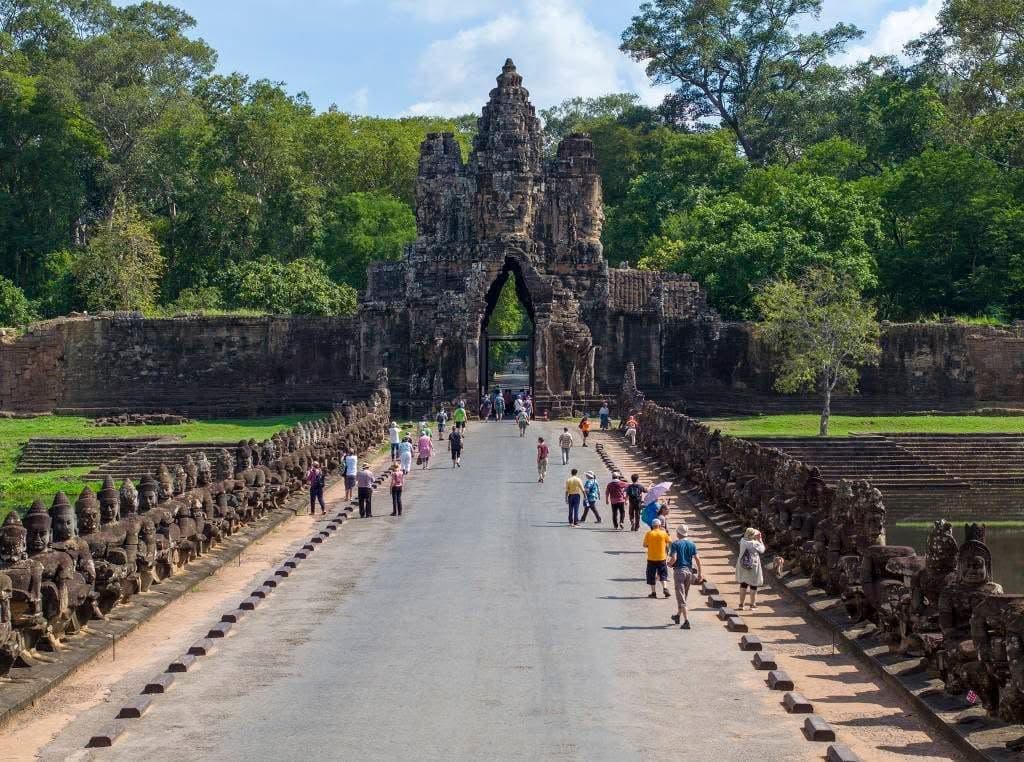
Our take: Cambodia's most photographed gate — the gods-and-demons causeway is an unforgettable introduction to Angkor Thom.
The South Gate of Angkor Thom isn't a standalone temple but the grand entrance to the fortified city of Angkor Thom. The approach road is flanked by 54 stone figures on each side — devas on the left and asuras on the right — all pulling on a giant naga. The gate tower features four massive faces of Avalokiteshvara. Park your tuk-tuk before the causeway and walk the full 200 meters to appreciate the scale and symbolism.
Other temples to discover
Beyond the top 12 and the hidden gems, the Angkor Archaeological Park and its surroundings hold dozens of other temples worth the trip. These 13 additional temples range from small jewel-box sanctuaries on the Small Circuit to the pre-Angkorian ruins of Sambor Prei Kuk. Most receive very few visitors, offering a peaceful contrast to the main sites.
13Neak Pean
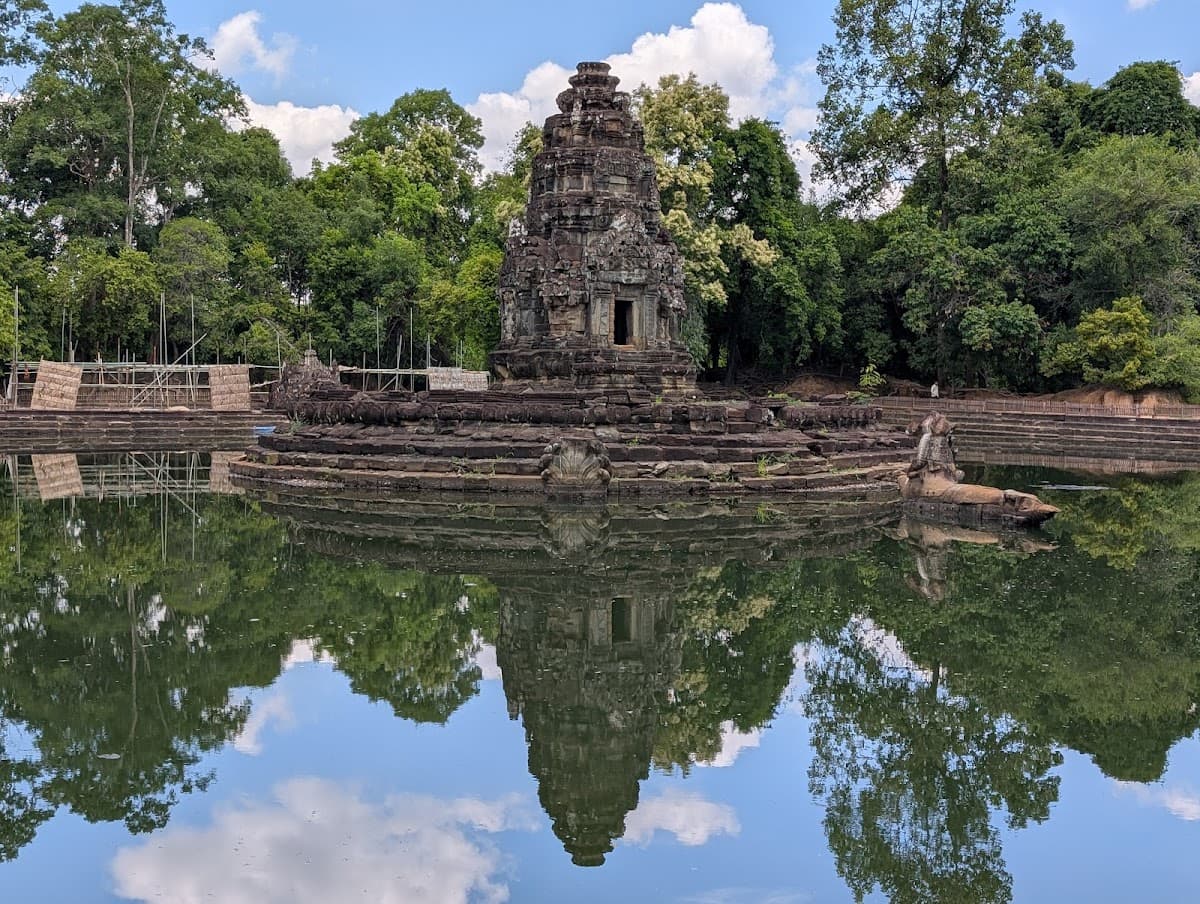
Our take: A unique island temple in the middle of a reservoir — serene and mystical, one of Jayavarman VII's most original creations.
Neak Pean is a small Buddhist temple built on an artificial island in the center of the Jayatataka Baray, a now-dry reservoir on the Grand Circuit. Built by Jayavarman VII in the late 12th century, it represents the mythical Himalayan Lake Anavatapta. The temple sits on a circular island surrounded by four smaller pools, each with a gargoyle-shaped fountain (human, elephant, horse, lion). It's reached via a long wooden walkway over the water. The visit takes only 30 minutes but the atmosphere is incomparable. Combine with Ta Som and East Mebon for a Grand Circuit trio.
14East Mebon
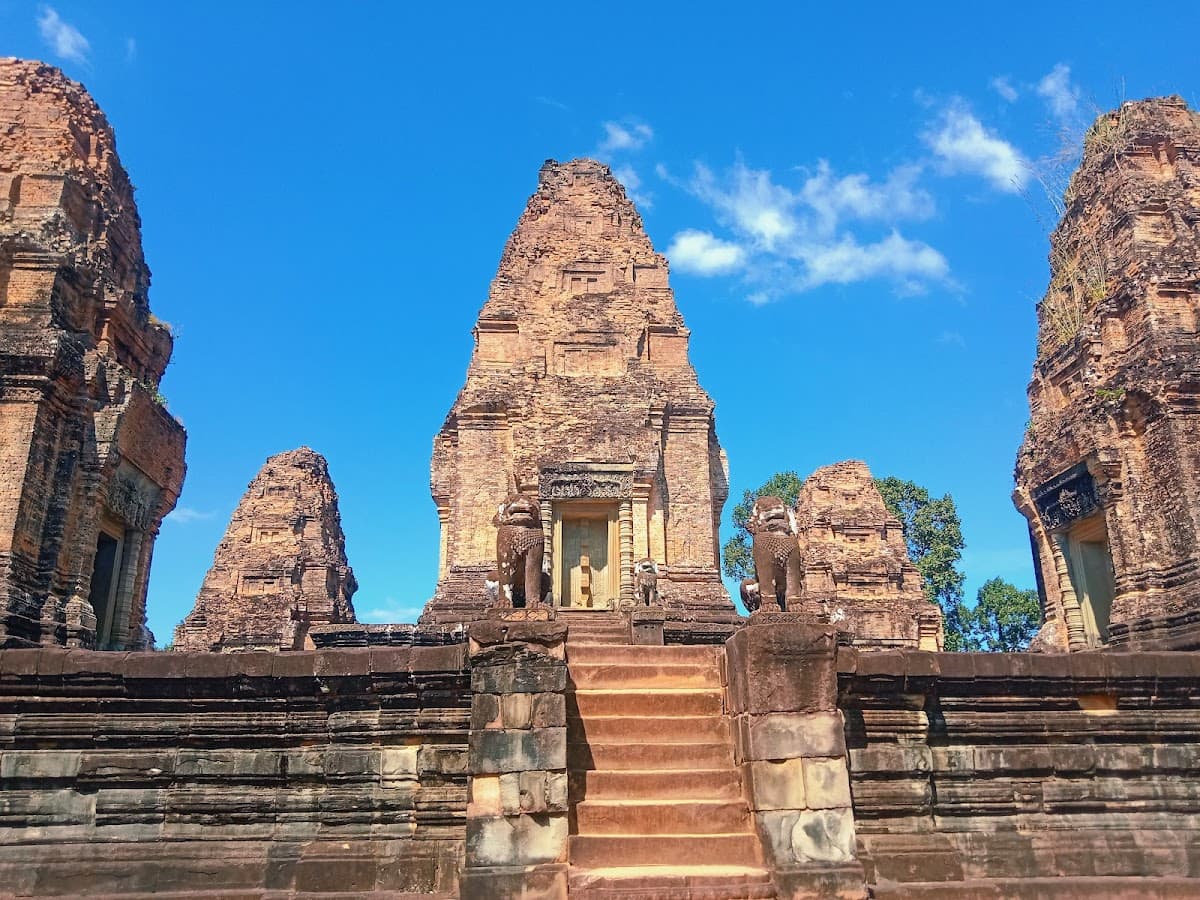
Our take: A beautifully symmetrical 10th-century temple surrounded by stone elephants — a Grand Circuit must-see often overlooked.
East Mebon was built in 953 by King Rajendravarman as a Hindu temple dedicated to Shiva. It once stood on a now-dry island in the immense East Baray reservoir. The temple is famous for its life-sized stone elephants at each corner of the first two tiers and its perfectly symmetrical five-tower layout. The carved lintels and false doors are among the finest examples of 10th-century Khmer art. Plan 30 to 45 minutes, rarely crowded. Located on the Grand Circuit between Pre Rup and Ta Som.
15Ta Som
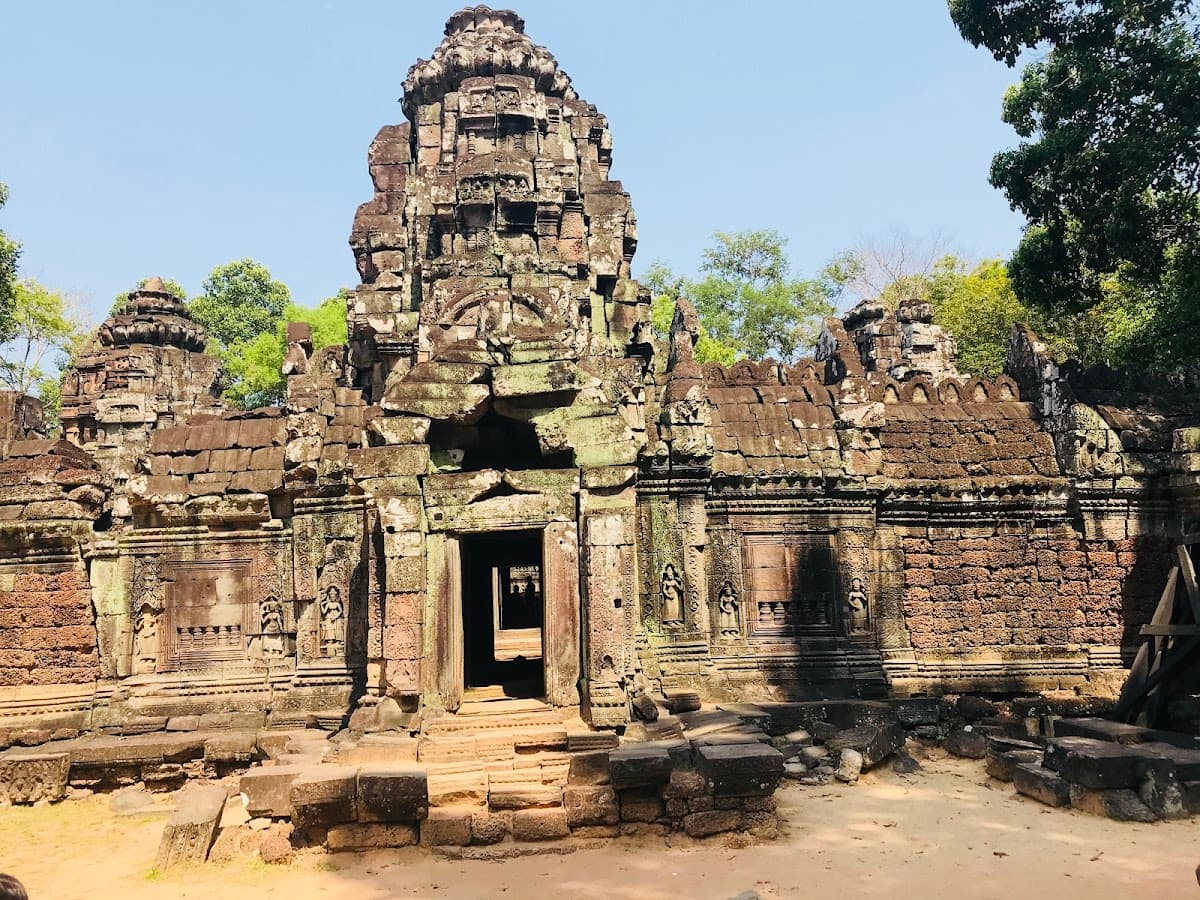
Our take: A peaceful Grand Circuit gem with a spectacular strangler fig over the eastern gopura — the most photogenic moment after Ta Prohm.
Ta Som is a small, elegant temple built in the late 12th century by Jayavarman VII, dedicated to his father. Its eastern gopura is almost entirely wrapped by the roots of an enormous strangler fig, creating one of the most photographed settings in Angkor. The temple follows a flat plan similar to Ta Prohm and Banteay Kdei but at a smaller scale. Visit in 30 minutes. It sits at the eastern end of the Grand Circuit and receives very few visitors. Combine with Neak Pean and East Mebon.
16Thommanon
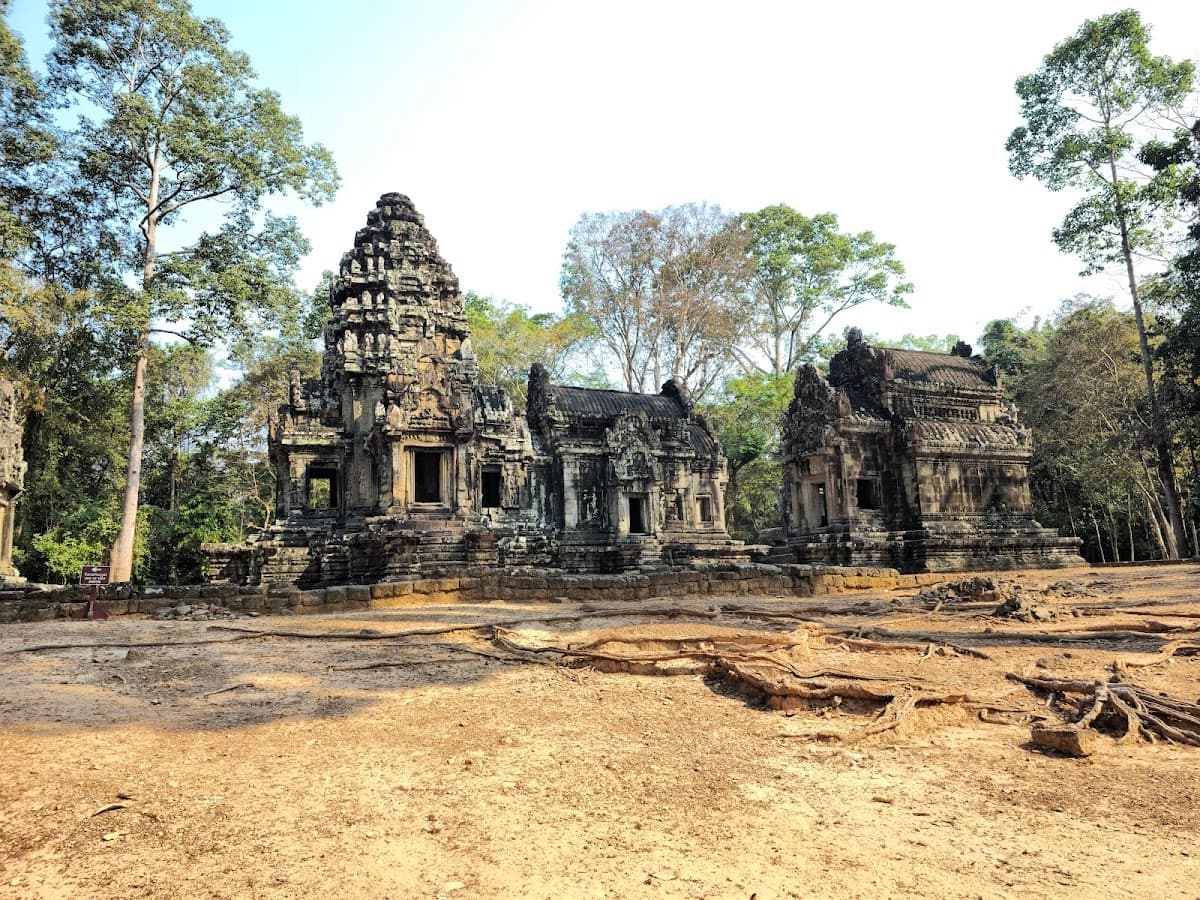
Our take: A tiny jewel-box temple with exquisite carvings — easy to visit as a quick stop on the Small Circuit.
Thommanon is a small, beautifully decorated Hindu temple built in the early 12th century during the reign of Suryavarman II, the same king who built Angkor Wat. It sits just east of the Victory Gate of Angkor Thom, facing its twin temple Chau Say Tevoda. Despite its small size, the quality of its devata carvings rivals Angkor Wat. Restored by EFEO, it's in excellent condition. A 20-minute visit is enough — pair with Chau Say Tevoda right across the road.
17Chau Say Tevoda
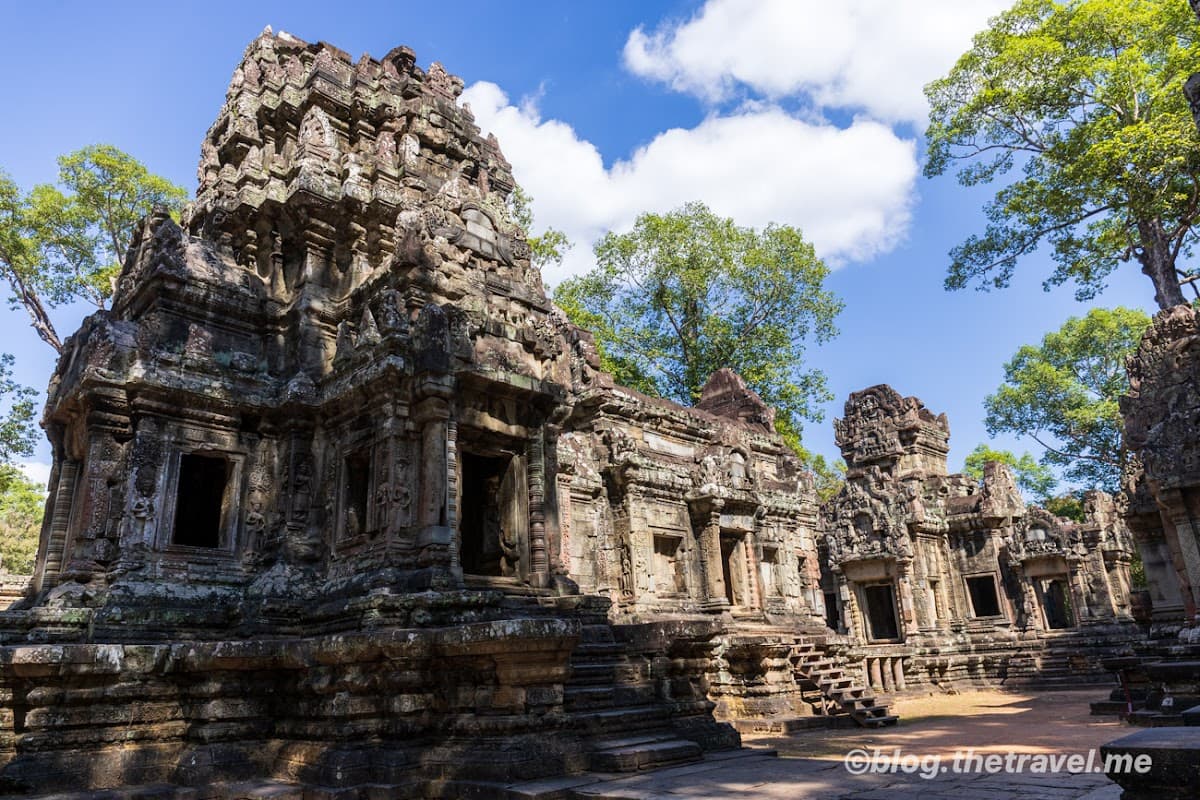
Our take: Thommanon's twin — a beautifully restored small temple most visitors overlook.
Chau Say Tevoda sits directly opposite Thommanon and was built around the same time (early 12th century). It was dedicated to Vishnu and Shiva. After years of neglect and near-collapse, it was painstakingly restored by a Chinese team and reopened in 2012. The temple features beautiful pediments depicting Hindu mythology and elegant devatas. A 20-minute visit, almost no crowds despite its position on the Small Circuit. Visit both with Thommanon — the pair takes less than an hour.
18Banteay Samré
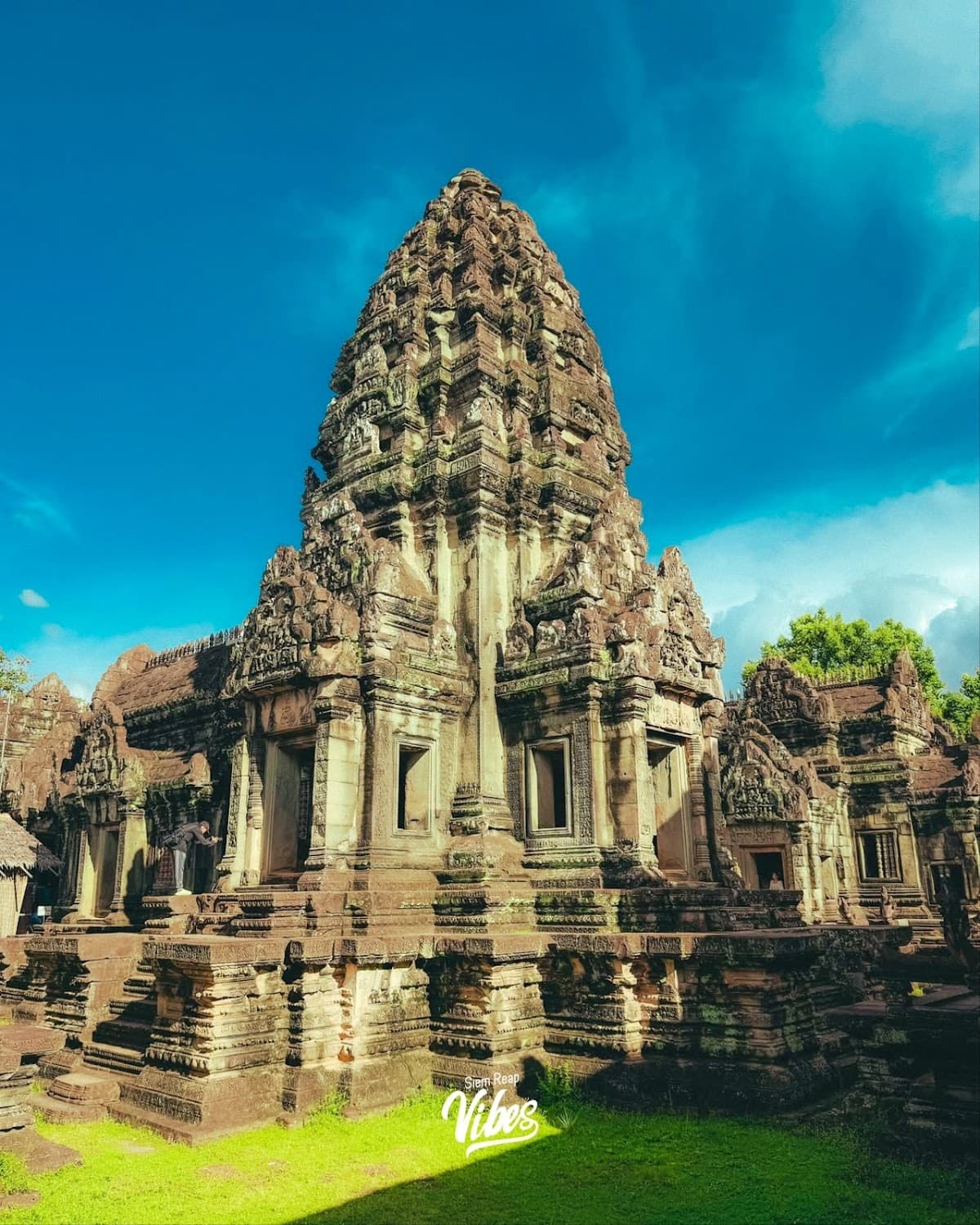
Our take: A well-preserved outer temple with beautiful moats and galleries — one of Angkor's most underrated experiences.
Banteay Samre is a Hindu temple from the early 12th century, built in the same style as Angkor Wat but far from the main circuits. Named after the Samre people, it features an inner courtyard framed by covered galleries, an elevated central sanctuary, and moats that still hold water during the rainy season. The carvings are remarkably well preserved thanks to a complete anastylosis restoration. Located about 5 km east of the East Baray, it receives very few visitors. Plan 45 minutes to an hour.
19Srah Srang
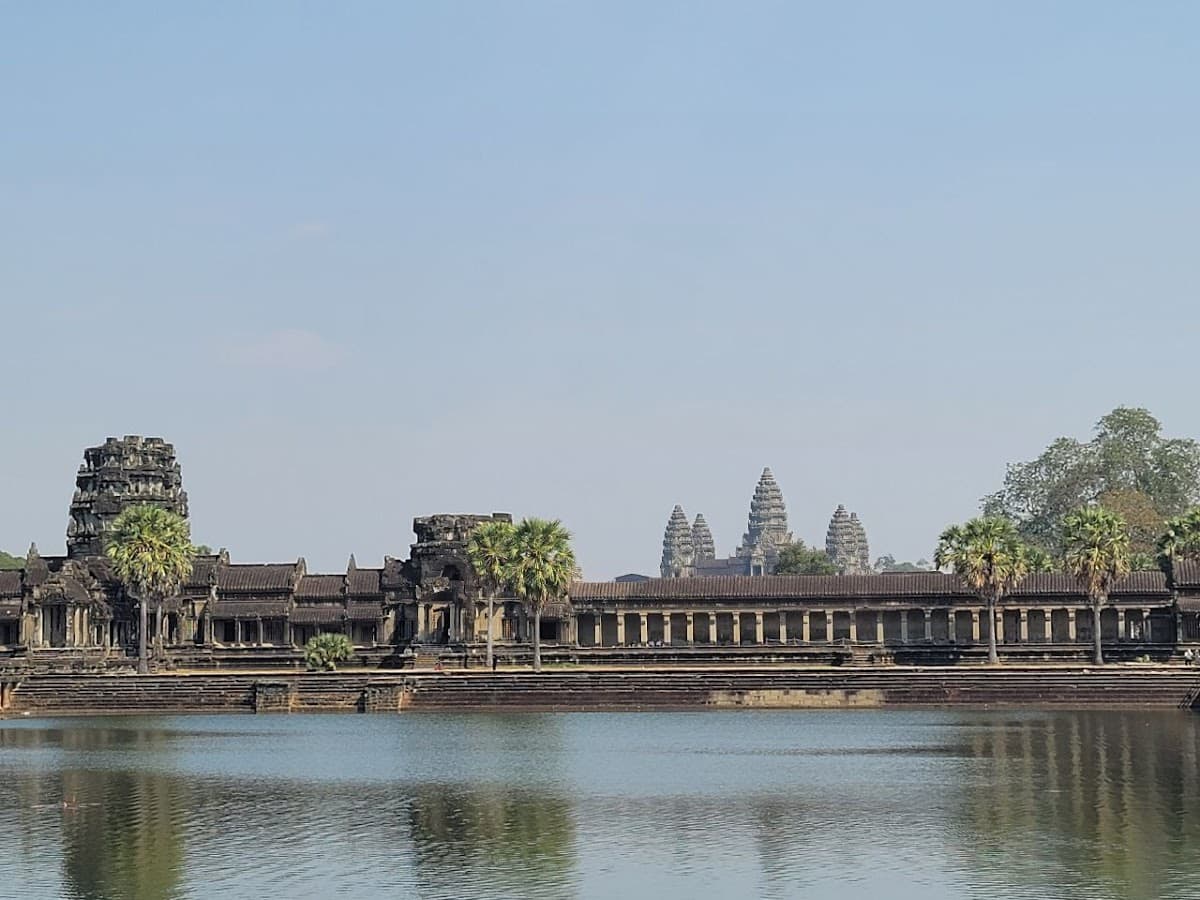
Our take: A peaceful royal pool facing Banteay Kdei — the best alternative sunrise spot, almost crowd-free.
Srah Srang is a large reservoir (700 by 300 meters) built in the 10th century and modified later by Jayavarman VII. A sandstone landing with naga balustrades faces east, offering a sublime alternative sunrise spot with far fewer visitors than Angkor Wat. The water beautifully reflects the sky at dawn. Locals still use the reservoir for swimming and fishing. It sits just east of Banteay Kdei. Plan 20 minutes. Combine with Banteay Kdei and Prasat Kravan.
20Bakong
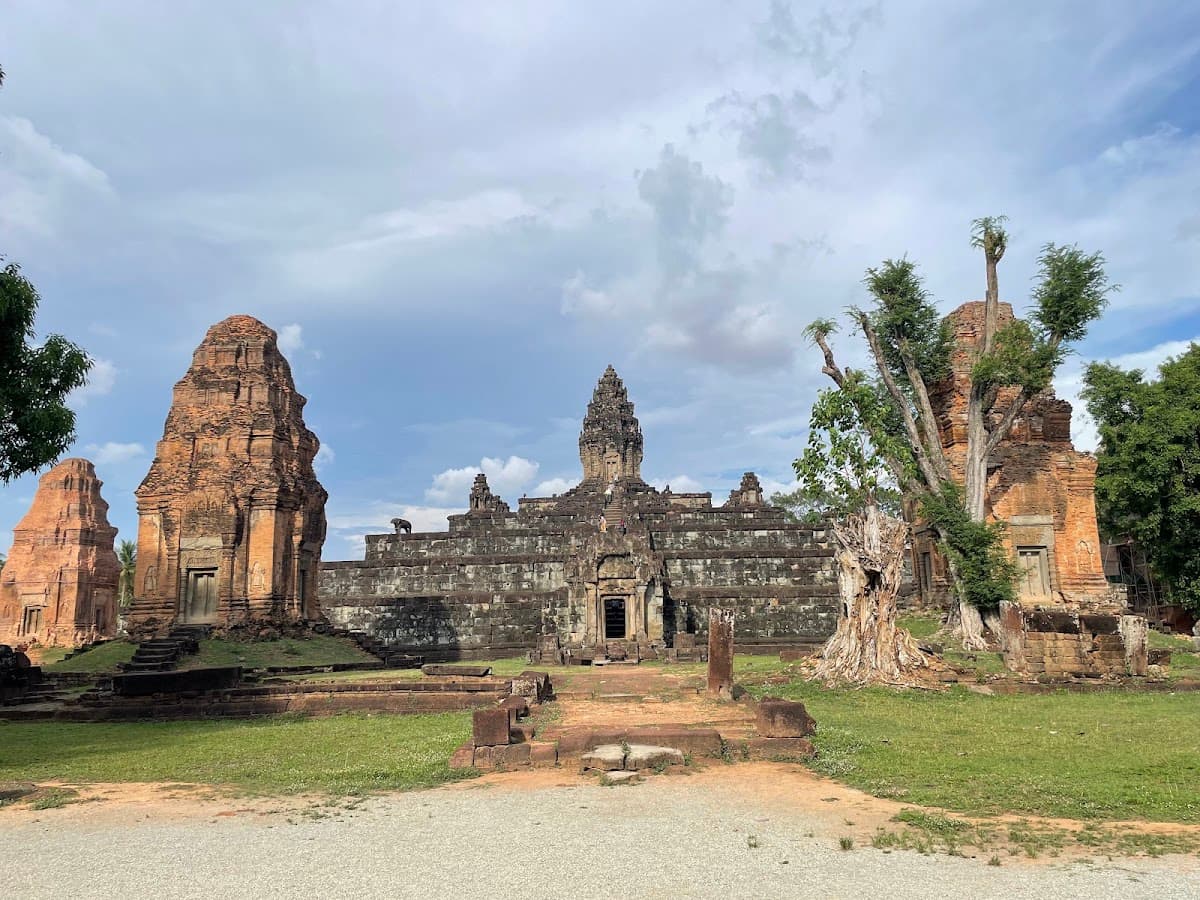
Our take: The oldest and largest pyramid in the Roluos Group — the cradle of classical Khmer architecture.
Bakong is the centerpiece of the Roluos Group, a cluster of the earliest Angkorian-era temples 13 km east of Siem Reap. Built in 881 by King Indravarman I, it's the first sandstone temple-mountain and served as the state temple of the capital Hariharalaya. The five-tier pyramid is crowned by a single tower and surrounded by eight smaller brick towers decorated with stucco. Stone elephants guard the corners. It established the architectural template that would evolve into Angkor Wat 250 years later. Plan 45 minutes. Combine with Preah Ko and Lolei for a full Roluos Group morning.
21Preah Ko
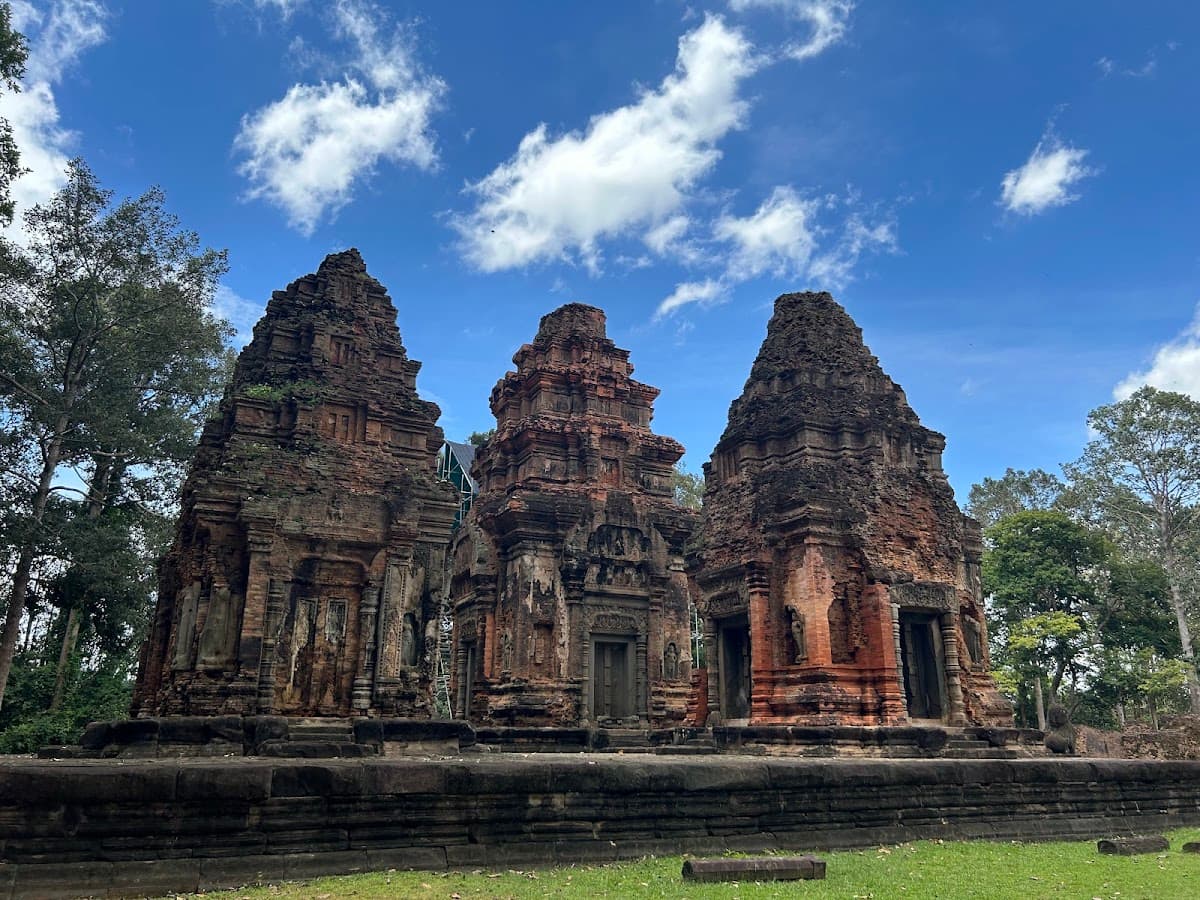
Our take: Six graceful brick towers with the oldest Angkorian inscriptions — a must for history buffs.
Preah Ko (Sacred Bull) was the first temple built at the Roluos Group in 879, dedicated by Indravarman I to his ancestors and to Shiva. The six brick towers are arranged in two rows and still preserve fragments of their original stucco decoration — among the oldest decorative plasterwork in the Angkor region. Sacred bulls (nandi) line the approach. The temple is compact and visitable in 30 minutes. Located just south of Bakong in the Roluos Group, 13 km from Siem Reap. Almost no tourists, a wonderfully peaceful experience.
22Lolei
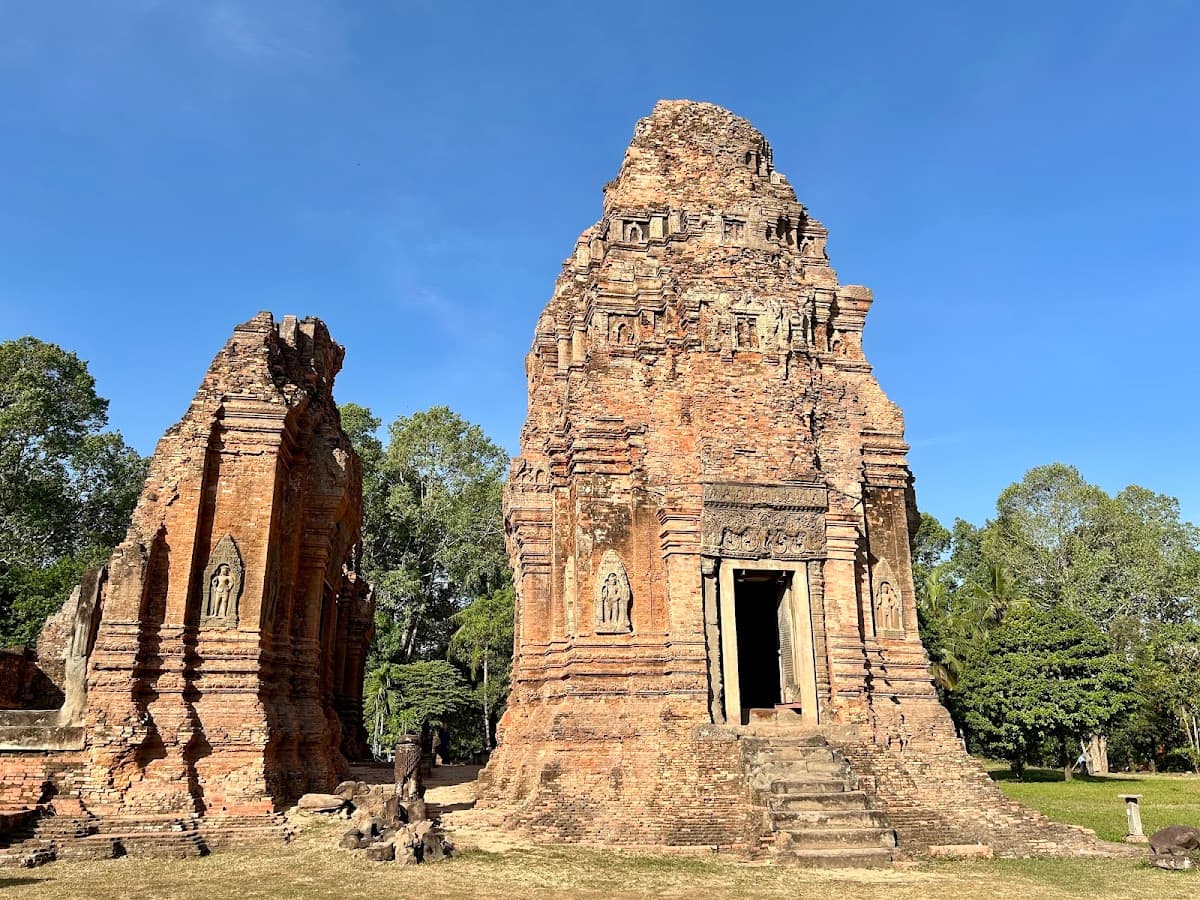
Our take: The last Roluos Group temple, built on a now-dry reservoir island — a quiet footnote to Angkor's origins.
Lolei was built in 893 by Yasovarman I on an island in the middle of the Indratataka Baray (now dry). Its four brick towers are dedicated to the king's parents and grandparents. The lintel carvings are remarkably detailed for their age and include fine Sanskrit inscriptions. A modern Buddhist monastery now occupies the site, giving it a living atmosphere. Plan 20 to 30 minutes. It's the northernmost Roluos Group temple. Visit all three Roluos temples in a single morning from Siem Reap.
23Prasat Kravan
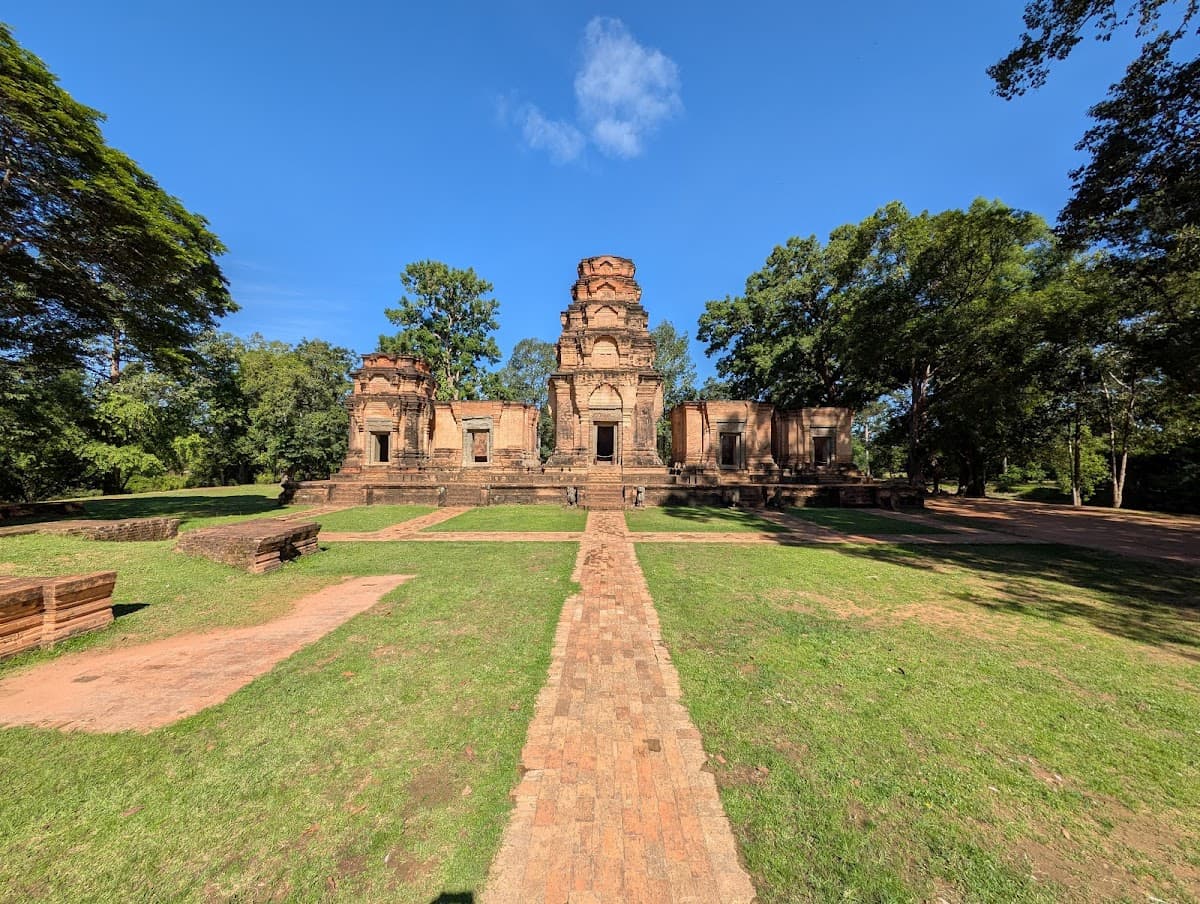
Our take: The only Angkor temple with brick bas-reliefs — five small towers with unique interior Vishnu carvings.
Prasat Kravan is a small Hindu temple built in 921, remarkable for being the only Angkor temple with bas-reliefs carved directly into the brick walls of its interior. The five brick towers are aligned north-to-south. The central tower contains a remarkable relief of Vishnu striding across the ocean, while the northern tower features carvings of Lakshmi. The temple was restored by the French in the 1960s with both original and replacement bricks (marked CA for conservation). Located on the Small Circuit between Ta Prohm and Srah Srang, 15 to 20 minutes is enough but the experience is unique.
24Sambor Prei Kuk
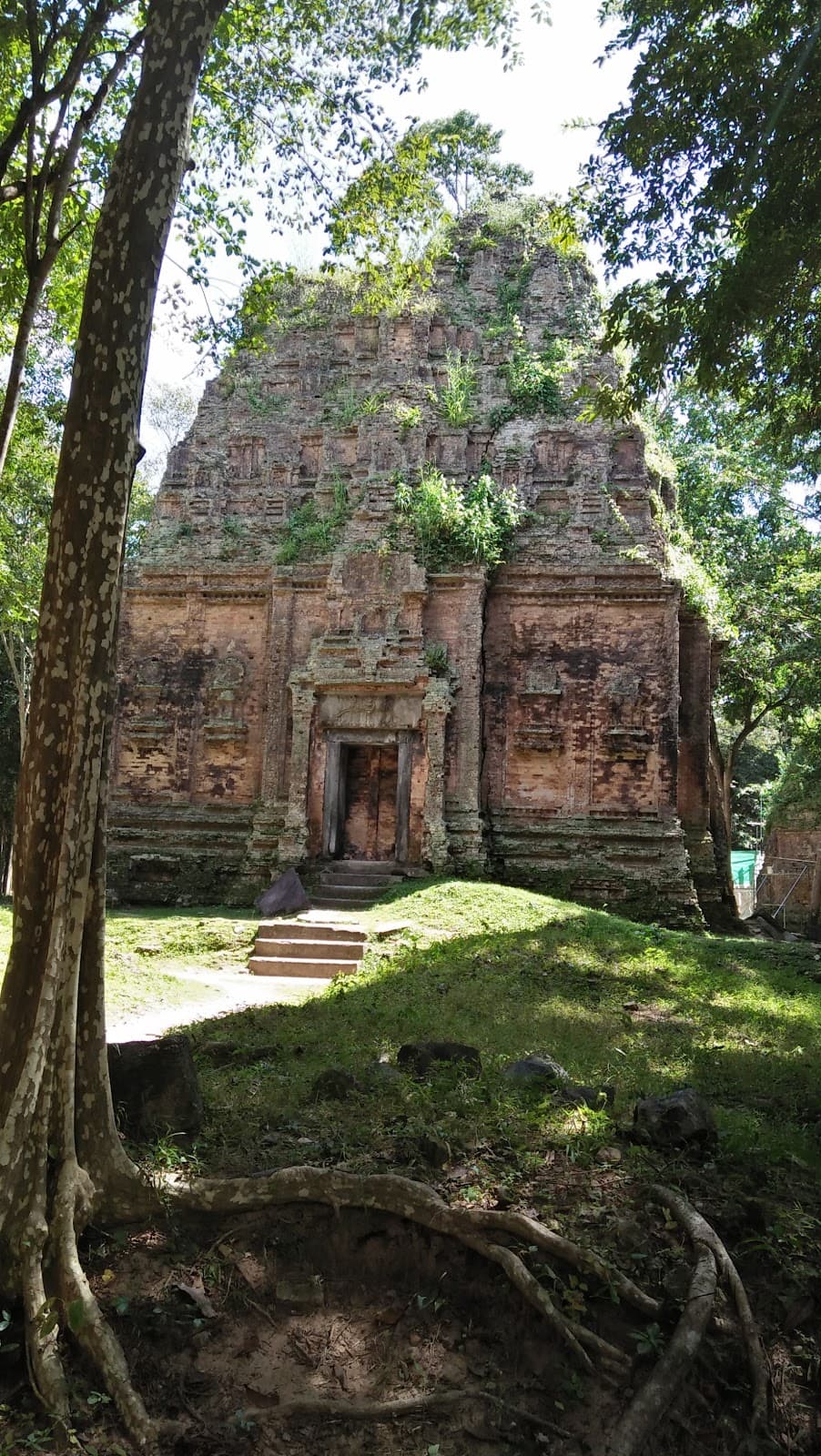
Our take: A pre-Angkorian UNESCO site 3 hours from Siem Reap — Cambodia's oldest temple complex and a fascinating day trip.
Sambor Prei Kuk is Cambodia's second UNESCO World Heritage site (inscribed in 2017), predating Angkor by several centuries. Built in the 7th century as Isanapura, capital of the Chenla empire, it contains over 100 temples spread across three main groups in the forest. The octagonal temples and flying-palace carvings are unique in Southeast Asian architecture. Located about 200 km from Siem Reap (3 hours by car via Kampong Thom), it's a rewarding excursion for those with an extra day. Plan 2 to 3 hours for the main groups.
25Phimeanakas
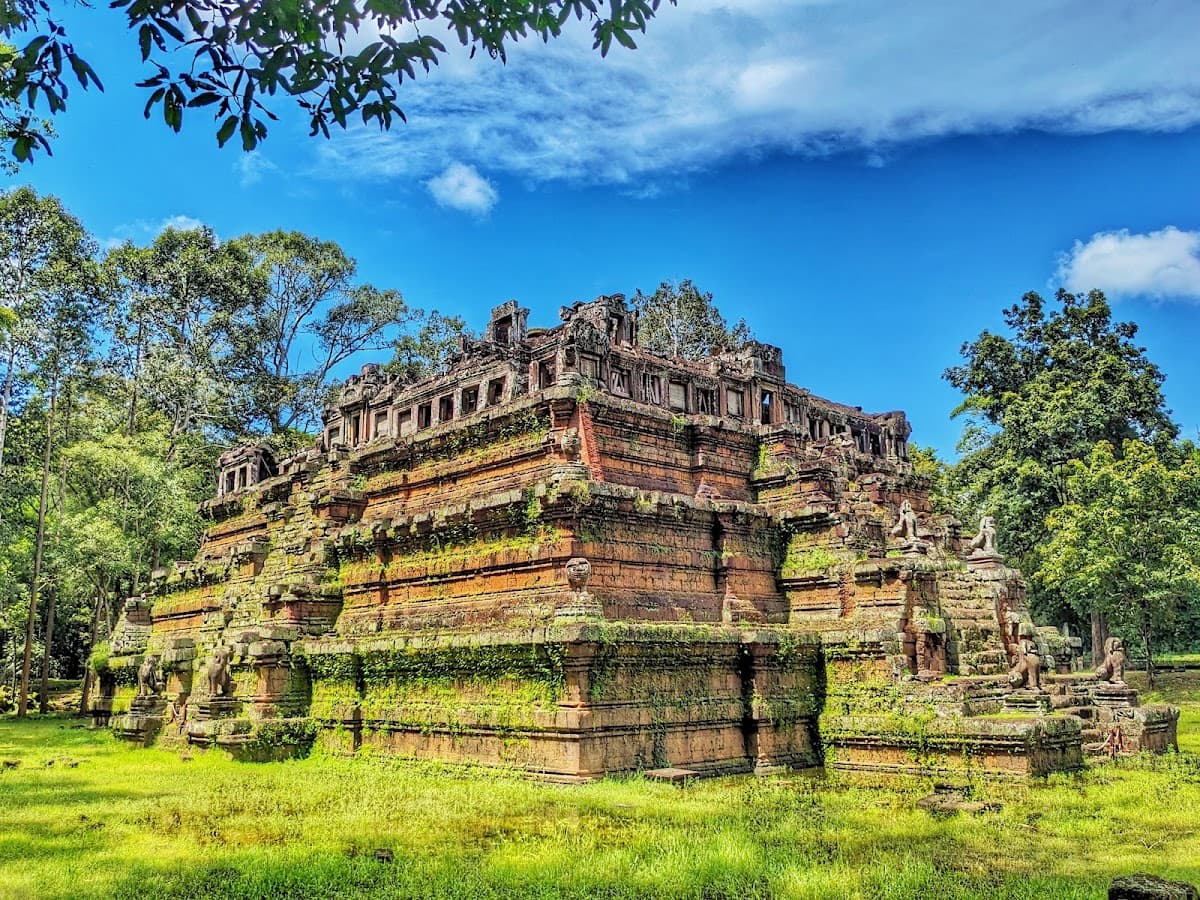
Our take: A pyramid hidden in the Royal Palace enclosure of Angkor Thom — a steep climb rewarded with canopy views.
Phimeanakas is a small three-tier pyramid temple inside the Royal Palace enclosure of Angkor Thom, built in the late 10th century by Rajendravarman and modified later by Jayavarman VII. According to legend, the Khmer king had to sleep each night in the golden tower at the top with a naga spirit — failure to appear meant disaster for the kingdom. The steep climb offers views over the surrounding jungle and palace walls. It's easily missed because visitors rush past toward the Baphuon or the Terrace of the Elephants. Plan 20 to 30 minutes and combine with the nearby Royal Palace pools.
Suggested itineraries
11-day itinerary — The essentials
5am — Angkor Wat for sunrise. 6:30am — Explore the interior. 8:30am — South Gate of Angkor Thom. 9am — Bayon. 10:30am — Baphuon and Terrace of the Elephants. 11:30am — Lunch. 1pm — Ta Prohm. 2:30pm — Banteay Kdei and Srah Srang. 4pm — Ta Keo (optional). 5pm — Sunset at Pre Rup or Phnom Bakheng. Leave early and stay constantly hydrated.
22-day itinerary — The full experience
Day 1 — Small Circuit at a relaxed pace. More time at Angkor Wat and Ta Prohm. Day 2 — Grand Circuit + Banteay Srei: 6am Preah Khan, 8am Neak Pean, 8:30am Ta Som, 9:30am East Mebon, 10am Pre Rup, 10:30am drive to Banteay Srei, 11:30am Banteay Srei, 1pm return to Siem Reap.
33-day itinerary — The explorer's route
Day 1 — Small Circuit. Day 2 — Grand Circuit. Day 3 — Outer temples: 6am depart for Beng Mealea (1h30), 8am exploration with local guide, 10am continue to Koh Ker, 11:30am climb the Prasat Thom pyramid, 1pm picnic, 2pm return. The ultimate Angkor experience.
Budget — What it really costs
| Item | Budget | Mid-range | Luxury |
|---|---|---|---|
| Angkor Pass (1 day) | $37 | $37 | $37 |
| Transport | $15 (tuk-tuk) | $35 (A/C car) | $80 (private guide + car) |
| Lunch | $3–5 | $8–15 | $25–40 |
| Water and snacks | $2 | $5 | $10 |
| Guide (optional) | $0 | $25 | $50+ |
| Scarf/shirt | $2 (market) | $0 | $0 |
| TOTAL per day | $59–61 | $110–117 | $202–217 |
Best time — Month by month
| Month | Weather | Crowds | Verdict |
|---|---|---|---|
| January | Cool and dry, 25–32°C | High season | Best |
| February | Dry and warm, 26–34°C | High season | Best |
| March | Hot, 28–36°C | Moderate | Good |
| April | Very hot, 29–38°C | Low season | Avoid |
| May | Hot, first rains, 28–36°C | Low season | Avoid |
| June | Rainy, 27–34°C | Low season | Avoid |
| July | Rainy, 27–33°C | Low season | Avoid |
| August | Rainy, 27–33°C | Low season | Avoid |
| September | Rainy, green jungle, 27–32°C | Very low | Good |
| October | Last rains, lush, 26–32°C | Low | Good |
| November | Cool, dry beginning, 25–31°C | Rising | Best |
| December | Cool and dry, 24–30°C | High season | Best |
Tickets, hours, and dress code
The Angkor Pass is the single ticket for the entire archaeological park. 2026 prices: 1-day pass $37, 3-day pass $62 (valid 10 days), 7-day pass $72 (valid one month). Buy at the official Angkor Enterprise counter on the Apsara Road — it opens at 5am. Cash (USD) or card.
Children under 12 enter free. Dress code: shoulders and knees must be covered at the upper level of Angkor Wat. The park opens at 5am and closes at 5:30pm.
Keep your pass with you at all times.
How to get there and get around
The tuk-tuk is the classic Angkor experience: $15–20 per day for the Small Circuit, $25–30 for the Grand Circuit, $35–45 for outer temples. Your driver waits at each temple. Air-conditioned private car: $35–50 per day.
E-bikes and electric scooters ($8–15 per day) are increasingly popular. Classic bicycles ($3–5) work well for the Small Circuit but are exhausting for the Grand Circuit. Tip your driver $3–5 if they do a good job.
Small Circuit vs Grand Circuit
The Small Circuit is a 17-kilometer loop covering Angkor Wat, Angkor Thom, Ta Keo, Ta Prohm, and Banteay Kdei. It's the essential one-day itinerary. The Grand Circuit adds 26 kilometers with Preah Khan, Neak Pean, Ta Som, East Mebon, and Pre Rup.
The Outer Circuit covers Banteay Srei, Beng Mealea, and Koh Ker. Most do the Small Circuit on day 1 and the Grand Circuit on day 2. If you only have one day, do the Small Circuit — you'll see the big three.
Sunrise at Angkor Wat — The complete guide
Watching the sun rise behind Angkor Wat's five towers is one of the great travel experiences on Earth. Sunrise times: 5:30am (December) to 6am (June). Arrive at the ticket counter by 5am.
Position yourself to the left of the reflecting pool. The best months are November to February. The equinox dates (March 21 and September 23) are special: the sun rises directly behind the central tower.
Bring a tripod and a headlamp. After the crowd disperses around 6:30am, you'll have Angkor Wat practically to yourself for the next hour.
Photography guide — The best shots
Angkor Wat photographs at sunrise (reflection in the moats) and late afternoon (golden light). Bayon requires a wide-angle lens for the faces at 7am. Ta Prohm is a natural-light paradise: tree roots create dramatic frames before 9am or after 3pm.
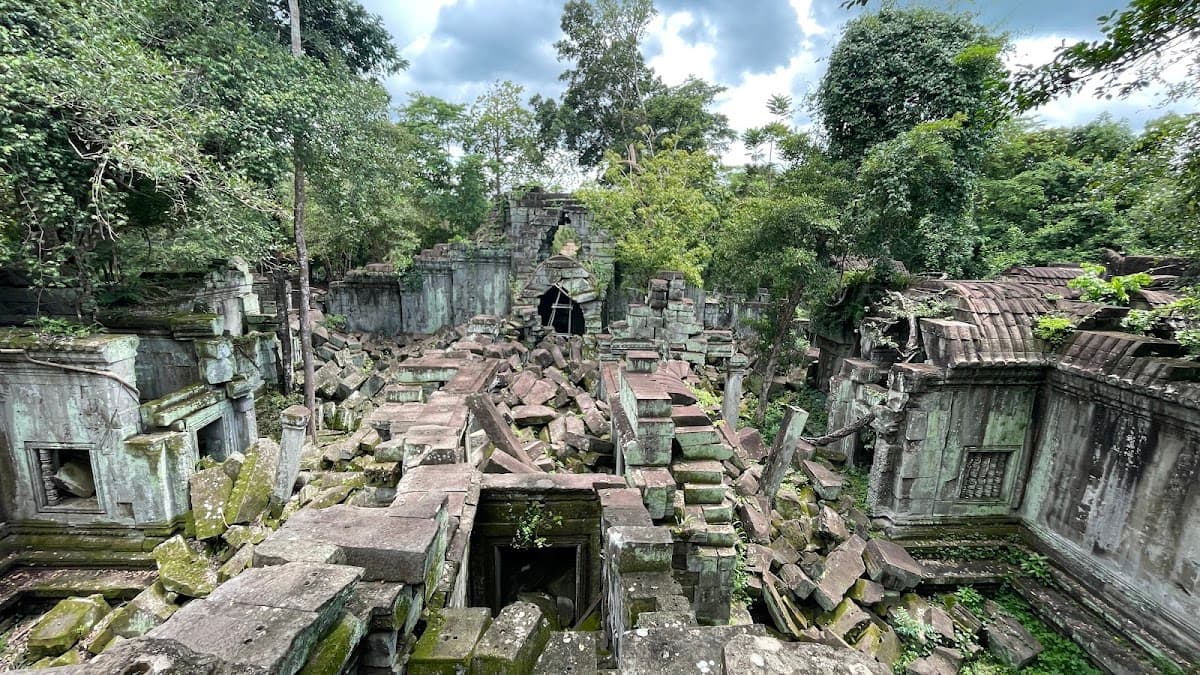
Banteay Srei's pink sandstone glows in the morning — bring a macro lens. Pre Rup and Phnom Bakheng offer sunset panoramas. For Beng Mealea, a wide-angle captures the scale of the collapsed galleries.
Drone photography is strictly forbidden. Tripods are allowed but not in the central galleries of Angkor Wat.
Visiting the temples with kids
Angkor with kids is entirely doable if you plan around their energy. Angkor Wat at sunrise — kids love the early-morning adventure. Bayon is a hit thanks to the giant stone faces.
Ta Prohm is the ultimate kids' temple — finding the dinosaur carving makes a great scavenger hunt. Avoid Ta Keo (too steep) and Phnom Bakheng (too crowded). Bring snacks, water, SPF 50 sunscreen, hats, and a portable fan.
Most kids under 8 will be tired after three temples. Children under 12 enter free.
Scams, safety, and common mistakes
The Angkor temples are generally very safe, but a few scams persist. Be wary of unofficial guides. Never buy antiquities — they're either fake or illegally looted.
Watch your step: uneven stones, steep stairs, and slippery moss. Bring a headlamp for sunrise. Stay hydrated: heat stroke is common from March to May.
Monkeys at Angkor Wat are common — don't feed them. The biggest mistake is trying to see too many temples in one day.
A brief history of Angkor
The Khmer Empire was founded in 802 AD when Jayavarman II proclaimed himself universal monarch on Phnom Kulen. Over the next six centuries, successive kings built increasingly ambitious temple-mountains. Suryavarman II built Angkor Wat in the early 12th century.
Jayavarman VII converted the empire to Buddhism and built Angkor Thom, Bayon, Ta Prohm, and Preah Khan. Ayutthaya sacked Angkor in 1431 and the capital moved to Phnom Penh. French explorer Henri Mouhot brought Angkor to Western attention in 1860, and restoration has continued ever since.
Published by Siem Reap Hub
The community guide for expats and travelers in Siem Reap, Cambodia.
Built by a French engineer based in Siem Reap since 2025, combining AI analysis (Claude, RAG pipelines) and Google Maps data to assemble the most complete local directory — 5,300+ verified businesses. No sponsored placements, no paid content.
Planning your trip to Siem Reap?
Explore our complete guide to things to do in Siem Reap — beyond the temples.
50+ things to doFrequently asked questions
How much does the Angkor Pass cost?
The 1-day pass costs $37, the 3-day pass $62 (valid 10 days), and the 7-day pass $72 (valid 1 month). Children under 12 enter free.
What time does Angkor Wat open?
The park opens at 5am for sunrise visitors and closes at 5:30pm.
Is a guide necessary?
Not strictly, but a good guide transforms the experience. Count $25 to $50 for a licensed guide for the day.
How should you dress?
Shoulders and knees must be covered. Bring a light shirt or scarf. Comfortable walking shoes are essential.
Can you use a drone?
No. Drone photography is strictly forbidden throughout the Angkor Archaeological Park.
How many days do you need?
One day for the essentials. Two days for a comfortable pace. Three days for the ultimate experience with the outer temples.
Is Angkor wheelchair-accessible?
The ground floor of Angkor Wat and the South Gate causeway are relatively accessible. The upper levels are not.
What's the best time?
November to February for the best weather. September–October are underrated with fewer crowds and lush jungle.
Can you buy the pass online?
In 2026, the Angkor Pass must be purchased in person at the Angkor Enterprise counter. Cash (USD) and cards accepted.
Is sunrise worth it?
Absolutely. Arrive at 5:15am and position yourself to the left of the reflecting pool for the best angle.
How much should you tip?
$3 to $5 on top of the agreed rate for a full day of temples.
Can you exit and re-enter?
Yes. The 1-day pass is valid all day from 5am to 5:30pm.
Is Beng Mealea included in the pass?
Yes, Beng Mealea and Koh Ker are included in the main Angkor Pass.
Where to eat near the temples?
Several restaurants near Angkor Thom ($5–10 per meal). For better value, eat in Siem Reap.
What about the rainy season?
Afternoon thunderstorms but dry mornings. Fewer tourists, green jungle, full moats, and dramatic clouds for photography.