Der archäologische Park von Angkor erstreckt sich über mehr als 400 Quadratkilometer und beherbergt einige der atemberaubendsten Tempel, die jemals von Menschenhand errichtet wurden.
25
Tempel
UNESCO
Weltkulturerbe
$37
1-Tages-Pass
5:30
Sonnenaufgang am Morgen
Angkor ist nicht nur ein Tempel. Es ist eine in Stein erstarrte Zivilisation — ein weitläufiger 400 km² großer Park mit den Ruinen von über 1.000 Tempeln und Bauwerken, von denen etwa 72 Haupttempel für Besucher zugänglich sind. Von der ikonischen Silhouette von Angkor Wat über die mit Würgefeigen umrankten Korridore von Ta Prohm, von den 216 lächelnden Steingesichtern des Bayon bis zu den vor-angkorianischen achteckigen Türmen von Sambor Prei Kuk — dieser Reiseführer stellt dir 25 der schönsten Tempel in und um Siem Reap vor, sortiert nach architektonischer Bedeutung, Besuchererlebnis und Zugänglichkeit.
Wir haben diese 25 Tempel anhand ihrer architektonischen Bedeutung, des Besuchererlebnisses und der Zugänglichkeit bewertet. Egal, ob du einen Tag oder eine ganze Woche Zeit hast — dieser Guide hilft dir, die perfekte Angkor-Route zu planen. Jeder Tempel enthält GPS-Koordinaten, Angaben zum Andrang, Schwierigkeitsgrad und unser ehrliches Urteil.
| # | Tempel | Rundweg | Schwierigkeit | Zeit | Andrang |
|---|---|---|---|---|---|
| 1 | Angkor Wat | Hauptpark | Leicht | 2–3h | Hoch |
| 2 | Bayon | Kleiner Rundweg | Leicht | 1–2h | Hoch |
| 3 | Ta Prohm | Kleiner Rundweg | Leicht | 1–1.5h | Hoch |
| 4 | Banteay Srei | Äußerer Rundweg | Leicht | 1–1.5h | Mittel |
| 5 | Preah Khan | Großer Rundweg | Mittel | 1–2h | Mittel |
| 6 | Ta Keo | Kleiner Rundweg | Anspruchsvoll | 30–45min | Gering |
| 7 | Banteay Kdei | Kleiner Rundweg | Leicht | 45min–1h | Gering |
| 8 | Pre Rup | Großer Rundweg | Mittel | 30–45min | Mittel |
| 9 | Phnom Bakheng | Hauptpark | Anspruchsvoll | 1–1.5h | Hoch |
| 10 | South Gate of Angkor Thom | Kleiner Rundweg | Leicht | 15–30min | Mittel |
Tempelkarte
Top 10 Tempel von Angkor
1Angkor Wat
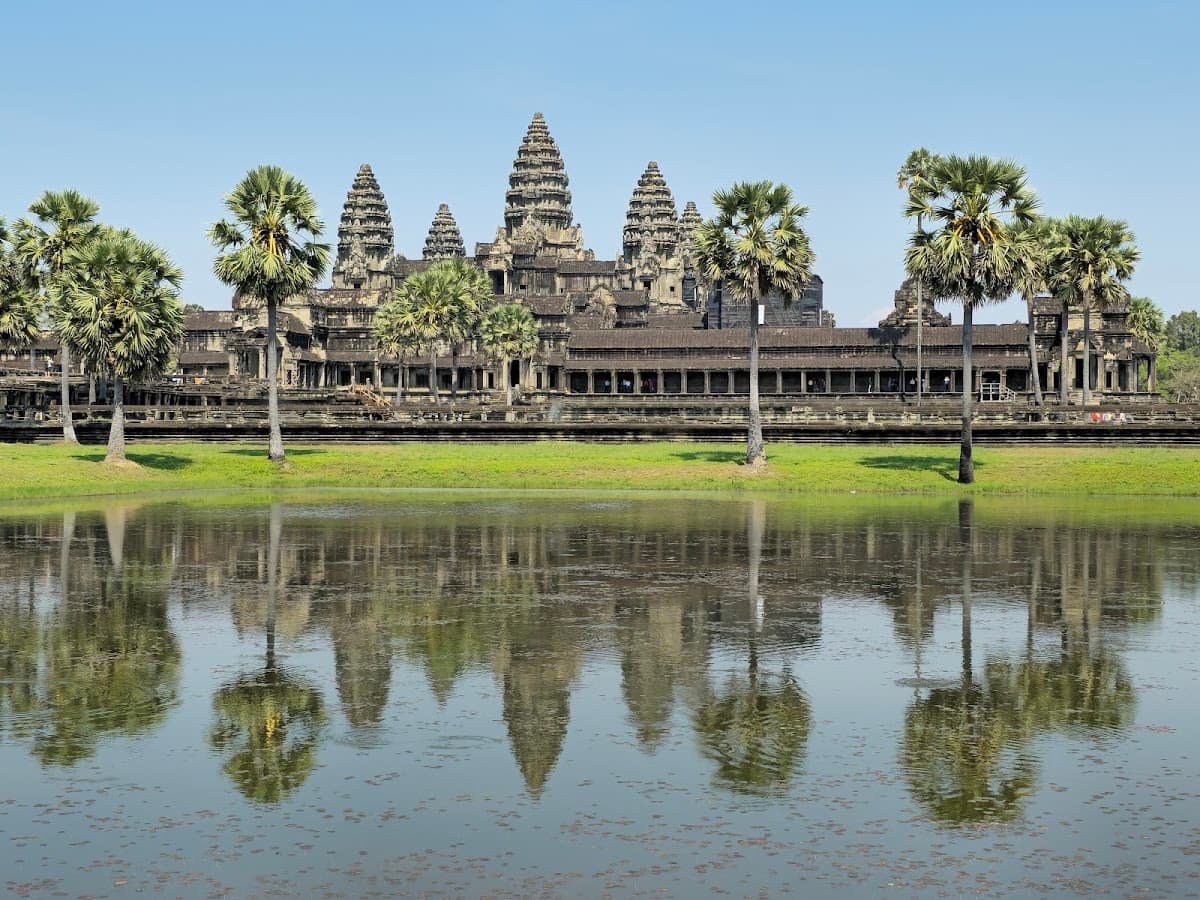
Unser Urteil: Das unbestrittene Meisterwerk der Khmer-Architektur und das größte religiöse Monument der Erde. Keine Reise nach Kambodscha ist ohne diesen Tempel vollständig.
Angkor Wat braucht keine Vorstellung — er prangt nicht ohne Grund auf der kambodschanischen Flagge. König Suryavarman II. ließ diesen dem Vishnu geweihten Hindu-Tempel zu Beginn des 12. Jahrhunderts errichten. Mit einer Fläche von 162,6 Hektar ist er das größte religiöse Bauwerk der Welt. Der Anblick beim Überqueren des 190 Meter langen Steindamms über den Wassergraben gehört zu den großen architektonischen Erlebnissen unseres Planeten. Die Basreliefs entlang der äußeren Galerie erstrecken sich über 800 Meter und zeigen Szenen aus der hinduistischen Mythologie, darunter das berühmte Quirlen des Milchozeans. Sei um 5:00 Uhr morgens da, um den Sonnenaufgang zu erleben — stell dich links vom Spiegelbecken auf, um das klassische Silhouettenfoto einzufangen. Nach Sonnenaufgang erkundest du die inneren Galerien und steigst in die dritte Ebene hinauf (auf 100 Besucher gleichzeitig begrenzt). Das Nachmittagslicht zwischen 15:00 und 17:00 Uhr bringt die westliche Fassade wunderschön zur Geltung. Plane mindestens zwei bis drei Stunden ein und nimm Wasser mit — im Inneren gibt es kaum Schatten.
2Bayon
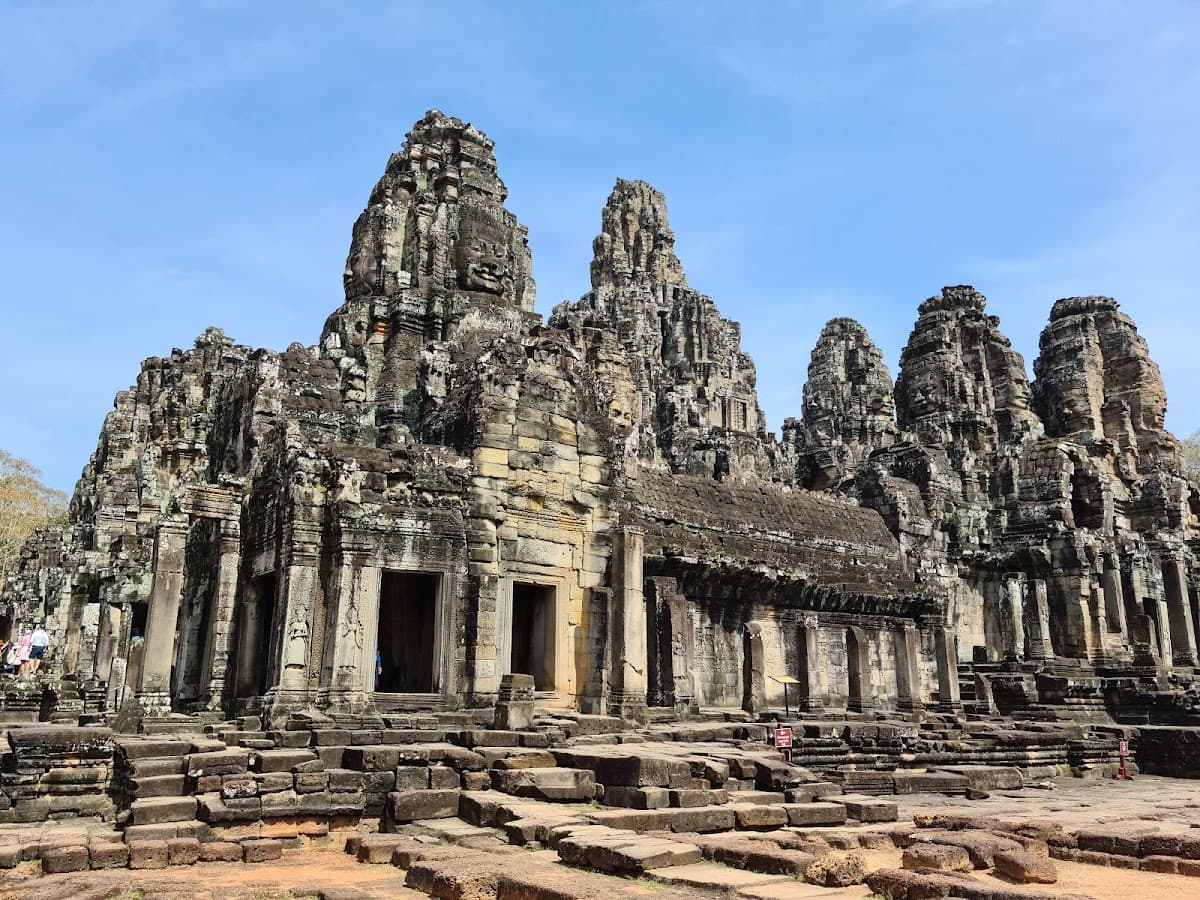
Unser Urteil: Der Tempel mit 216 lächelnden Steingesichtern ist eine der mystischsten und fotogensten Stätten ganz Südostasiens.
Bayon liegt im exakten Zentrum von Angkor Thom und ist sofort erkennbar an seinen 54 gotischen Türmen, die jeweils mit vier ruhigen, rätselhaften Gesichtern verziert sind — insgesamt 216 Gesichter. Erbaut von Jayavarman VII. im späten 12. Jahrhundert, war Bayon der letzte große Staatstempel des Khmer-Reiches. Die Basreliefs sind hier einzigartig, weil sie das Alltagsleben statt mythologischer Szenen darstellen: Marktszenen, Hahnenkämpfe, Fischfang und militärische Prozessionen. Komme früh am Morgen (7:00 bis 8:30 Uhr), wenn das Licht weich ist und die Menschenmassen dünn — ab 9:00 Uhr rollen die Reisebusse in Wellen an. Die obere Terrasse, auf der du den riesigen Steingesichtern Auge in Auge gegenüberstehst, ist das Highlight. Fototipp: Ein Weitwinkelobjektiv setzt die Gesichter dramatisch vor den Morgenwolken in Szene.
3Ta Prohm
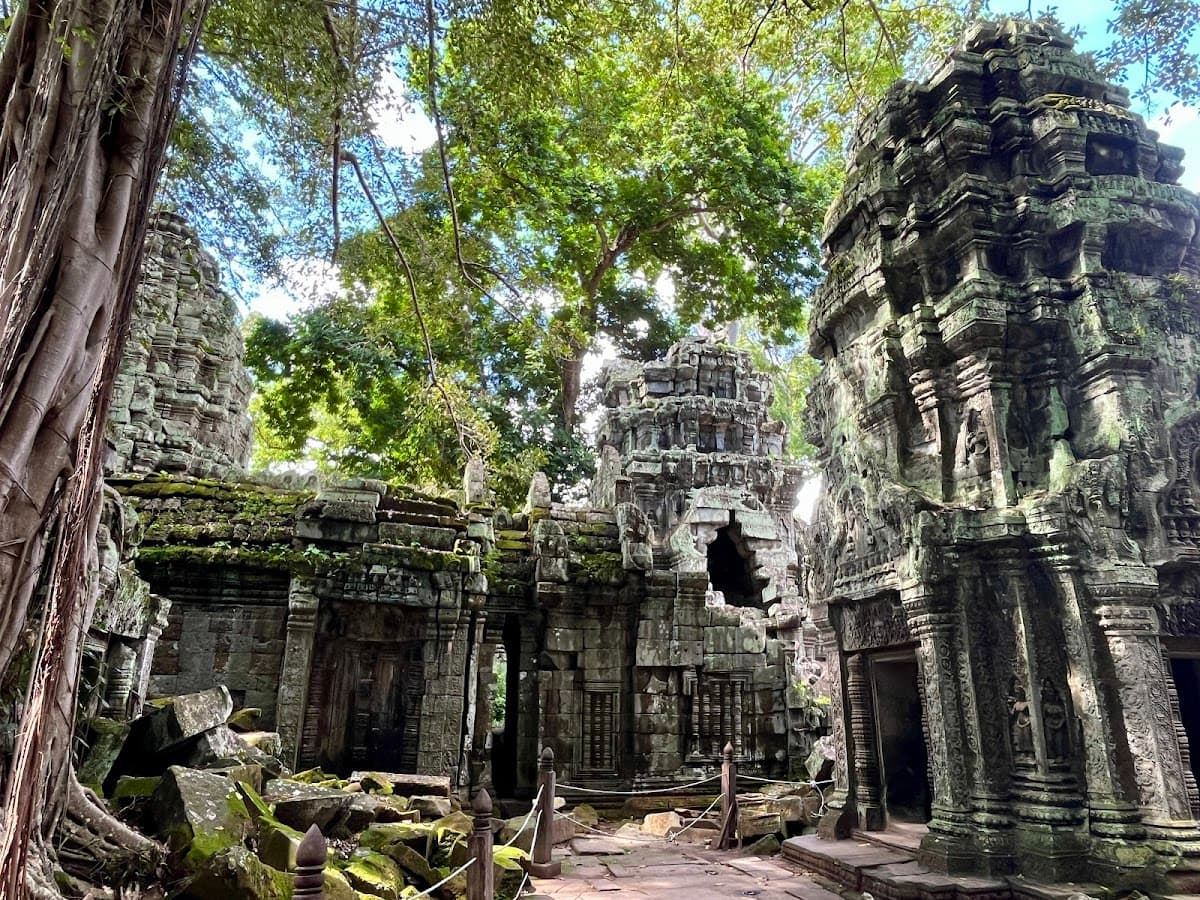
Unser Urteil: Der berühmte Tomb-Raider-Tempel, in dem sich die Natur langsam den alten Stein zurückerobert — absolut unvergesslich.
Ta Prohm ist der Tempel, der Angelina Jolie berühmt gemacht hat (oder andersherum). Dieses buddhistische Kloster wurde weitgehend unrestauriert belassen und wird von gewaltigen Kapok- und Würgefeigenbäumen verschlungen, deren Wurzeln über die Mauern fließen und Steinblöcke auseinanderdrücken. Der Effekt ist auf eindringliche Weise schön — Natur und Architektur in einer Zeitlupen-Umarmung. 1186 von Jayavarman VII. für seine Mutter erbaut, beherbergte Ta Prohm einst 12.640 Menschen und wurde von 3.140 Dörfern unterhalten. Der meistfotografierte Spot ist die riesige Wurzel über dem Türrahmen in der inneren Galerie — rechne mit einer Schlange. Um den schlimmsten Andrang zu vermeiden, komm vor 8:00 Uhr oder nach 15:30 Uhr. Die Dinosaurier-Schnitzerei an einer Wand nahe dem östlichen Gopura ist ein nettes Easter Egg für Suchfans.
4Banteay Srei
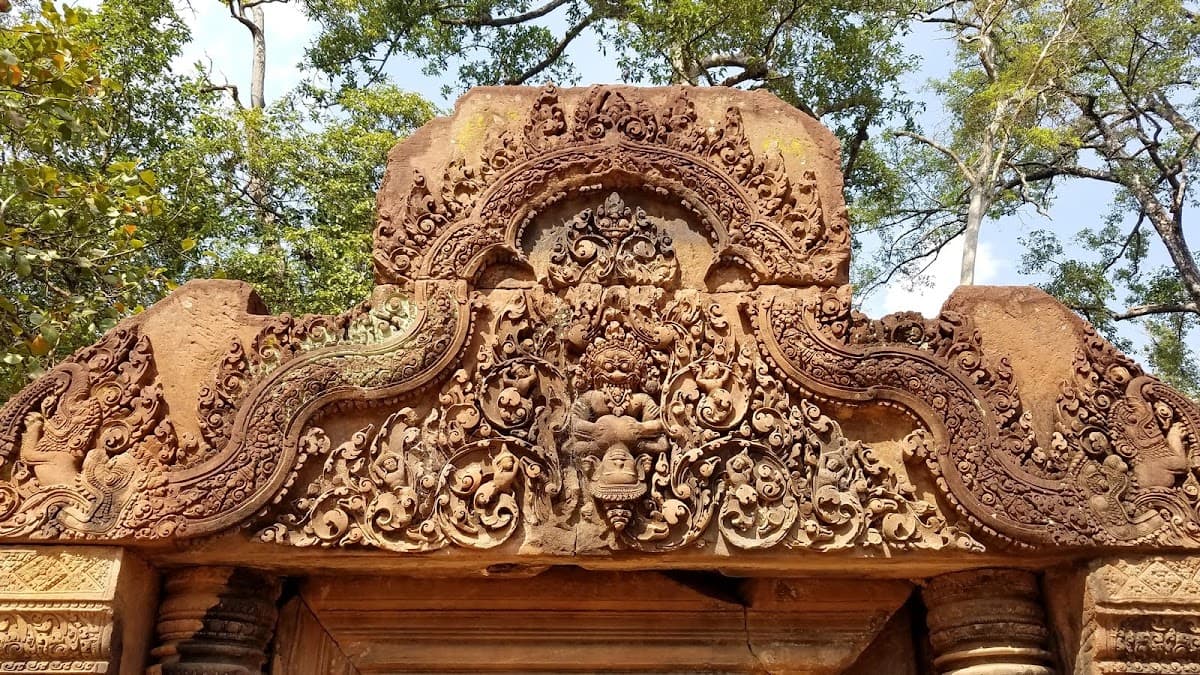
Unser Urteil: Das Juwel von Angkor — filigrane Schnitzereien aus rosa Sandstein, unerreicht in der gesamten Khmer-Welt.
Banteay Srei ist klein, aber perfekt. 25 Kilometer nordöstlich des Hauptkomplexes von Angkor gelegen, wurde dieser Hindu-Tempel aus dem 10. Jahrhundert aus rosa Sandstein gehauen — mit einer Detailtreue, die jeden anderen Tempel Kambodschas übertrifft. Die Türsturze und Giebel zeigen Szenen aus der hinduistischen Mythologie — Ravana, der den Berg Kailasa erschüttert, Krishna, der den Dämon Kamsa erschlägt — mit einer Präzision, die fast maschinengefertigt wirkt. Der Tempel ist kompakt und in einer Stunde zu erkunden, aber bring eine Lupe mit (wirklich), um die Miniaturschnitzereien zu würdigen. Der rosafarbene Stein leuchtet im Morgenlicht warm. Verbinde den Besuch mit Banteay Samre auf dem Rückweg. Die 45-minütige Fahrt von Siem Reap führt durch wunderschöne Landschaft — organisier dir ein Tuk-Tuk für die Hin- und Rückfahrt ($20 bis $25).
5Preah Khan
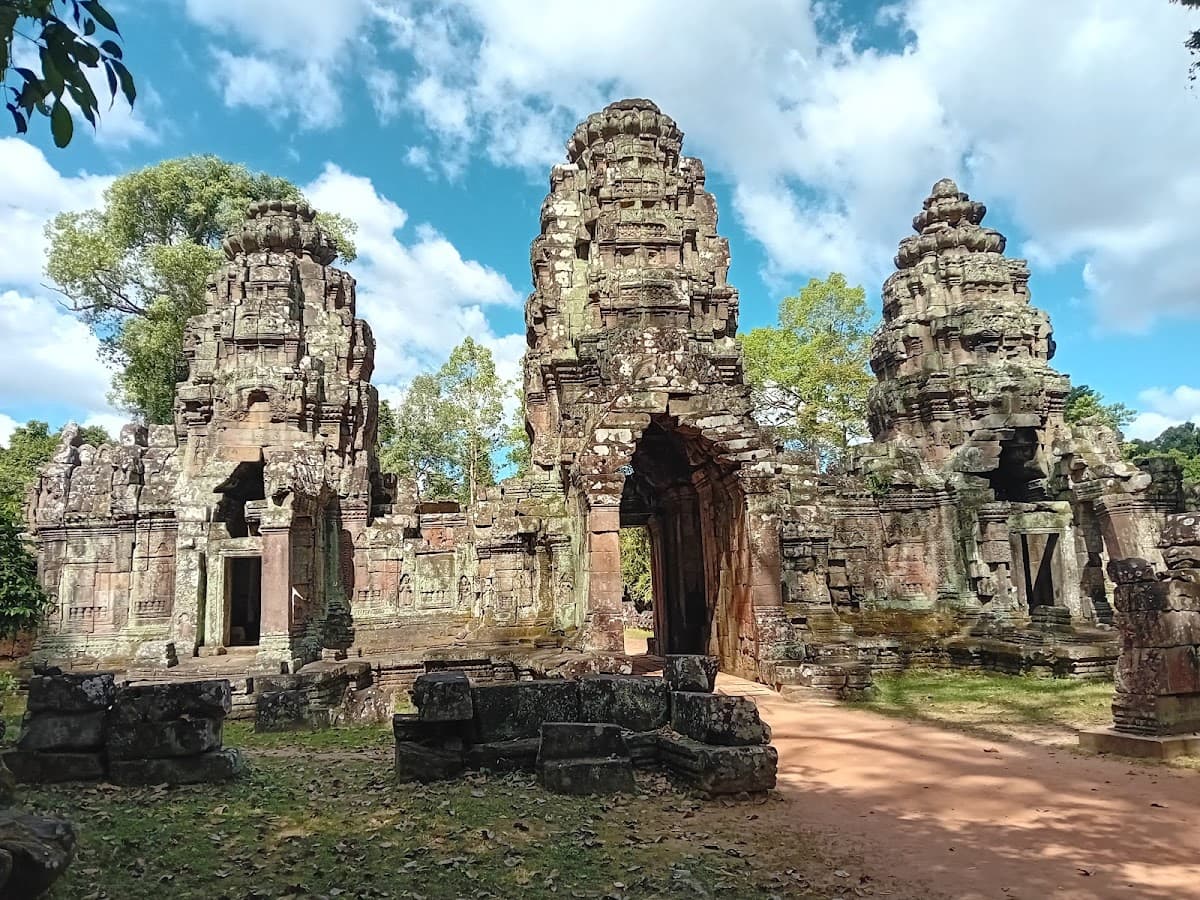
Unser Urteil: Ein riesiger, atmosphärischer Komplex, der es in puncto Schönheit mit Ta Prohm aufnimmt — aber nur einen Bruchteil des Andrangs hat.
Preah Khan ist der Tempel, den Archäologie-Enthusiasten lieben und Gelegenheitstouristen auslassen — und genau deshalb solltest du ihn besuchen. Dieser riesige Komplex, 1191 von Jayavarman VII. erbaut, diente als buddhistische Universität und beherbergte 100.000 Beamte und Bedienstete. Die langen Korridore erzeugen dramatische Licht- und Schatteneffekte, und im zentralen Heiligtum steht noch immer ein Linga. Das zweistöckige Gebäude mit runden Säulen (einzigartig in Angkor) wird als ehemalige Kornkammer oder Bibliothek vermutet. Preah Khan liegt am Großen Rundweg und passt perfekt zu Neak Pean und Ta Som. Plane ein bis zwei Stunden ein, um ihn richtig zu erkunden — der Osteingang mit seiner Allee aus Garudas ist der fotogenste Zugang.
6Ta Keo
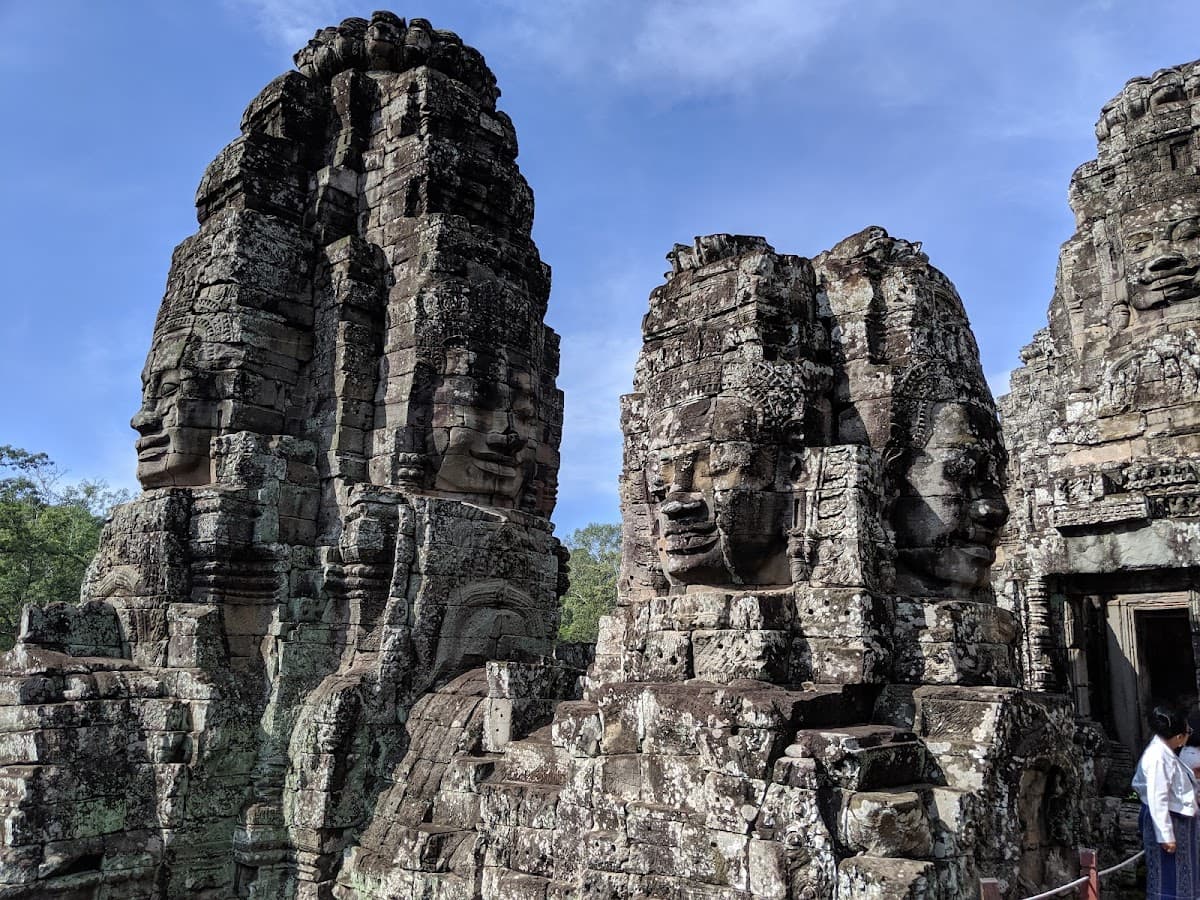
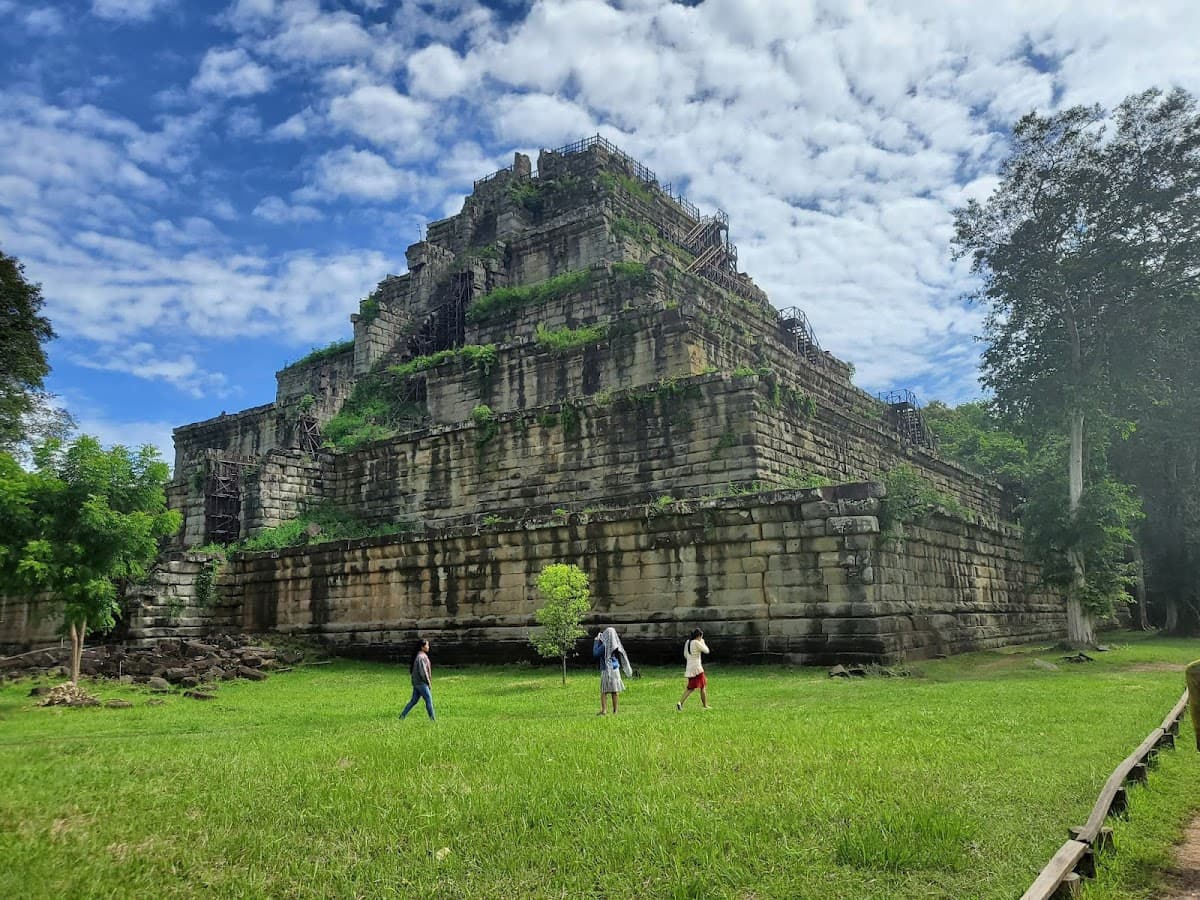
Unser Urteil: Ein unvollendeter Pyramidentempel mit steilen Aufstiegen und unglaublichen Ausblicken — etwas für Abenteuerlustige.
Ta Keo ist der Tempel, den Angkor nie fertiggestellt hat. Der Bau wurde im frühen 11. Jahrhundert aufgegeben, möglicherweise weil ein Blitzeinschlag als böses Omen gedeutet wurde. Übrig geblieben ist eine rohe, undekorierte fünfstufige Pyramide, die dir ein eindrucksvolles Gefühl dafür vermittelt, wie diese Tempel gebaut wurden — Block für gewaltigen Block. Der Aufstieg ist steil und ungeschützt (kein Geländer), aber die Aussicht vom Gipfel ist die Mühe wert. Ta Keo liegt am Kleinen Rundweg zwischen Ta Prohm und Thommanon und lässt sich leicht in jede Route einbauen. Die meisten Besucher gehen schnell durch, sodass du die oberen Ebenen oft für dich allein hast. Trag gute Schuhe mit gutem Profil.
7Banteay Kdei
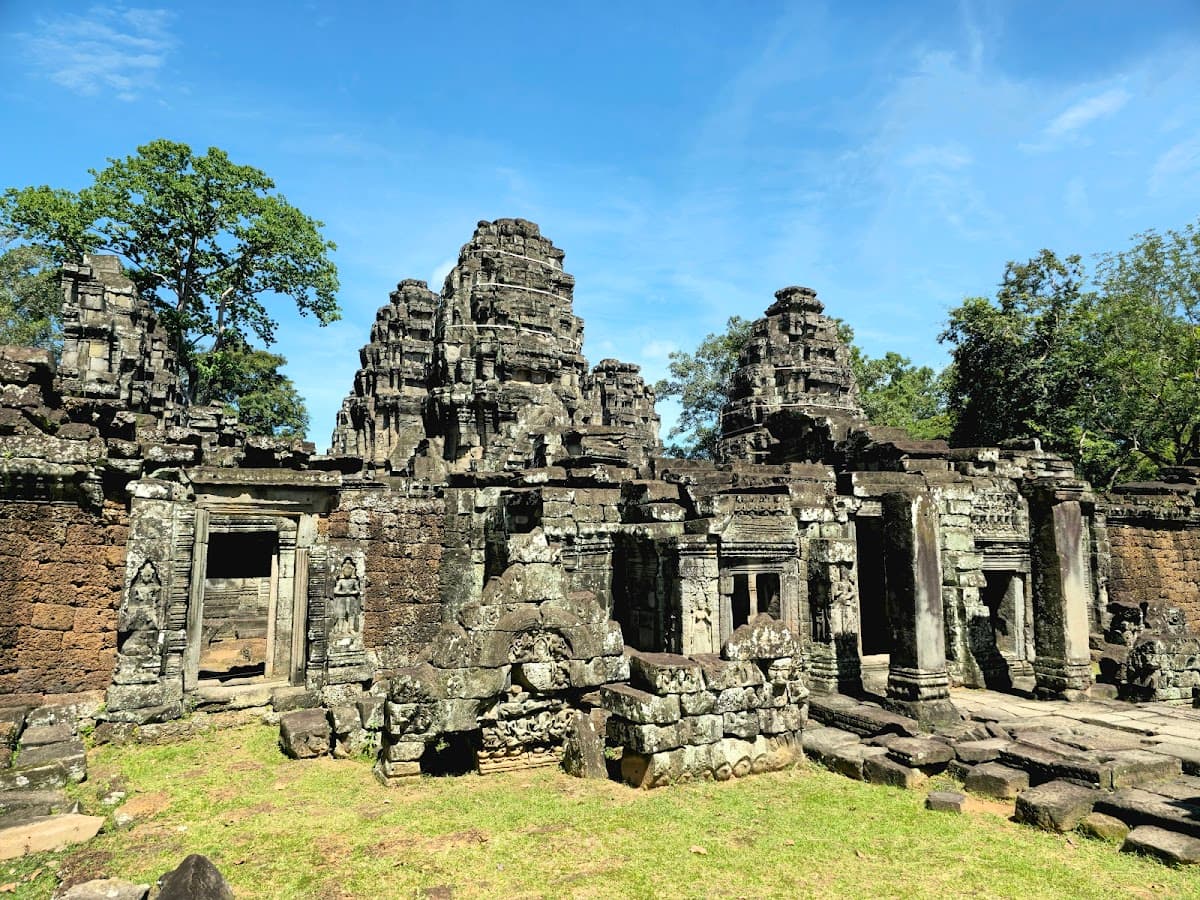
Unser Urteil: Ein friedliches, fotogenes Kloster, das sich perfekt mit dem benachbarten Reservoir Srah Srang verbinden lässt.
Banteay Kdei ist die ruhige Alternative zu Ta Prohm — gleiche Epoche, ähnlicher Stil, aber ohne den Tomb-Raider-Ruhm und den daraus resultierenden Andrang. Dieses buddhistische Kloster zeigt wunderschön geschnitzte Devatas (himmlische Tänzerinnen) und lange, mit Moos überzogene Korridore. Die Halle der Tänzer mit ihren mit Apsaras geschnitzten Säulen ist das Highlight. Geh weiter zum Osteingang und überquere die Straße zum Srah Srang, dem königlichen Badebecken — ein wunderschöner Ort, um zu sitzen und den Sonnenuntergang auf dem stillen Wasser zu bestaunen. Banteay Kdei liegt am Kleinen Rundweg und nimmt 45 Minuten bis eine Stunde in Anspruch. Japanische Archäologen restaurieren ihn schrittweise und legen erstaunliche Details frei, die jahrhundertelang vom Dschungel verborgen waren.
8Pre Rup
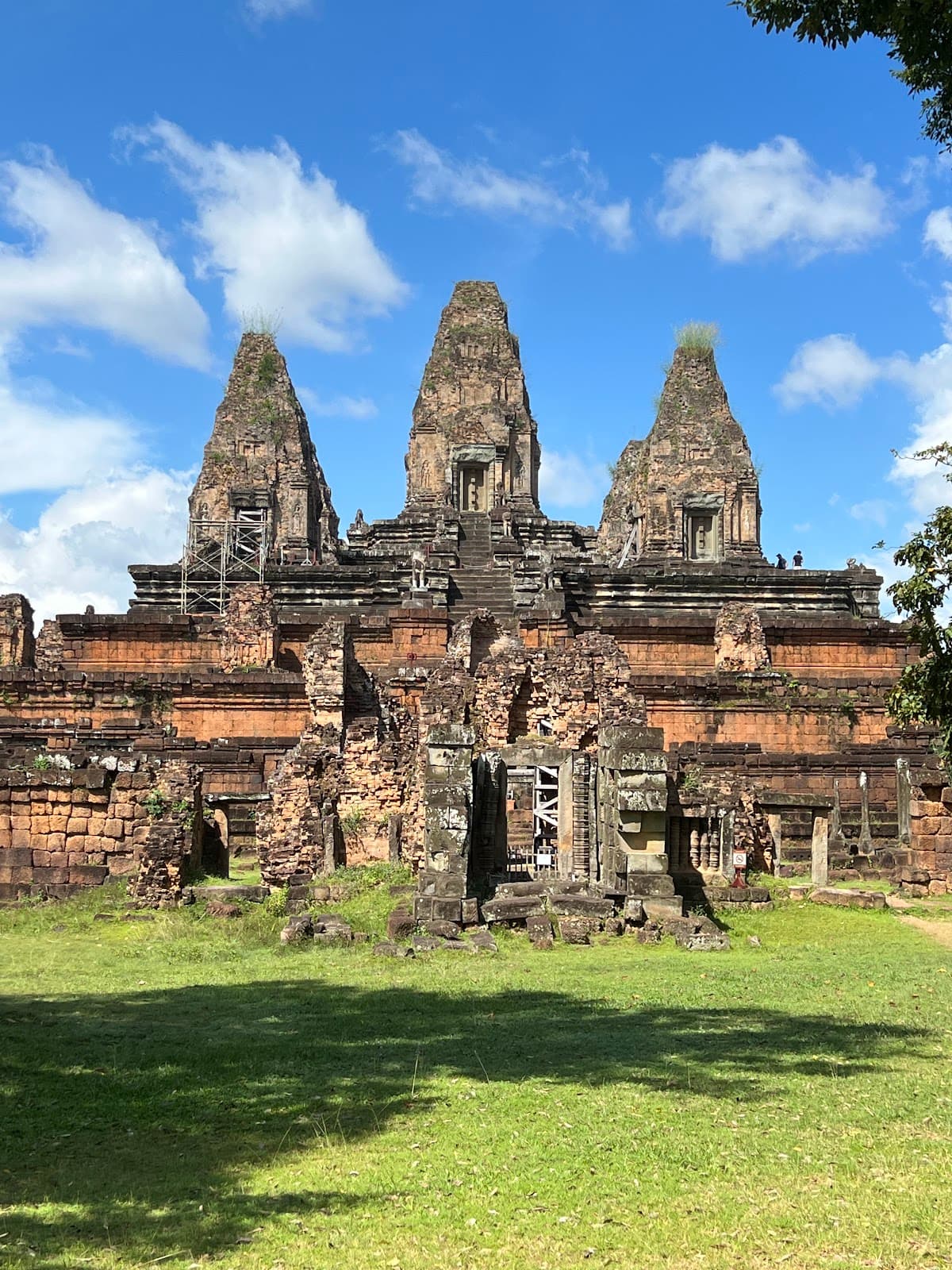
Unser Urteil: Ein dramatischer Sonnenuntergangstempel mit Panoramablicken über das Dschungeldach von seinen oberen Stufen aus.
Pre Rup ist ein hinduistischer Tempel aus dem 10. Jahrhundert, der als königliches Krematorium diente — sein Name bedeutet wörtlich „den Körper drehen“. Die drei Stufen dieses Tempelbergs sind aus Ziegel und Laterit erbaut und verleihen ihm eine warme, erdige Farbe, die im Sonnenuntergang golden leuchtet. Steig auf die Spitze für 360-Grad-Blicke über die Angkor-Ebene — an klaren Tagen kannst du in der Ferne die Türme von Angkor Wat erkennen. Pre Rup liegt am Großen Rundweg und ist eine der besten Alternativen zu Phnom Bakheng, um den Sonnenuntergang zu erleben — mit weit weniger Menschen. Die Löwenwächter am Sockel und die Ziegeltürme am Gipfel sind großartige Fotomotive. Plane 30 bis 45 Minuten ein.
9Phnom Bakheng
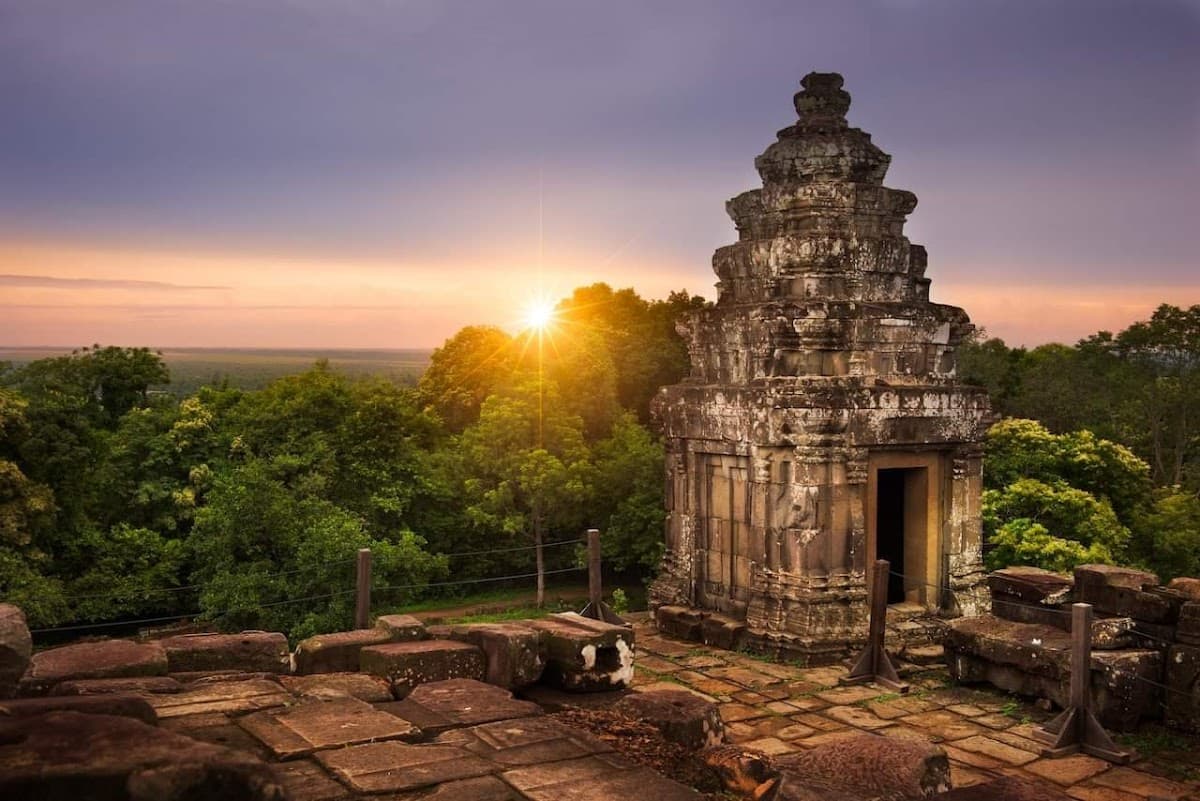
Unser Urteil: Der klassische Sonnenuntergangsspot in Angkor — komm früh und sei auf Menschenmassen vorbereitet, aber die Aussicht ist es wert.
Phnom Bakheng ist ein Tempelberg aus dem 9. Jahrhundert, der auf einem natürlichen Hügel errichtet wurde — der höchste Punkt im unmittelbaren Angkor-Gebiet. Der Blick auf Angkor Wat von oben bei Sonnenuntergang ist ikonisch, ebenso wie der Andrang — der Zugang ist auf 300 Personen gleichzeitig begrenzt, und die Schlange beginnt sich ab 16:00 Uhr zu bilden. Der 20-minütige Aufstieg (oder die nun eingestellte Elefantenfahrt) führt zu einer fünfstufigen Pyramide mit 108 Türmen. Wenn du die Sonnenuntergangsaussicht ohne Stress willst, probier Pre Rup oder die Ballonfahrt. Für Fotografen ist Phnom Bakheng bei Sonnenaufgang interessanter, wenn du die Plattform fast für dich allein hast. Der Tempel selbst, das älteste große Bauwerk im Angkor-Gebiet, ist architektonisch bedeutsam als der erste in Angkor errichtete Tempelberg.
10South Gate of Angkor Thom
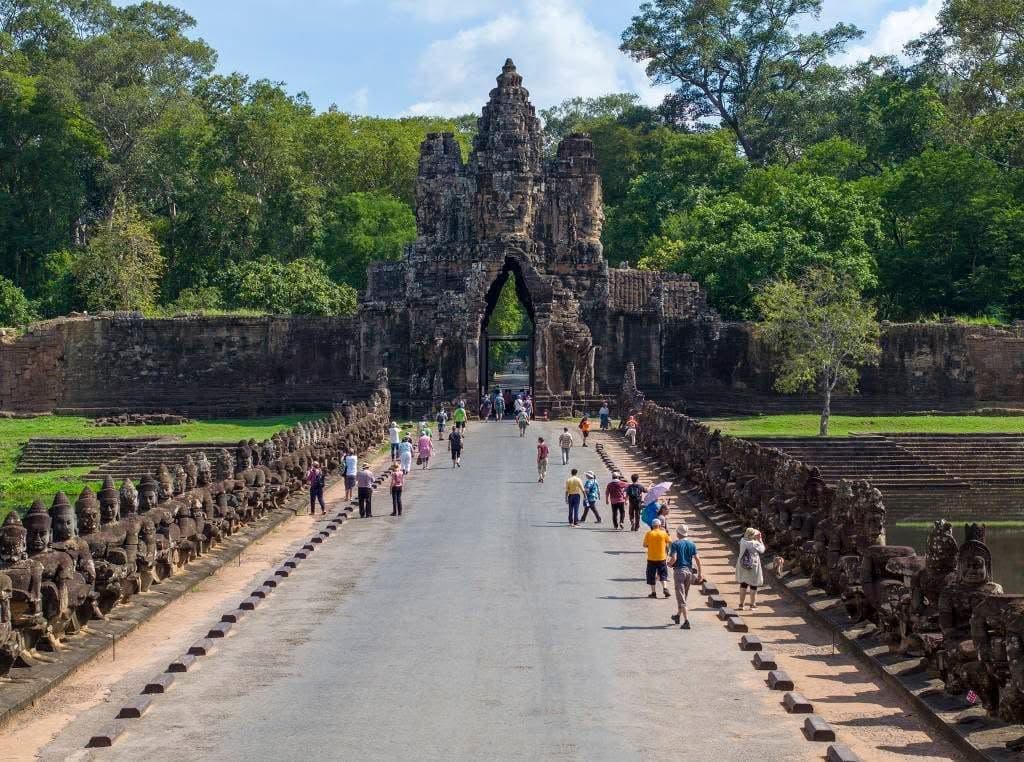
Unser Urteil: Das meistfotografierte Tor Kambodschas — der mit Göttern und Dämonen gesäumte Damm ist eine unvergessliche Einleitung zu Angkor Thom.
Das Südtor von Angkor Thom ist kein eigenständiger Tempel, sondern der prächtige Eingang zur ummauerten Stadt Angkor Thom — und es verdient einen eigenen Eintrag, weil es zu den optisch markantesten Bauwerken im gesamten Park zählt. Die Zufahrtsstraße wird auf jeder Seite von 54 Steinfiguren flankiert — Devas (Götter) auf der linken, Asuras (Dämonen) auf der rechten Seite —, die alle eine riesige Naga (Schlange) ziehen, in einer Darstellung des Quirlens des Milchozeans. Der Torturm selbst zeigt vier massive Gesichter des Avalokiteshvara, die in alle vier Himmelsrichtungen blicken. Die meisten Besucher fahren ohne Halt hindurch — ein Fehler. Park dein Tuk-Tuk vor dem Damm und geh die vollen 200 Meter zu Fuß, um Maßstab und Symbolik zu würdigen.
Weitere sehenswerte Tempel
Über die Top 12 und die Geheimtipps hinaus enthalten der archäologische Park von Angkor und seine Umgebung Dutzende weiterer Tempel, die einen Besuch wert sind. Diese 13 zusätzlichen Tempel reichen von winzigen Schmuckkästchen-Heiligtümern am Kleinen Rundweg bis zu den vor-angkorianischen Ruinen von Sambor Prei Kuk. Die meisten sehen nur sehr wenige Besucher und bieten einen friedlichen Kontrast zu den Hauptstätten.
13Neak Pean
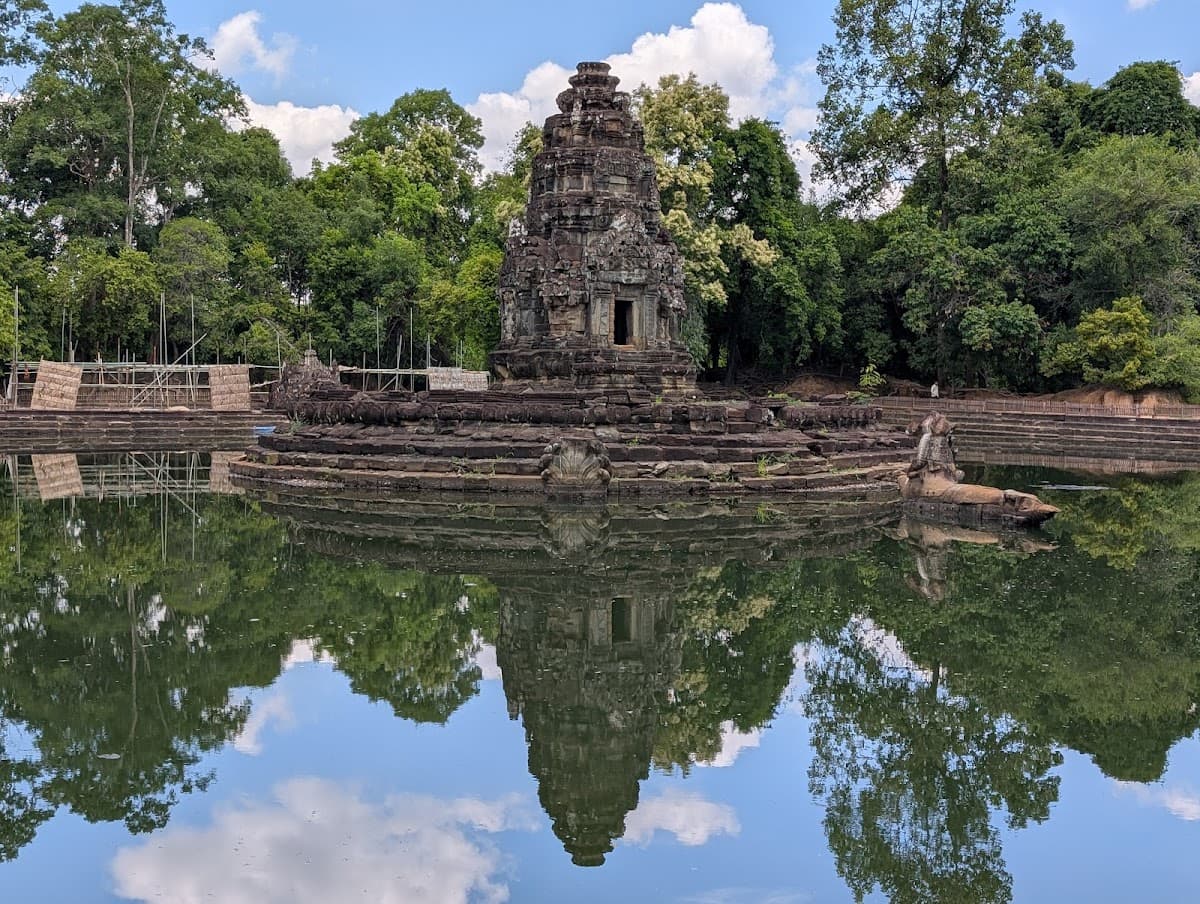
Unser Urteil: Ein einzigartiger Inseltempel inmitten eines Reservoirs — heiter und mystisch, einer der originellsten Entwürfe von Jayavarman VII.
Neak Pean ist ein kleiner buddhistischer Tempel, der auf einer künstlichen Insel im Zentrum des Jayatataka Baray errichtet wurde — einem heute trockengelegten Reservoir am Großen Rundweg. Er wurde von Jayavarman VII. im späten 12. Jahrhundert erbaut und stellt den mythischen Himalaya-See Anavatapta dar. Der Tempel sitzt auf einer kreisrunden Insel, umgeben von vier kleineren Becken, jedes mit einem Wasserspeier in Form eines Kopfes (Mensch, Elefant, Pferd, Löwe). Du näherst dich über einen langen Holzsteg über das Wasser. Er ist klein und nimmt nur 30 Minuten in Anspruch, aber die Atmosphäre ist anders als an jedem anderen Tempel von Angkor. Am besten am Morgen besuchen, wenn die Spiegelungen am schärfsten sind. Zusammen mit Ta Som und East Mebon bildet er ein natürliches Dreigestirn am Großen Rundweg.
14East Mebon
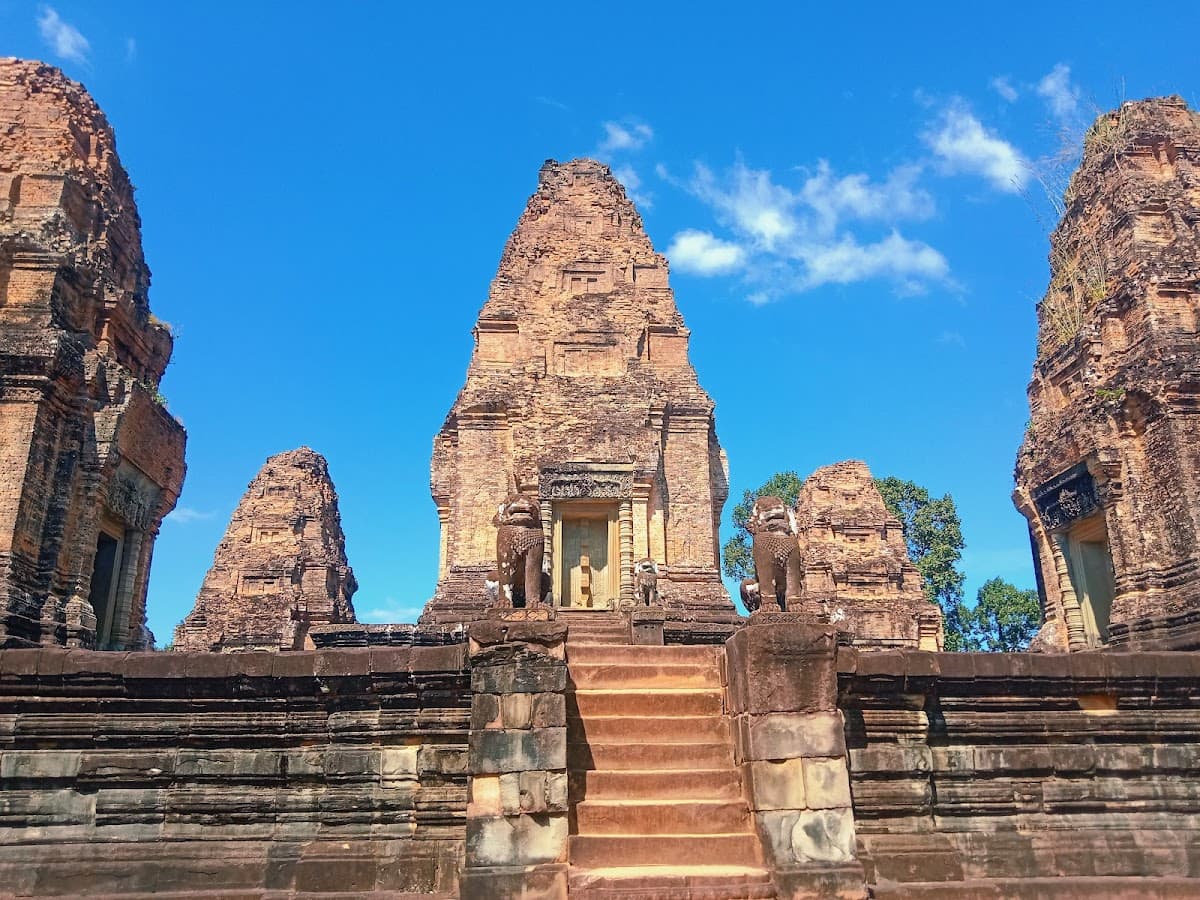
Unser Urteil: Ein wunderschön symmetrischer Tempel aus dem 10. Jahrhundert, umgeben von steinernen Elefanten — ein essenzieller Stopp am Großen Rundweg, der von Touristen oft ausgelassen wird.
East Mebon wurde 953 n. Chr. von König Rajendravarman als Shiva geweihter Hindu-Tempel erbaut. Er stand einst auf einer heute trockengelegten Insel im riesigen East-Baray-Reservoir. Der Tempel ist berühmt für seine lebensgroßen Steinelefanten an jeder Ecke der ersten und zweiten Ebene und für seine perfekt symmetrische Anordnung mit fünf Türmen. Die filigranen Türsturze und Scheintüren gehören zu den feinsten Beispielen der Khmer-Schnitzkunst des 10. Jahrhunderts. Die Erkundung dauert 30 bis 45 Minuten und der Tempel ist selten überlaufen. Er liegt am Großen Rundweg zwischen Pre Rup und Ta Som.
15Ta Som
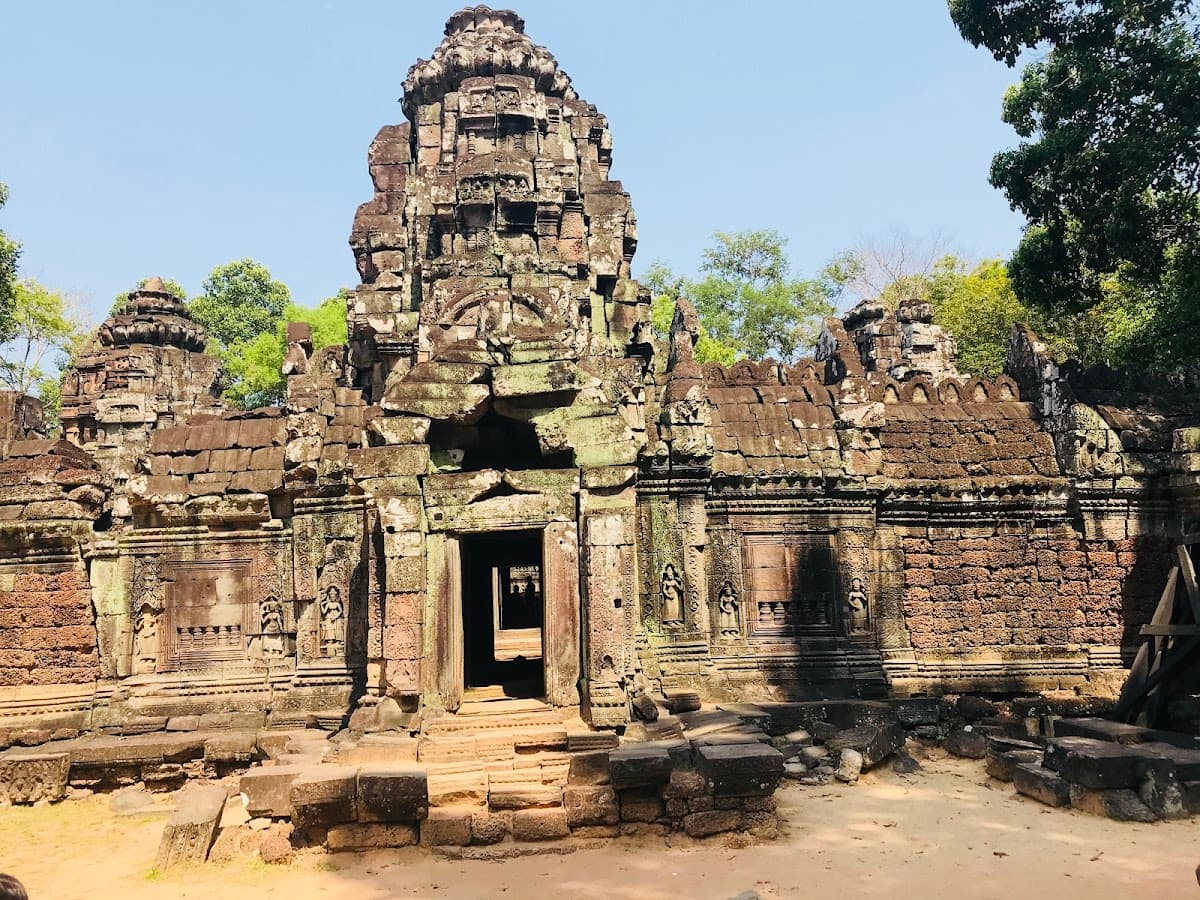
Unser Urteil: Ein friedliches Juwel am Großen Rundweg mit einem von Würgefeigen überwachsenen Osttor — der fotogenste Moment nach Ta Prohm.
Ta Som ist ein kleiner, eleganter Tempel, der im späten 12. Jahrhundert von Jayavarman VII. erbaut und seinem Vater geweiht wurde. Sein östliches Gopura (Eingangsturm) ist fast vollständig von den Wurzeln einer riesigen Würgefeige umschlungen und schafft einen der meistfotografierten Rahmen in Angkor. Der Tempel folgt einem flachen Grundriss ähnlich dem von Ta Prohm und Banteay Kdei, aber in kleinerem Maßstab. Du kannst ihn in 30 Minuten erkunden. Er liegt am östlichen Ende des Großen Rundwegs und sieht im Vergleich zu den Haupttempeln nur sehr wenige Besucher. Verbinde ihn mit Neak Pean und East Mebon für eine vollständige Schleife des Großen Rundwegs.
16Thommanon
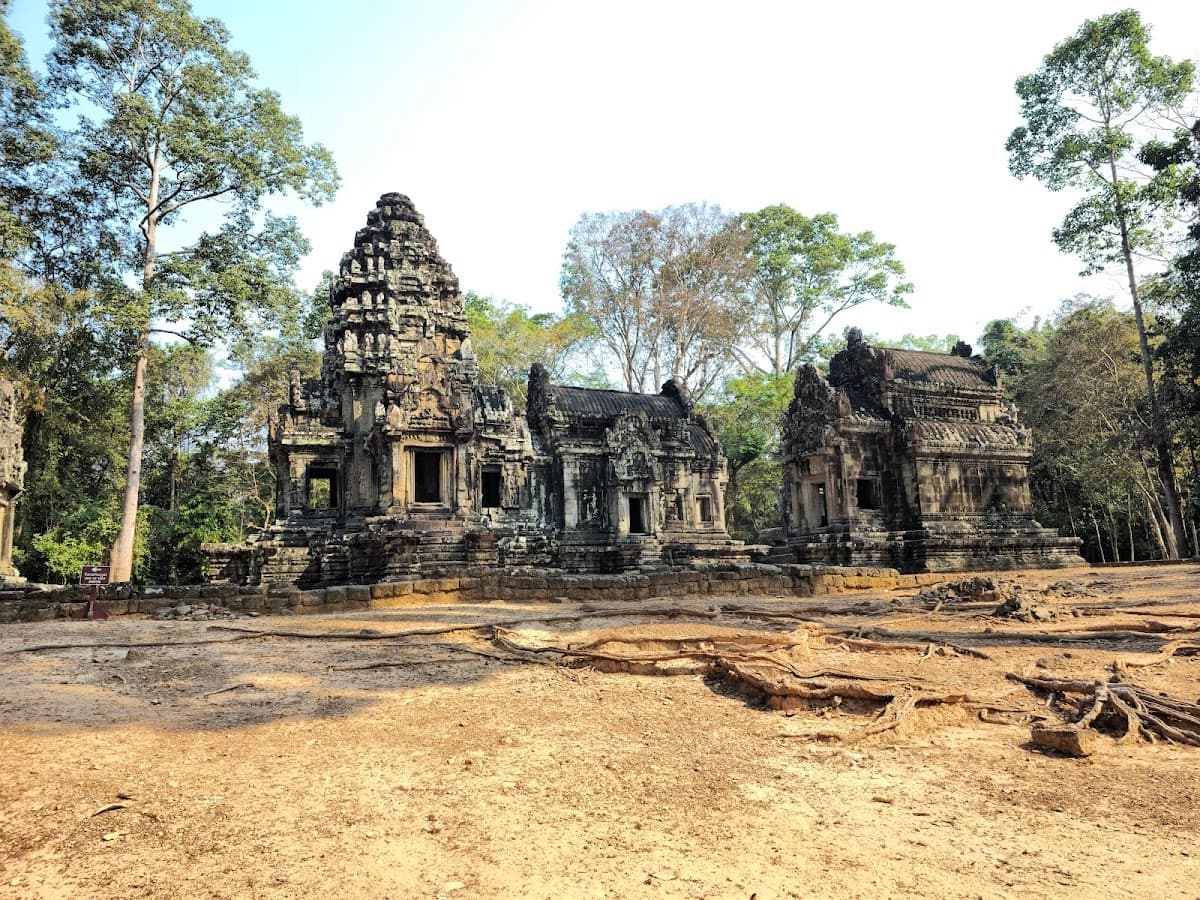
Unser Urteil: Ein winziger Schmuckkästchen-Tempel mit exquisiten Schnitzereien — leicht als kurzer Stopp am Kleinen Rundweg zu besuchen.
Thommanon ist ein kleiner, aber überaus reich verzierter Hindu-Tempel, der zu Beginn des 12. Jahrhunderts während der Herrschaft von Suryavarman II. errichtet wurde — derselbe König, der auch Angkor Wat erbaute. Er liegt direkt östlich des Siegestors von Angkor Thom, genau gegenüber seinem Zwillingstempel Chau Say Tevoda. Trotz seiner geringen Größe übertrifft die Qualität seiner Devata-Schnitzereien (weibliche Gottheiten) sogar Angkor Wat selbst. Restauriert von der EFEO (Französische Schule des Fernen Ostens), ist er in ausgezeichnetem Zustand. Ein 20-minütiger Besuch reicht aus, und er bildet ein perfektes Paar mit Chau Say Tevoda direkt gegenüber der Straße.
17Chau Say Tevoda
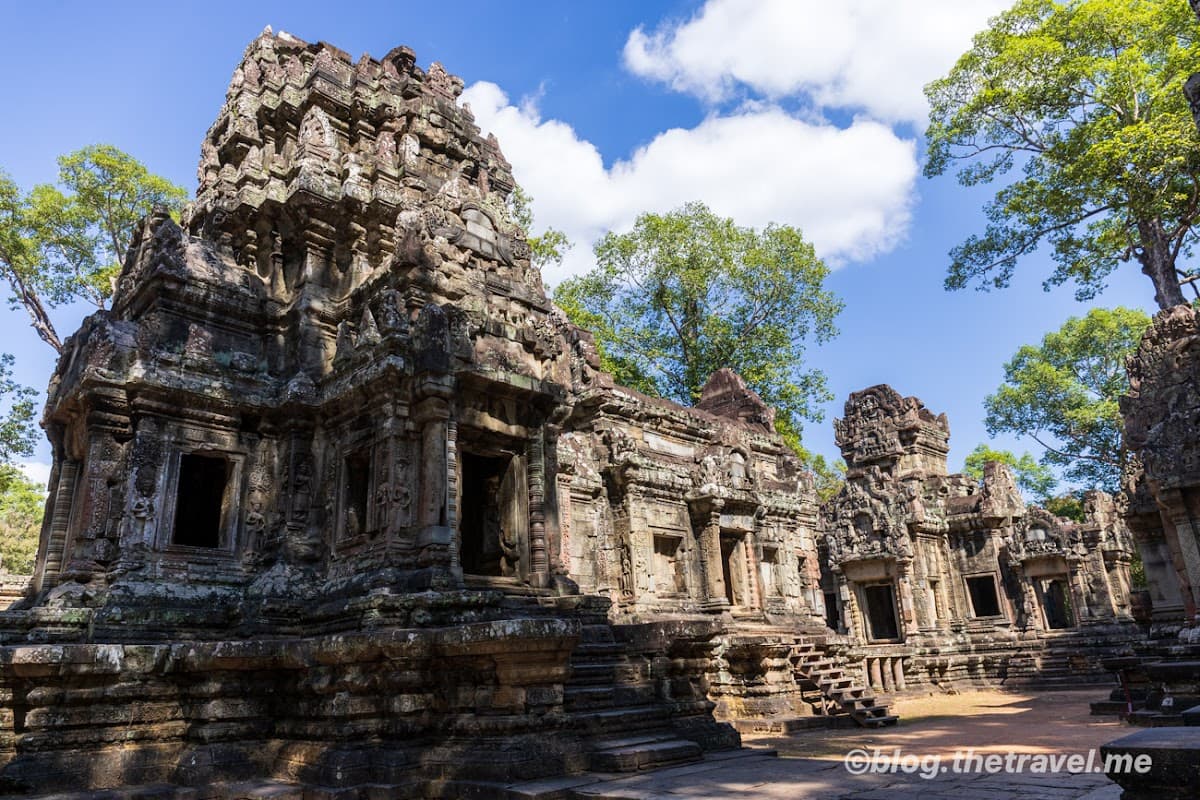
Unser Urteil: Der Spiegelzwilling von Thommanon — ein wunderschön restaurierter kleiner Tempel, an dem die meisten Besucher direkt vorbeilaufen.
Chau Say Tevoda liegt direkt gegenüber von Thommanon und wurde in derselben Epoche (frühes 12. Jahrhundert) errichtet. Er war Vishnu und Shiva geweiht. Nach Jahren der Vernachlässigung und nahezu vollständigem Einsturz wurde er von einem chinesischen Team akribisch restauriert und 2012 wiedereröffnet. Der Tempel zeigt feine Giebel mit Darstellungen aus der hinduistischen Mythologie und elegante Devata-Figuren. Der Besuch dauert etwa 20 Minuten, und obwohl er direkt an der Hauptstraße des Kleinen Rundwegs liegt, sieht er fast keine Menschenmassen. Besuche Thommanon und Chau Say Tevoda zusammen — das Paar nimmt unter einer Stunde in Anspruch.
18Banteay Samré
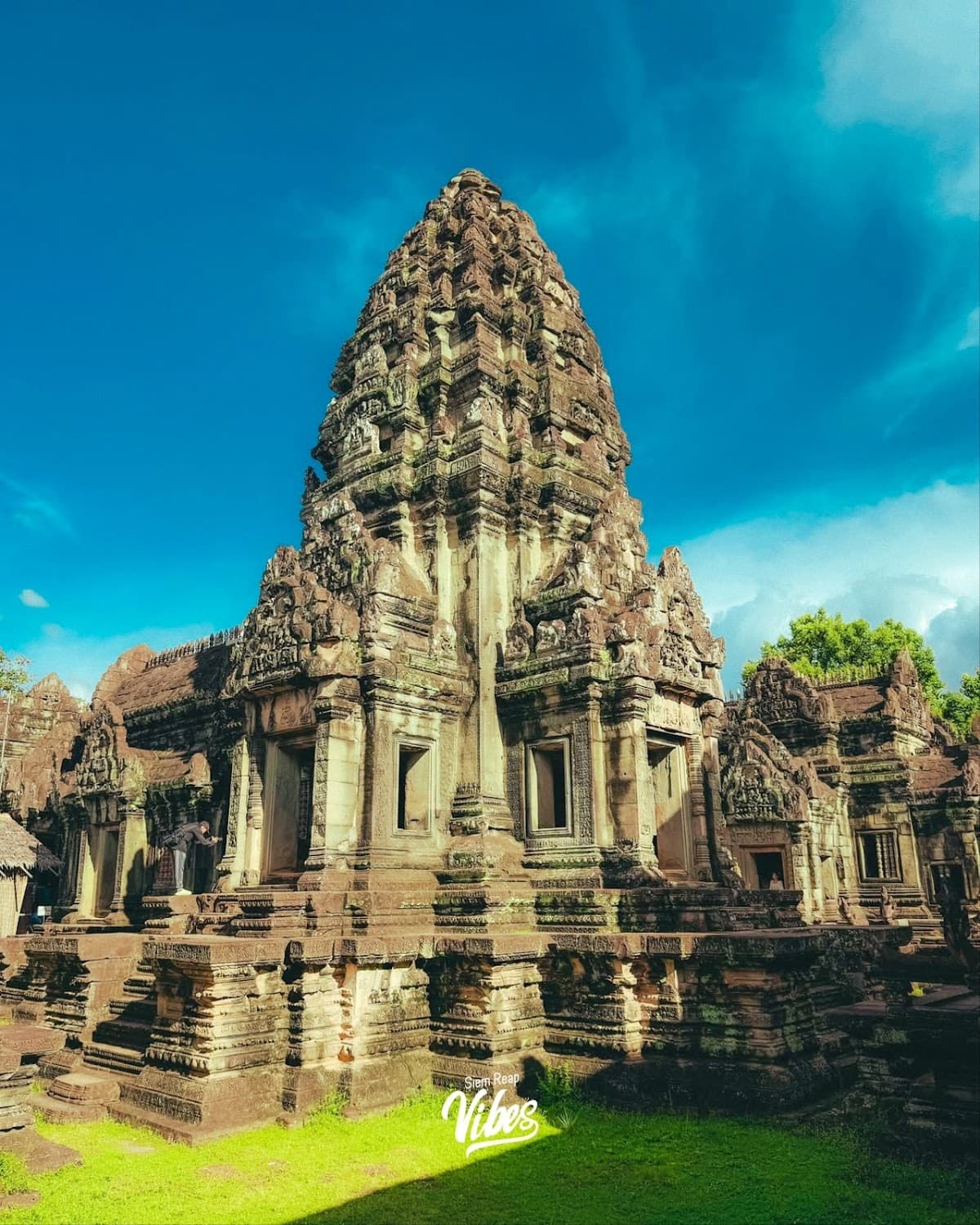
Unser Urteil: Ein gut erhaltener äußerer Tempel mit einem schönen Wassergraben und Galerien — eines der am meisten unterschätzten Angkor-Erlebnisse.
Banteay Samre ist ein Hindu-Tempel aus dem frühen 12. Jahrhundert, im selben Stil wie Angkor Wat erbaut, aber weit von den Hauptrundwegen entfernt. Benannt nach dem Volk der Samre (einer alten ethnischen Gruppe), zeichnet er sich durch einen inneren Hof aus, der von überdachten Galerien umgeben ist, ein erhöhtes zentrales Heiligtum und einen Wassergraben, der in der Regenzeit noch immer Wasser führt. Die Schnitzereien sind dank einer vollständigen Anastylose-Restaurierung bemerkenswert gut erhalten. Etwa 5 Kilometer östlich des East Baray gelegen, sieht er nur sehr wenige Besucher und bietet ein friedliches, unbeeiltes Erlebnis. Plane 45 Minuten bis eine Stunde ein.
19Srah Srang
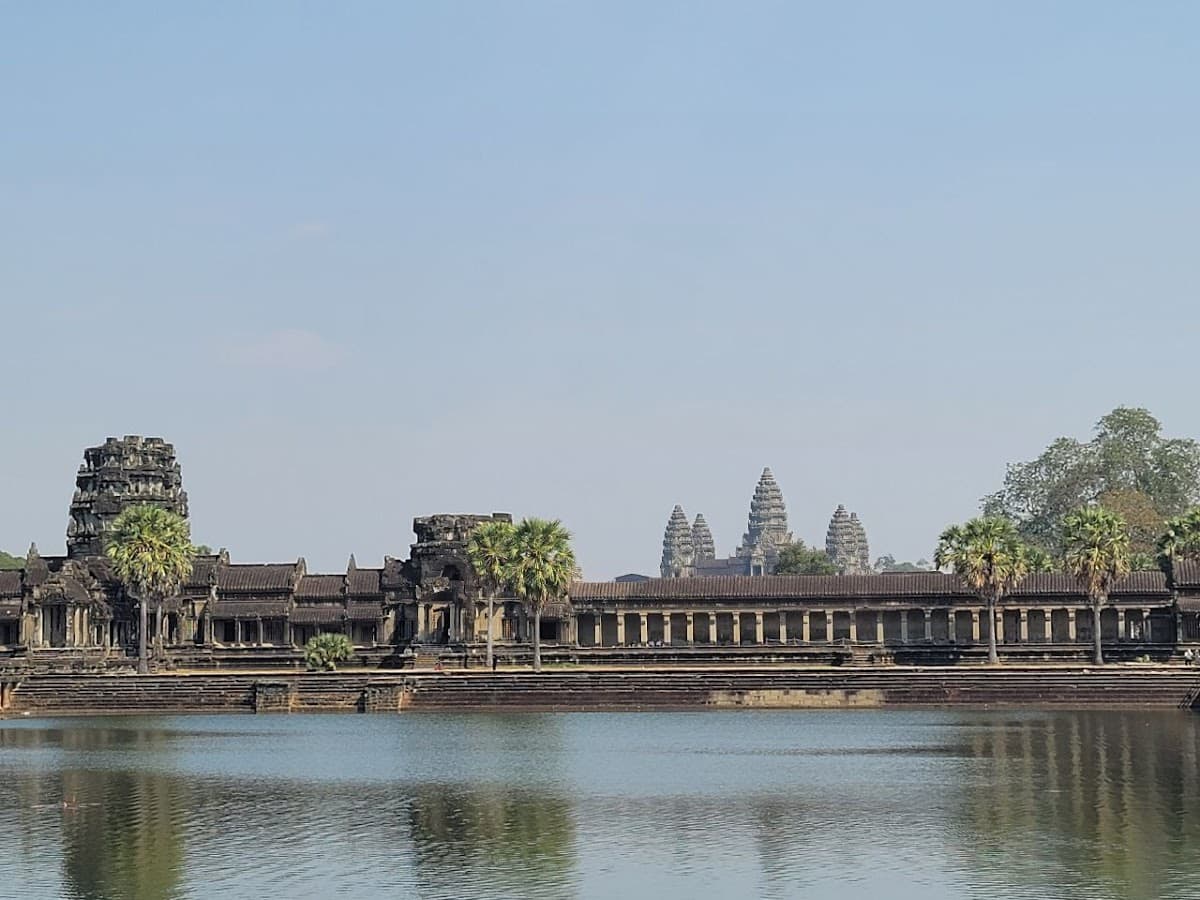
Unser Urteil: Ein friedliches königliches Badebecken gegenüber von Banteay Kdei — der beste alternative Sonnenaufgangsspot mit fast keinem Andrang.
Srah Srang ist ein großes Reservoir (700 mal 300 Meter), das im 10. Jahrhundert erbaut und später von Jayavarman VII. modifiziert wurde. Eine Sandstein-Anlegestelle mit Naga-Balustraden zeigt nach Osten und macht es zu einer atemberaubenden alternativen Sonnenaufgangs-Location mit weit weniger Besuchern als Angkor Wat. Das Wasser spiegelt den Himmel im Morgengrauen wunderschön. Einheimische nutzen das Reservoir noch immer zum Baden und Fischen. Es liegt direkt östlich von Banteay Kdei und nimmt nur 20 Minuten in Anspruch. Verbinde es mit Banteay Kdei und Prasat Kravan für einen ruhigen Abstecher am Kleinen Rundweg.
20Bakong
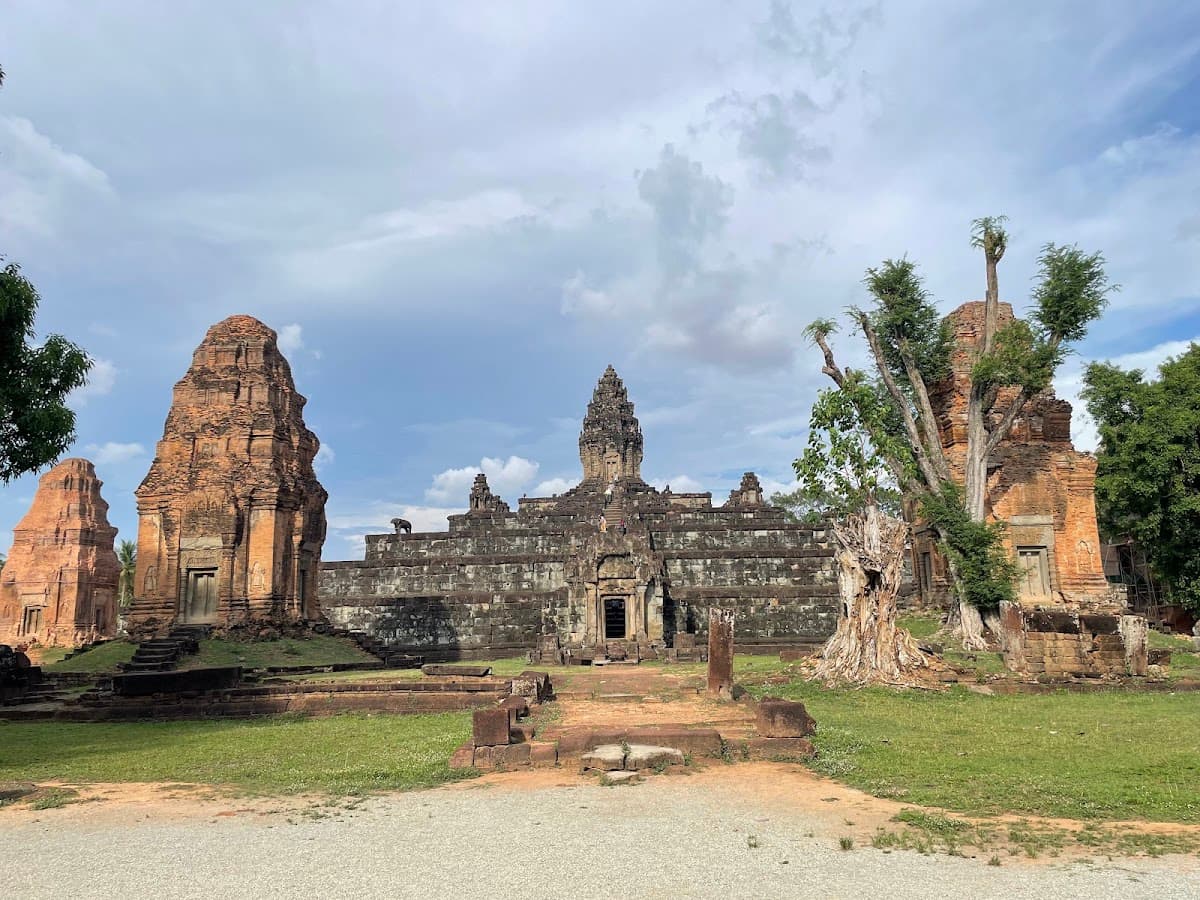
Unser Urteil: Die älteste und größte Pyramide der Roluos-Gruppe — die Geburtsstätte der klassischen Khmer-Architektur.
Bakong ist das Herzstück der Roluos-Gruppe, einer Ansammlung der ältesten erhaltenen Tempel der Angkor-Ära, 13 Kilometer östlich von Siem Reap gelegen. Erbaut 881 n. Chr. von König Indravarman I., war er der erste in Sandstein errichtete Tempelberg und diente als Staatstempel der Hauptstadt Hariharalaya. Die fünfstufige Pyramide wird von einem einzelnen Turm bekrönt und ist von acht kleineren Ziegeltürmen umgeben, die mit Stuck verziert sind. Steinerne Elefanten bewachen die Ecken. Er legte den architektonischen Bauplan fest, der sich 250 Jahre später zu Angkor Wat weiterentwickeln sollte. Plane 45 Minuten zum Erkunden ein. Verbinde ihn mit Preah Ko und Lolei für eine vollständige Roluos-Morgenfahrt.
21Preah Ko
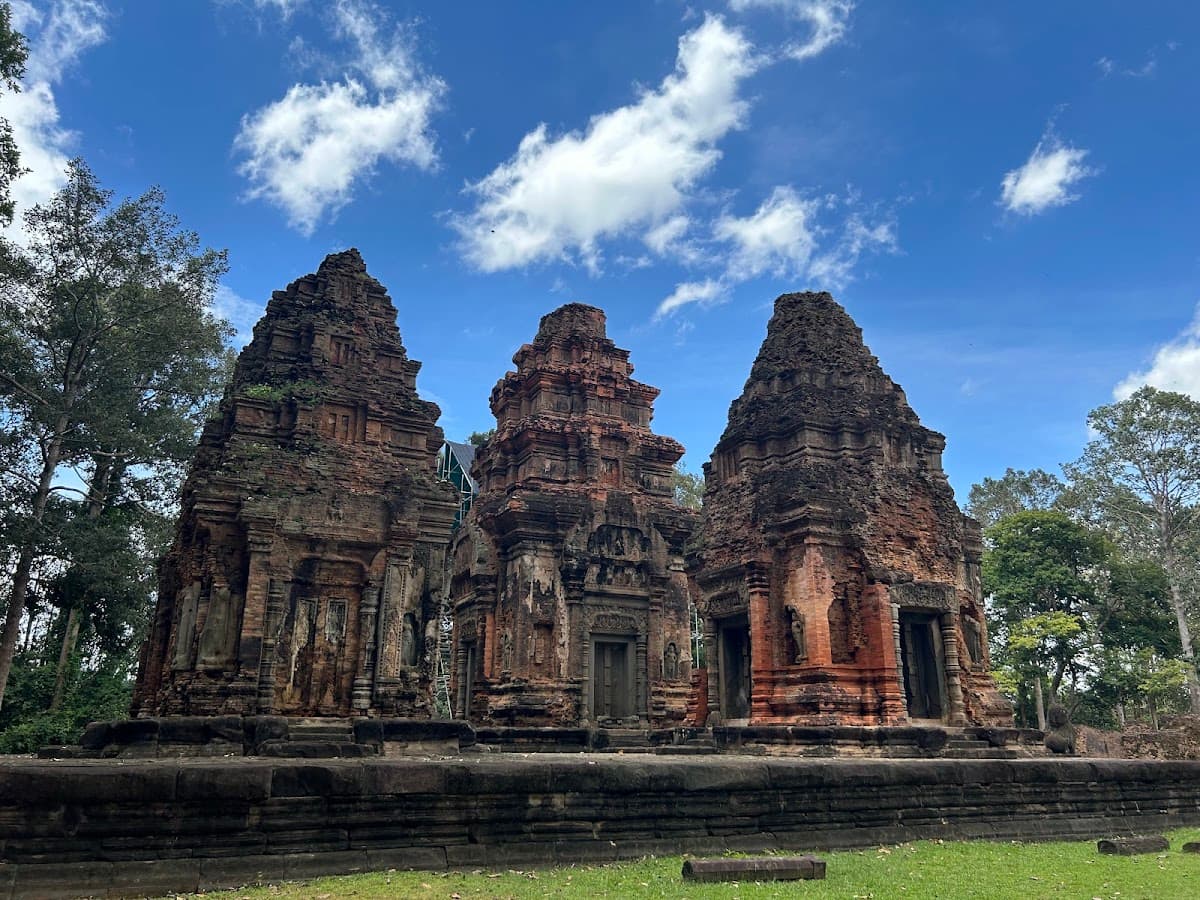
Unser Urteil: Sechs anmutige Ziegeltürme mit den ältesten erhaltenen Inschriften von Angkor — ein Muss für Geschichtsbegeisterte.
Preah Ko (Heiliger Bulle) war der erste Tempel, der 879 n. Chr. in der Roluos-Gruppe erbaut wurde, geweiht von Indravarman I. seinen Vorfahren und Shiva. Die sechs Ziegeltürme sind in zwei Reihen angeordnet und bewahren noch immer Fragmente ihrer ursprünglichen Stuckverzierungen — einige der ältesten dekorativen Stuckarbeiten in der Region Angkor. Heilige Bullen (Nandi) säumen den Zugang. Der Tempel ist kompakt und nimmt etwa 30 Minuten in Anspruch. Er liegt direkt südlich von Bakong in der Roluos-Gruppe, 13 Kilometer von der Stadt Siem Reap entfernt. Fast keine Touristen besuchen ihn, was ihn zu einem wunderbar friedlichen Erlebnis macht.
22Lolei
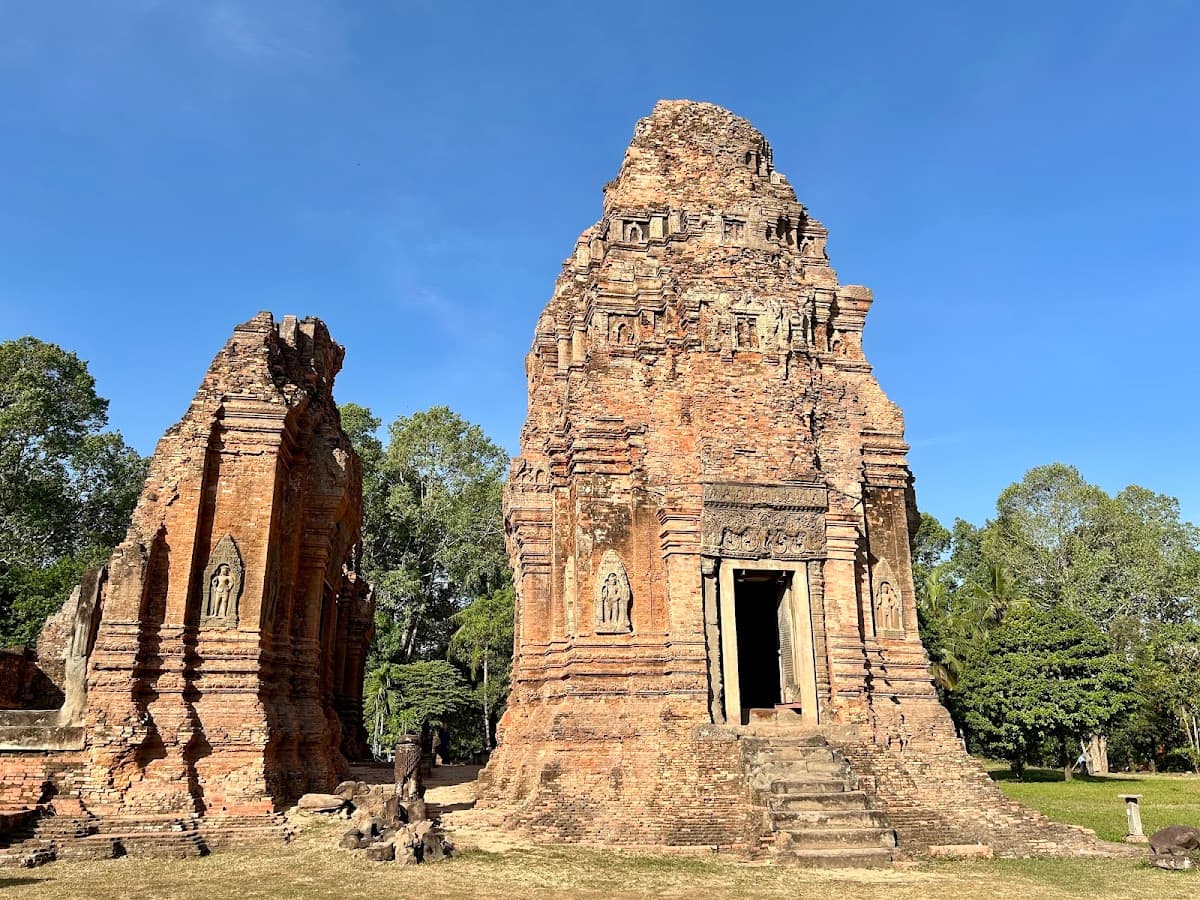
Unser Urteil: Der letzte der Tempel der Roluos-Gruppe, erbaut auf einer heute trockengelegten Reservoir-Insel — eine stille Fußnote zu den Ursprüngen Angkors.
Lolei wurde 893 n. Chr. von Yasovarman I. auf einer Insel inmitten des Indratataka Baray (heute ausgetrocknet) errichtet. Seine vier Ziegeltürme sind den Eltern und Großeltern des Königs geweiht. Die Schnitzereien an den Türsturzen sind für ihr Alter bemerkenswert detailliert und enthalten feine Sanskrit-Inschriften. Ein modernes buddhistisches Kloster nimmt heute das Gelände ein und verleiht der Stätte eine belebte Atmosphäre. Die Erkundung dauert 20 bis 30 Minuten, und er ist der nördlichste Tempel der Roluos-Gruppe. Besuche alle drei Roluos-Tempel an einem einzigen Vormittagstrip von Siem Reap aus.
23Prasat Kravan
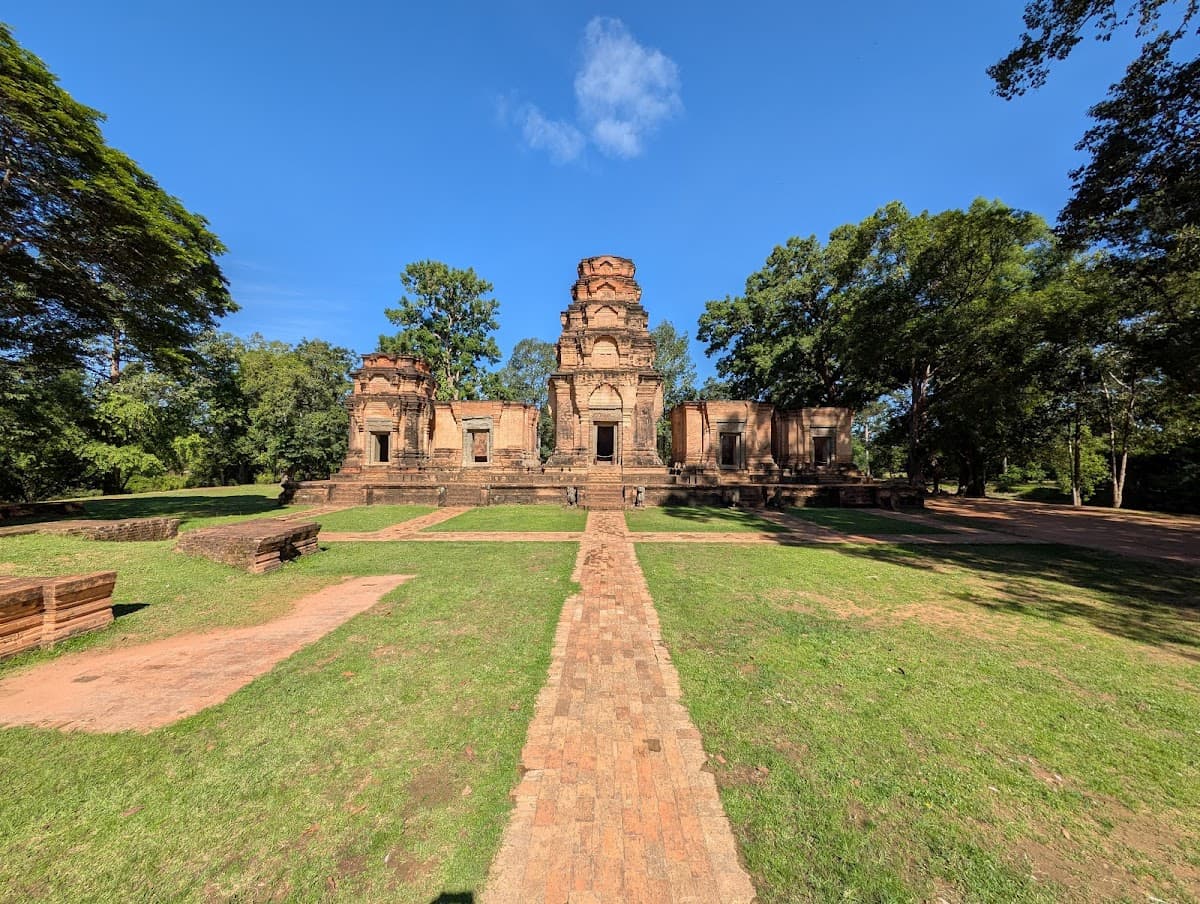
Unser Urteil: Der einzige Tempel von Angkor mit Ziegel-Basreliefs — fünf kleine Türme mit einzigartigen Innenschnitzereien von Vishnu.
Prasat Kravan ist ein kleiner Hindu-Tempel, erbaut 921 n. Chr., bemerkenswert dafür, der einzige Tempel von Angkor zu sein, dessen Basreliefs direkt in die Ziegelmauern seines Innenraums geschnitten sind. Die fünf Ziegeltürme stehen in einer Nord-Süd-Reihe. Der zentrale Turm enthält eine bemerkenswerte Schnitzerei von Vishnu, der über den Ozean schreitet, während der nördlichste Turm Schnitzereien von Lakshmi zeigt. Der Tempel wurde in den 1960er Jahren von den Franzosen unter Verwendung originaler und ersetzter Ziegel restauriert (mit CA für Konservierung markiert). Am Kleinen Rundweg zwischen Ta Prohm und Srah Srang gelegen, nimmt er nur 15 bis 20 Minuten in Anspruch, bietet aber etwas völlig Einzigartiges.
24Sambor Prei Kuk
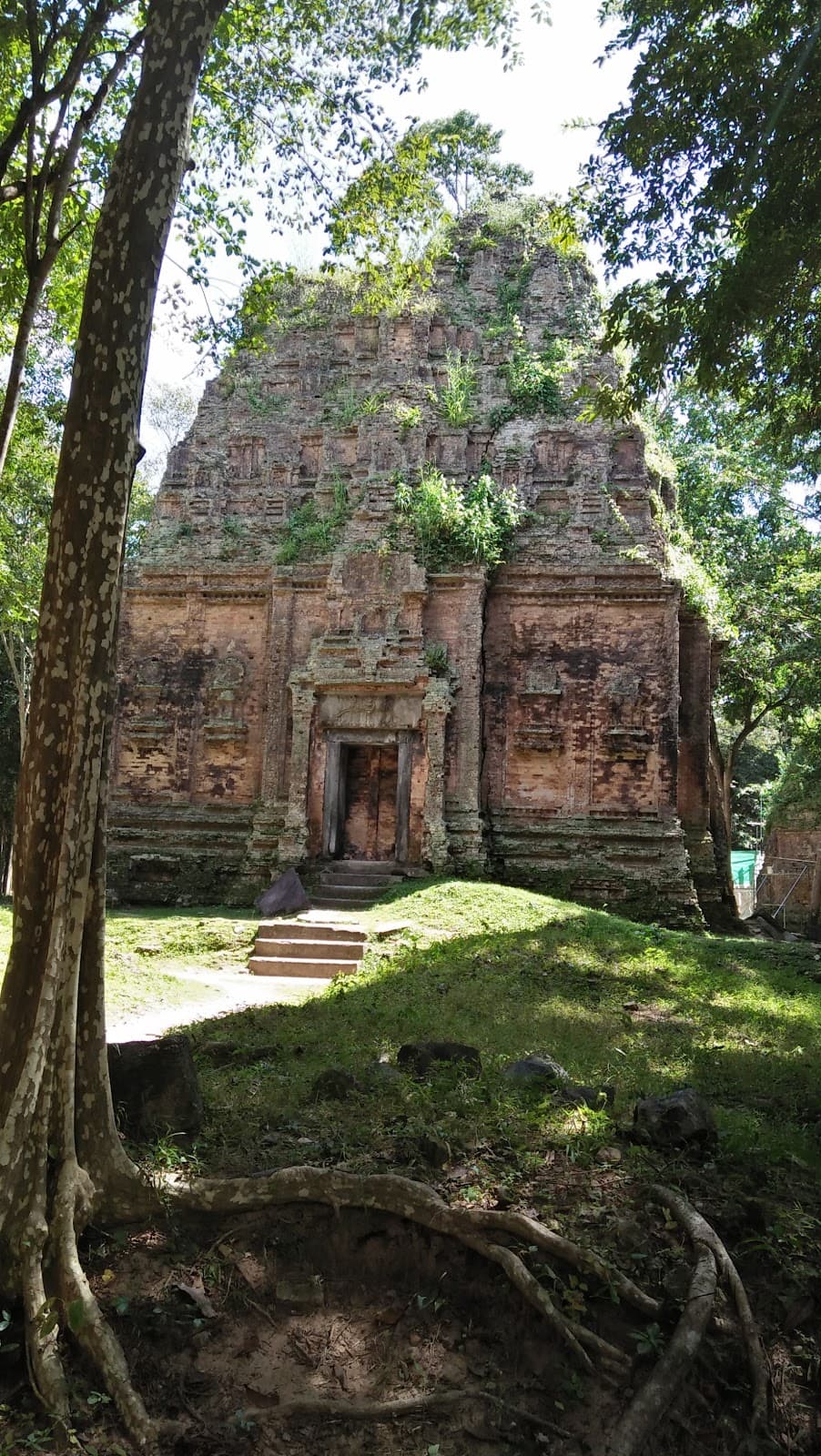
Unser Urteil: Eine vor-angkorianische UNESCO-Stätte 3 Stunden von Siem Reap entfernt — der älteste Tempelkomplex Kambodschas und ein faszinierender Tagesausflug.
Sambor Prei Kuk ist Kambodschas zweites UNESCO-Weltkulturerbe (eingetragen 2017) und liegt mehrere Jahrhunderte vor Angkor. Im 7. Jahrhundert als Isanapura, der Hauptstadt des Chenla-Reiches, erbaut, enthält es über 100 Tempel in drei Hauptgruppen, verstreut durch den Wald. Die achteckigen Tempel und die Schnitzereien fliegender Paläste sind in der südostasiatischen Architektur einzigartig. Etwa 200 Kilometer von Siem Reap entfernt (3 Stunden mit dem Auto über Kampong Thom), bietet er einen lohnenden Tagesausflug für alle, die einen zusätzlichen Tag haben. Die Einrichtungen sind einfach, aber ein lokaler Guide steht vor Ort zur Verfügung. Plane 2 bis 3 Stunden für die Hauptgruppen ein.
25Phimeanakas
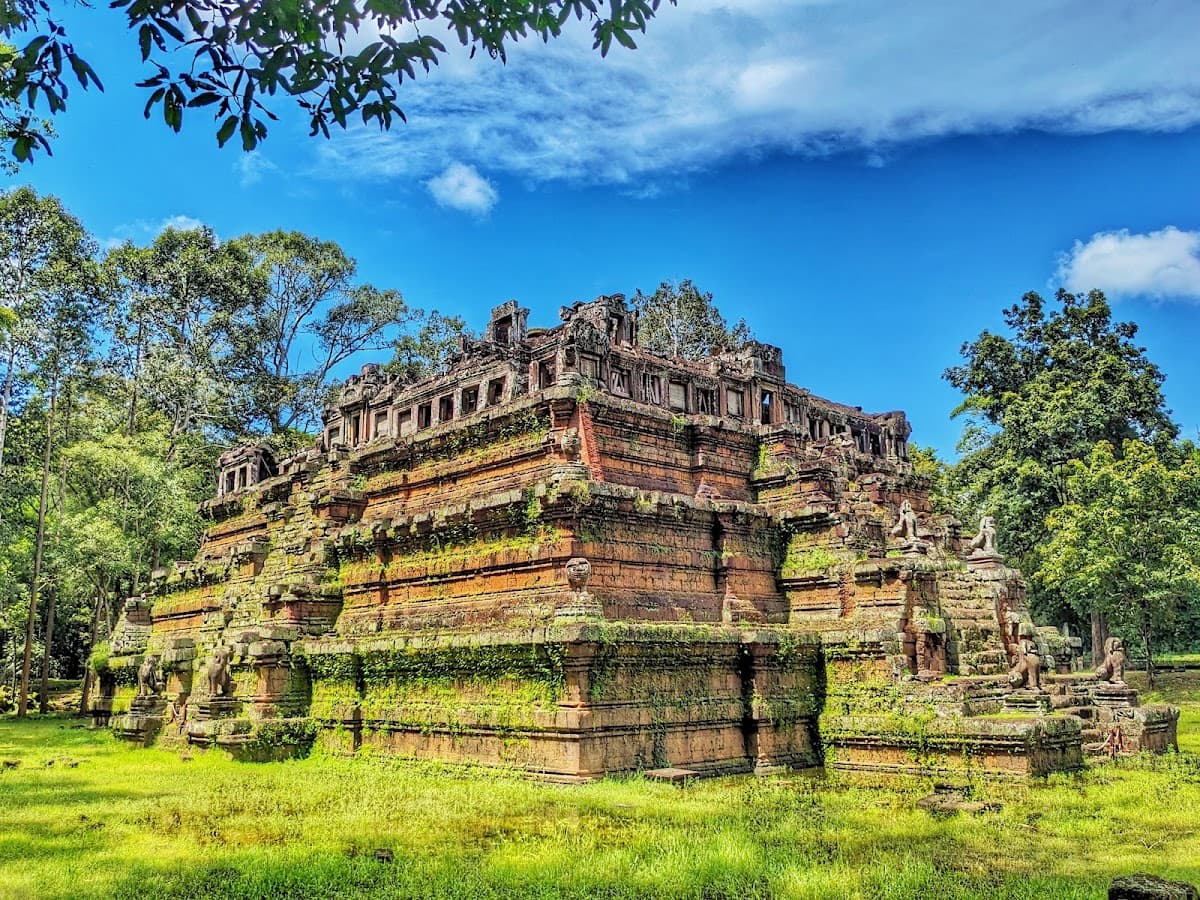
Unser Urteil: Eine versteckte Pyramide im Komplex des königlichen Palastes von Angkor Thom — ein steiler Aufstieg, belohnt mit Blicken über das Dschungeldach.
Phimeanakas ist ein kleiner dreistufiger Pyramidentempel im Komplex des königlichen Palastes von Angkor Thom, erbaut im späten 10. Jahrhundert von Rajendravarman und später von Jayavarman VII. modifiziert. Der Legende nach war der Khmer-König verpflichtet, jede Nacht im goldenen Turm an der Spitze des Tempels mit einem Naga-Geist zu schlafen — sein Ausbleiben bedeutete Unheil für das Königreich. Der steile Aufstieg zur Spitze bietet Blicke über den Dschungel und die umliegenden Palastmauern. Er wird leicht übersehen, weil Besucher auf dem Weg zu Baphuon oder zur Elefantenterrasse vorbeieilen. Plane 20 bis 30 Minuten ein und verbinde den Besuch mit den nahegelegenen Badebecken des königlichen Palastes.
Empfohlene Reiserouten
11-Tages-Route — Das Wesentliche
5:00 Uhr — Ankunft an Angkor Wat zum Sonnenaufgang (Pass ab 5:00 Uhr erhältlich). Genieße den Sonnenaufgang von der linken Seite des Spiegelbeckens. 6:30 Uhr — Erkunde das Innere von Angkor Wat und steig in die dritte Ebene auf. 8:30 Uhr — Fahre zum Südtor von Angkor Thom und geh den Damm zu Fuß ab. 9:00 Uhr — Bayon-Tempel (die Gesichter). 10:30 Uhr — Baphuon und Elefantenterrasse (kurzer Rundgang). 11:30 Uhr — Mittagspause in einem der Restaurants nahe Angkor Thom (oder mitgebrachtes Lunchpaket). 13:00 Uhr — Ta Prohm (der Tomb-Raider-Tempel). 14:30 Uhr — Banteay Kdei und Srah Srang (friedlich, wenig besucht). 16:00 Uhr — Ta Keo (optional, für abenteuerlustige Kletterer). 17:00 Uhr — Sonnenuntergang an Pre Rup oder Phnom Bakheng (komm früh für Bakheng). So passt du die sechs wesentlichen Tempel in einen einzigen Tag. Starte früh und trink ständig.
22-Tages-Route — Das vollständige Erlebnis
Tag 1 — Kleiner Rundweg: Folge der 1-Tages-Route oben, aber in entspanntem Tempo. Verbring mehr Zeit in Angkor Wat (volle 3 Stunden) und Ta Prohm. Lass Ta Keo aus, wenn du müde bist. Sonnenuntergang am Phnom Bakheng. Tag 2 — Großer Rundweg + Banteay Srei: 6:00 Uhr — Preah Khan (atmosphärisch im Morgenlicht). 8:00 Uhr — Neak Pean (Inseltempel, 20 Minuten). 8:30 Uhr — Ta Som (ruhiges, fotogenes Osttor mit Baumwurzeln). 9:30 Uhr — East Mebon (Elefantenskulpturen). 10:00 Uhr — Pre Rup (kurzer Besuch im Morgenlicht). 10:30 Uhr — Fahrt nach Banteay Srei (45 Minuten). 11:30 Uhr — Banteay Srei (das Juwel aus rosa Sandstein). 13:00 Uhr — Mittagessen und Rückfahrt nach Siem Reap. Nachmittag frei für Pool oder Massage. Diese Route deckt bequem alle 12 Haupttempel an zwei Tagen ab.
33-Tages-Route — Die Entdeckerroute
Tag 1 — Kleiner Rundweg: Wie Tag 1 der 2-Tages-Route. Tag 2 — Großer Rundweg: Wie Tag 2 der 2-Tages-Route, ohne Banteay Srei. Tag 3 — Äußere Tempel: 6:00 Uhr — Aufbruch nach Beng Mealea (1,5 Stunden). 8:00 Uhr — Erkundung von Beng Mealea mit einem lokalen Guide ($5). 10:00 Uhr — Weiter nach Koh Ker (1 Stunde weiter). 11:30 Uhr — Aufstieg auf die Pyramide von Prasat Thom, Erkundung der verstreuten Waldtempel. 13:00 Uhr — Picknick (selbst mitbringen — keine Restaurants). 14:00 Uhr — Rückfahrt nach Siem Reap (2,5 Stunden). Dies ist das ultimative Angkor-Erlebnis — drei Tage, die sowohl die ikonischen Sehenswürdigkeiten als auch die abgelegenen Wildnistempel abdecken, die die meisten Besucher nie zu Gesicht bekommen.
Budgetübersicht — Was es wirklich kostet
| Posten | Sparsam | Mittelklasse | Luxus |
|---|---|---|---|
| Angkor-Pass (1 Tag) | $37 | $37 | $37 |
| Transport | $15 (Tuk-Tuk) | $35 (Auto mit Klima) | $80 (privater Guide + Auto) |
| Mittagessen | $3–5 | $8–15 | $25–40 |
| Wasser & Snacks | $2 | $5 | $10 |
| Guide (optional) | $0 | $25 | $50+ |
| Schal/Hemd für Sonnenaufgang | $2 (Markt) | $0 (eigene Kleidung) | $0 (eigene Kleidung) |
| GESAMT pro Tag | $59–61 | $110–117 | $202–217 |
Beste Reisezeit — Monat für Monat
| Monat | Wetter | Andrang | Urteil |
|---|---|---|---|
| Januar | Kühl & trocken, 25–32°C | Hochsaison | Beste Zeit |
| Februar | Trocken & warm, 26–34°C | Hochsaison | Beste Zeit |
| März | Heiß, 28–36°C | Mäßig | Gut |
| April | Sehr heiß, 29–38°C | Nebensaison | Meiden |
| Mai | Heiß, erste Regenfälle, 28–36°C | Nebensaison | Meiden |
| Juni | Regnerisch, 27–34°C | Nebensaison | Meiden |
| Juli | Regnerisch, 27–33°C | Nebensaison | Meiden |
| August | Regnerisch, 27–33°C | Nebensaison | Meiden |
| September | Regnerisch, grüner Dschungel, 27–32°C | Sehr gering | Gut |
| Oktober | Späte Regenfälle, üppig, 26–32°C | Gering | Gut |
| November | Kühl, beginnend trocken, 25–31°C | Steigend | Beste Zeit |
| Dezember | Kühl & trocken, 24–30°C | Hochsaison | Beste Zeit |
Tickets, Öffnungszeiten und Kleiderordnung
Der Angkor-Pass ist das einzige Ticket für den gesamten archäologischen Park. Preise 2026: 1-Tages-Pass $37, 3-Tages-Pass $62 (gültig für 10 Tage), 7-Tages-Pass $72 (gültig für einen Monat). Kauf die Tickets am offiziellen Ticketbüro von Angkor Enterprise an der Apsara Road — es öffnet um 5:00 Uhr morgens für Sonnenaufgangsbesucher.
Zahlung mit Bargeld (USD) oder Karte. Dein Foto wird gemacht und auf den Pass gedruckt. Kinder unter 12 Jahren haben freien Eintritt.
Kleiderordnung: Schultern und Knie müssen auf der oberen Ebene von Angkor Wat und in einigen anderen Tempeln bedeckt sein — bring einen Schal oder ein leichtes Hemd mit. Der Park öffnet um 5:00 Uhr (für den Sonnenaufgang an Angkor Wat) und schließt um 17:30 Uhr. Beng Mealea und Koh Ker sind nun im Hauptpass enthalten.
Trag deinen Pass jederzeit bei dir — Kontrolleure prüfen ihn an jedem Tempeleingang.
Anreise und Fortbewegung vor Ort
Das Tuk-Tuk ist das klassische Angkor-Erlebnis: $15 bis $20 pro Tag für den Kleinen Rundweg, $25 bis $30 für den Großen Rundweg, $35 bis $45 für äußere Tempel wie Banteay Srei. Dein Fahrer wartet an jedem Tempel auf dich. Verhandle Preis und Route vor der Abfahrt.
Privatauto mit Fahrer und Klimaanlage kostet $35 bis $50 pro Tag — in der heißen Jahreszeit (März bis Mai) lohnt es sich, wenn die Temperaturen 40 Grad erreichen. E-Bikes und Elektroroller ($8 bis $15 pro Tag) werden immer beliebter und sind im Park erlaubt. Normale Fahrräder ($3 bis $5 pro Tag im Hotel) eignen sich gut für den Kleinen Rundweg (17 km Schleife), sind aber für den Großen Rundweg ermüdend.
Minivan-Touren ($15 bis $25 pro Person) sind die Budgetoption, bieten aber keine Flexibilität. Gib deinem Tuk-Tuk-Fahrer $3 bis $5 Trinkgeld, wenn er gute Arbeit leistet — sie stehen für Sonnenaufgangstouren um 4:30 Uhr auf. Buche über dein Hotel oder einen seriösen Anbieter.
Kleiner Rundweg vs. Großer Rundweg
Der Kleine Rundweg (Petit Circuit) ist eine 17 Kilometer lange Schleife, die Angkor Wat, Angkor Thom (Südtor, Bayon, Baphuon, Elefantenterrasse), Ta Keo, Ta Prohm und Banteay Kdei umfasst. Dies ist die wesentliche Eintagesroute und enthält die drei bekanntesten Tempel. Der Große Rundweg (Grand Circuit) fügt 26 Kilometer hinzu und umfasst Preah Khan, Neak Pean, Ta Som, East Mebon und Pre Rup.
Er wird am besten am zweiten Tag absolviert oder mit dem Kleinen Rundweg kombiniert, wenn du bei Sonnenaufgang startest und ein paar Stopps auslässt. Der äußere Rundweg umfasst Tempel jenseits des Hauptparks: Banteay Srei (25 km nördlich), Beng Mealea (65 km östlich) und Koh Ker (120 km nordöstlich). Diese erfordern jeweils einen ganzen Tag.
Die meisten Besucher absolvieren am ersten Tag den Kleinen Rundweg und am zweiten Tag den Großen Rundweg. Wenn du nur einen Tag hast, mach den Kleinen Rundweg mit frühem Start — du siehst die Großen Drei (Angkor Wat, Bayon, Ta Prohm) und mehrere kleinere Juwelen.
Sonnenaufgang an Angkor Wat — Der vollständige Guide
Die Sonne hinter den fünf Türmen von Angkor Wat aufgehen zu sehen, gehört zu den großen Reiseerlebnissen der Erde. Die Sonnenaufgangszeiten variieren von 5:30 Uhr (Dezember) bis 6:00 Uhr (Juni). Sei um 5:00 Uhr am Ticketbüro — es öffnet eigens für Sonnenaufgangsbesucher.
Tritt durch das westliche Haupttor ein und geh direkt zum Spiegelbecken. Stell dich links vom Becken auf für das klassische Reflexionsfoto. Die besten Sonnenaufgangsmonate sind November bis Februar, wenn der Himmel am klarsten ist.
Die Tagundnachtgleichen (21. März und 23. September) sind besonders: Die Sonne geht direkt hinter dem zentralen Turm auf.
Bring ein Stativ für lange Belichtungen und eine Stirnlampe für den Weg im Dunkeln mit. Nachdem sich die Sonnenaufgangsmenge zerstreut hat (gegen 6:30 Uhr), hast du Angkor Wat in der nächsten Stunde fast für dich allein. Meide die rechte Seite des Beckens, die von Reisegruppen überfüllt ist.
Das gesamte Erlebnis von der Ankunft bis zur Erkundung nach Sonnenaufgang dauert etwa drei Stunden.
Fotografie-Guide — Die besten Aufnahmen an jedem Tempel
Angkor Wat fotografiert sich am besten bei Sonnenaufgang (Spiegelung im Wassergraben) und am späten Nachmittag (goldenes Licht auf der westlichen Fassade). Bayon verlangt ein Weitwinkelobjektiv für die Gesichter — fotografiere von der oberen Terrasse aus um 7:00 Uhr, wenn das Licht weich ist. Ta Prohm ist ein Paradies für natürliches Licht: Die Baumwurzeln über den Türen bilden dramatische Rahmen, und das gesprenkelte Dschungellicht ist vor 9:00 Uhr oder nach 15:00 Uhr am schönsten.
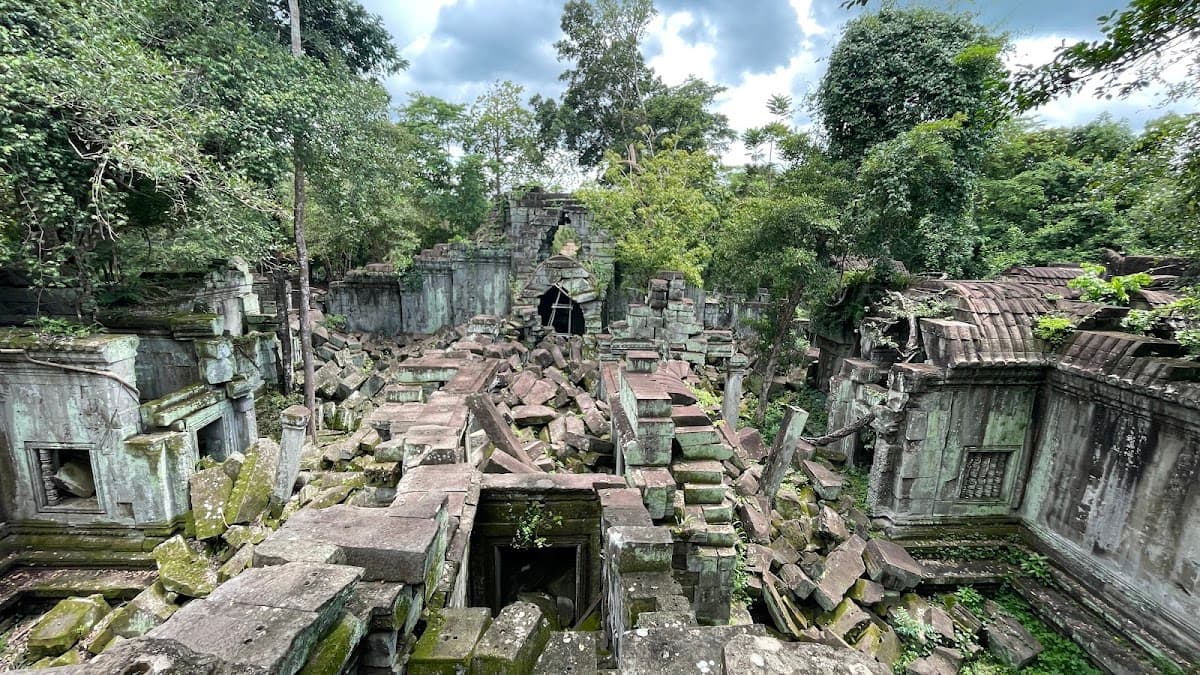
Banteay Sreis rosa Sandstein leuchtet im Morgenlicht — bring ein Makroobjektiv für die unglaublichen Detailarbeiten mit. Pre Rup und Phnom Bakheng bieten Sonnenuntergangs-Panoramen — ein Teleobjektiv fängt die Silhouette von Angkor Wat von der oberen Plattform von Pre Rup ein. Für Beng Mealea fängt ein Weitwinkelobjektiv den Maßstab der eingestürzten Galerien ein.
Drohnenfotografie ist im Park strikt verboten. Stative sind erlaubt, jedoch nicht in den zentralen Galerien von Angkor Wat. Trag immer Linsenputztücher mit — die Luftfeuchtigkeit beschlägt die Linsen ständig.
Tempelbesuche mit Kindern
Angkor mit Kindern ist absolut machbar, wenn du um deren Energielevel herum planst. Beginne mit Angkor Wat zum Sonnenaufgang — Kinder lieben das frühe Abenteuer, und der Wassergraben fasziniert. Bayon ist ein Hit bei Kindern wegen der riesigen Steingesichter (es fühlt sich an wie ein gigantisches Puzzle).
Ta Prohm ist der ultimative Kinder-Tempel — die Baumwurzeln sehen aus wie aus einem Fantasy-Film, und das Suchen nach der Dinosaurier-Schnitzerei ist eine tolle Schnitzeljagd. Lass Ta Keo (zu steil) und Phnom Bakheng (zu überlaufen und heiß) aus. Banteay Kdei und Srah Srang sind ruhig und schattig.
Für die Tuk-Tuk-Fahrt: Snacks, Wasser, Sonnencreme (mindestens LSF 50), Hüte und einen tragbaren Ventilator mitnehmen. Die meisten Kinder unter 8 Jahren sind nach drei Tempeln am Ende — wähle also die Großen Drei und ruf den Tag aus. Plane eine Mittagspause im Hotelpool ein.
Kinder unter 12 Jahren haben freien Eintritt. An den großen Tempeln gibt es Toiletten, aber bring Feuchttücher mit.
Betrug, Sicherheit und häufige Fehler
Die Tempel von Angkor sind im Allgemeinen sehr sicher, aber einige Maschen halten sich hartnäckig. Sei vorsichtig bei inoffiziellen Guides, die dich an Tempeleingängen ansprechen und behaupten, du brauchst einen Guide — das stimmt nicht. Kinder, die Postkarten und Armbänder verkaufen, können hartnäckig sein: Ein bestimmtes „Nein, danke“ wirkt.
Kauf niemals Antiquitäten oder alte Steine — sie sind entweder gefälscht oder illegal geplündert, und der Export ist eine schwere Straftat. Achte auf deine Schritte in den Tempeln: unebene Steine, steile Treppen ohne Geländer und rutschiges Moos sind die wahren Gefahren. Bring eine Stirnlampe mit, wenn du zum Sonnenaufgang kommst — die Wege sind dunkel.
Bleib hydriert: Hitzeerschöpfung ist häufig, besonders von März bis Mai, wenn die Temperaturen 38 Grad Celsius überschreiten. Trag alle zwei Stunden Sonnenschutz auf. Begegnungen mit Affen an Angkor Wat sind häufig — füttere sie nicht und sichere deine Wertsachen.
Der größte Touristenfehler ist der Versuch, an einem Tag zu viele Tempel zu sehen, sodass man mittags erschöpft und tempelmüde dasteht. Weniger ist mehr.
Eine kurze Geschichte von Angkor
Das Khmer-Reich wurde 802 n. Chr. gegründet, als Jayavarman II. sich auf dem Phnom Kulen, nördlich des heutigen Siem Reap, zum Universalherrscher erklärte. In den folgenden sechs Jahrhunderten errichteten aufeinanderfolgende Könige immer ehrgeizigere Tempelberge als Symbole ihrer göttlichen Autorität.
Yasovarman I. verlegte die Hauptstadt 889 n. Chr. nach Angkor und ließ den ersten Baray (Reservoir) bauen. Suryavarman II. errichtete Angkor Wat zu Beginn des 12.
Jahrhunderts als seinen Staatstempel und späteres Mausoleum — er bleibt das größte religiöse Bauwerk, das je errichtet wurde. Jayavarman VII., der letzte große Erbauer-König, bekehrte das Reich zum Buddhismus und ließ Angkor Thom, Bayon, Ta Prohm, Preah Khan und Dutzende von Krankenhäusern und Rasthäusern im gesamten Reich errichten. Nach seinem Tod begann der langsame Niedergang des Reiches.
Ayutthaya (Siam) plünderte Angkor 1431, und die Hauptstadt wurde nach Süden nach Phnom Penh verlegt. Die Tempel wurden nie ganz aufgegeben — Angkor Wat wurde von buddhistischen Mönchen unterhalten —, aber der Dschungel eroberte den Großteil des Komplexes zurück. Der französische Forscher Henri Mouhot machte Angkor 1860 in der westlichen Welt bekannt, und seitdem wird unter französischen, kambodschanischen und internationalen Teams unaufhörlich restauriert.
Veröffentlicht von Siem Reap Hub
Der Community-Guide für Expats und Reisende in Siem Reap, Kambodscha.
Erstellt von einem französischen Ingenieur, der seit 2025 in Siem Reap lebt. Verbindet KI-Analyse (Claude, RAG-Pipelines) und Google-Maps-Daten zum umfassendsten lokalen Verzeichnis — 5.300+ geprüfte Geschäfte. Keine bezahlten Platzierungen, keine bezahlten Inhalte.
Planst du deine Reise nach Siem Reap?
Entdecke unseren kompletten Guide zu den besten Aktivitäten in Siem Reap — jenseits der Tempel.
50+ AktivitätenHäufig gestellte Fragen
Wie viel kostet der Angkor-Pass?
Der 1-Tages-Pass kostet $37, der 3-Tages-Pass $62 (gültig über 10 Tage) und der 7-Tages-Pass $72 (gültig über 1 Monat). Kinder unter 12 Jahren haben freien Eintritt. Erhältlich am Ticketbüro von Angkor Enterprise an der Apsara Road.
Wann öffnet Angkor Wat?
Der Park öffnet um 5:00 Uhr für Sonnenaufgangsbesucher. Das Ticketbüro öffnet ebenfalls um 5:00 Uhr. Der Park schließt um 17:30 Uhr. Du musst vor Schließung eintreten.
Ist ein Guide notwendig?
Nicht zwingend, aber ein guter Guide verwandelt das Erlebnis, indem er Symbolik, Geschichte und versteckte Details erklärt, die du sonst übersehen würdest. Plane $25 bis $50 für einen lizenzierten Ganztagesguide ein. Buche über dein Hotel oder eine seriöse Agentur.
Was soll ich zu den Tempeln anziehen?
Schultern und Knie müssen auf der oberen Ebene von Angkor Wat und in mehreren anderen Tempeln bedeckt sein. Bring ein leichtes langärmliges Hemd oder einen Schal mit. Bequeme Wanderschuhe mit gutem Profil sind unverzichtbar — Sandalen sind für steile Tempel wie Ta Keo und Pre Rup nicht zu empfehlen.
Darf ich in Angkor eine Drohne benutzen?
Nein. Drohnenfotografie ist im gesamten archäologischen Park von Angkor strikt verboten. Strafen umfassen die Beschlagnahmung der Ausrüstung sowie Bußgelder. Keine Ausnahmen für irgendeine Genehmigung oder Lizenz.
Wie viele Tage brauche ich?
Ein Tag deckt das Wesentliche ab (Angkor Wat, Bayon, Ta Prohm). Zwei Tage erlauben ein angenehmes Tempo mit dem Großen Rundweg und Banteay Srei. Drei Tage fügen die äußeren Tempel hinzu (Beng Mealea, Koh Ker) für das ultimative Erlebnis. Die meisten Besucher finden zwei Tage ideal.
Ist Angkor für Rollstuhlfahrer geeignet?
Die Bodenebene von Angkor Wat und der Damm am Südtor sind relativ zugänglich. Bayon und Ta Prohm haben unebenes Gelände. Die oberen Ebenen der meisten Tempel sind nicht rollstuhlgängig. Wende dich an einen auf barrierefreies Reisen spezialisierten Anbieter für eine individuelle Route.
Wann ist die beste Reisezeit?
November bis Februar bieten die beste Kombination aus kühlen Temperaturen, trockenem Wetter und überschaubarem Andrang. Dezember und Januar sind Hochsaison. September und Oktober werden unterschätzt: Der Dschungel ist üppig und grün, und du wirst viele Tempel für dich allein haben.
Kann ich den Pass online kaufen?
Stand 2026 muss der Angkor-Pass persönlich am Ticketbüro von Angkor Enterprise an der Apsara Road gekauft werden. Bargeld (USD) und gängige Kreditkarten werden akzeptiert. Dein Foto wird vor Ort gemacht.
Lohnt sich der Sonnenaufgang?
Absolut ja. Die Silhouette der fünf Türme von Angkor Wat, die sich im Morgengrauen im Wassergraben spiegelt, gehört zu den ikonischsten Bildern auf Reisen. Sei bis 5:15 Uhr da und stell dich links vom Spiegelbecken auf, um den besten Winkel zu erwischen.
Wie viel Trinkgeld gibt man einem Tuk-Tuk-Fahrer?
Für eine ganztägige Tempeltour sind $3 bis $5 zusätzlich zum vereinbarten Fahrpreis Standard und werden geschätzt. Die Fahrer stehen für Sonnenaufgangstouren um 4:30 Uhr auf und warten an jedem Tempel. Bei besonders gutem Service sind $5 bis $10 großzügig.
Kann ich mit einem 1-Tages-Pass den Park wieder betreten?
Ja. Der 1-Tages-Pass gilt den ganzen Tag von 5:00 Uhr bis 17:30 Uhr. Du kannst beliebig oft hinaus- und wieder hineingehen. Viele Besucher kehren zum Mittagessen in die Stadt zurück und kommen für den Nachmittag wieder.
Ist Beng Mealea im Angkor-Pass enthalten?
Ja, seit 2020 ist Beng Mealea ohne zusätzliche Kosten im Hauptpass von Angkor enthalten. Koh Ker ist ebenfalls enthalten. Zuvor erforderten beide jeweils ein separates Ticket für $5.
Wo kann ich in der Nähe der Tempel essen?
Mehrere Restaurants gruppieren sich rund um Angkor Thom und entlang der Straße zwischen den Tempeln. Die Preise sind auf Touristenniveau ($5 bis $10 für eine Mahlzeit). Für ein besseres Preis-Leistungs-Verhältnis iss in Siem Reap vor oder nach deinem Tempelbesuch. Viele Tuk-Tuk-Fahrer kennen gute lokale Adressen.
Was ist mit der Regenzeit?
Die Regenzeit (Juni bis Oktober) bringt nachmittägliche Gewitter, aber die Vormittage sind meist trocken. Die Vorteile: weniger Touristen, üppiger grüner Dschungel, volle Wassergräben für Spiegelungen und dramatische Wolkenformationen für die Fotografie. Bring eine Regenjacke und eine wasserdichte Tasche für deine Kamera mit.