El parque arqueológico de Angkor se extiende a lo largo de más de 400 kilómetros cuadrados y alberga algunos de los templos más extraordinarios jamás construidos.
25
Templos
UNESCO
Patrimonio mundial
$37
Pase 1 día
5:30
Amanecer
Angkor no es un solo templo. Es una civilización fijada en la piedra — un parque inmenso de 400 km² que alberga las ruinas de más de 1.000 templos y estructuras, de las cuales unos 72 templos principales están abiertos a los visitantes. Desde la silueta icónica de Angkor Wat hasta los pasillos envueltos en higueras estranguladoras de Ta Prohm, desde los 216 rostros de piedra sonrientes del Bayon hasta las torres octogonales preangkorianas de Sambor Prei Kuk — esta guía cubre 25 de los mejores templos en torno a Siem Reap, clasificados por importancia arquitectónica, experiencia del visitante y accesibilidad.
Hemos clasificado estos 25 templos según su importancia arquitectónica, la experiencia del visitante y la accesibilidad. Tanto si dispones de un día como de una semana entera, esta guía te ayudará a planear el itinerario Angkor perfecto. Cada templo incluye las coordenadas GPS, el nivel de afluencia, la dificultad y nuestra opinión honesta.
| # | Templo | Circuito | Dificultad | Duración | Afluencia |
|---|---|---|---|---|---|
| 1 | Angkor Wat | Principal | Fácil | 2–3h | Elevada |
| 2 | Bayon | Pequeño Circuito | Fácil | 1–2h | Elevada |
| 3 | Ta Prohm | Pequeño Circuito | Fácil | 1–1.5h | Elevada |
| 4 | Banteay Srei | Exterior | Fácil | 1–1.5h | Media |
| 5 | Preah Khan | Gran Circuito | Moderado | 1–2h | Media |
| 6 | Ta Keo | Pequeño Circuito | Difícil | 30–45min | Escasa |
| 7 | Banteay Kdei | Pequeño Circuito | Fácil | 45min–1h | Escasa |
| 8 | Pre Rup | Gran Circuito | Moderado | 30–45min | Media |
| 9 | Phnom Bakheng | Principal | Difícil | 1–1.5h | Elevada |
| 10 | South Gate of Angkor Thom | Pequeño Circuito | Fácil | 15–30min | Media |
Mapa de los templos
Top 10 de los templos de Angkor
1Angkor Wat
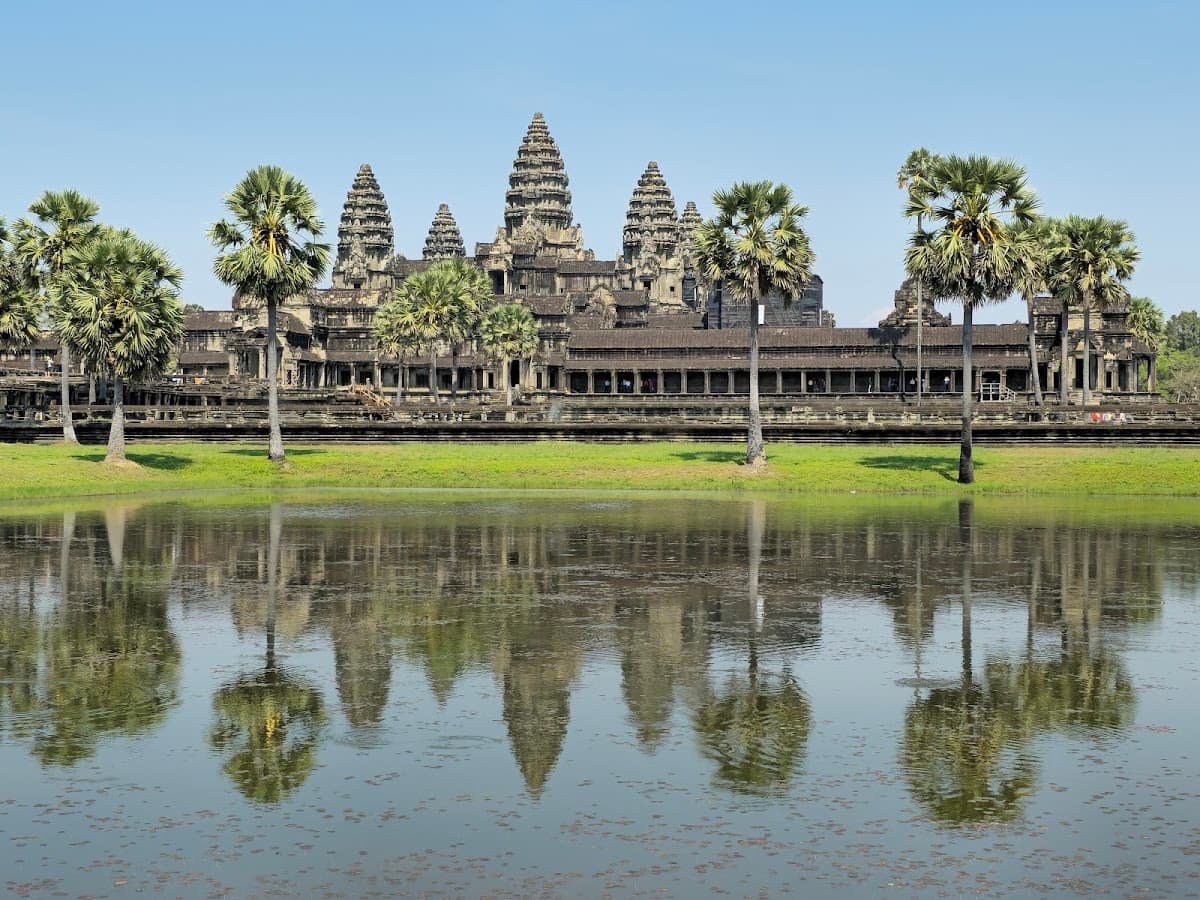
Nuestra opinión: La obra maestra indiscutible de la arquitectura jemer y el mayor monumento religioso de la Tierra. Ningún viaje a Camboya está completo sin él.
Angkor Wat no necesita presentación — figura en la bandera camboyana por una buena razón. Construido por el rey Suryavarman II a comienzos del siglo XII, este templo hindú dedicado a Vishnu es el mayor monumento religioso del mundo, con 162,6 hectáreas de extensión. La aproximación por la calzada de 190 metros sobre el foso es una de las grandes experiencias arquitectónicas del mundo. Los bajorrelieves a lo largo de la galería exterior se extienden 800 metros y representan escenas de la mitología hindú, entre ellas el célebre Batido del Mar de Leche. Llega a las 5:00 para el amanecer — colócate a la izquierda del estanque de reflejo para la foto silueta clásica. Tras el sunrise, explora las galerías interiores y sube al tercer nivel (limitado a 100 visitantes a la vez). La luz de la tarde, de 15:00 a 17:00, ilumina maravillosamente la fachada oeste. Calcula dos a tres horas mínimo y lleva agua — hay muy poca sombra dentro.
2Bayon
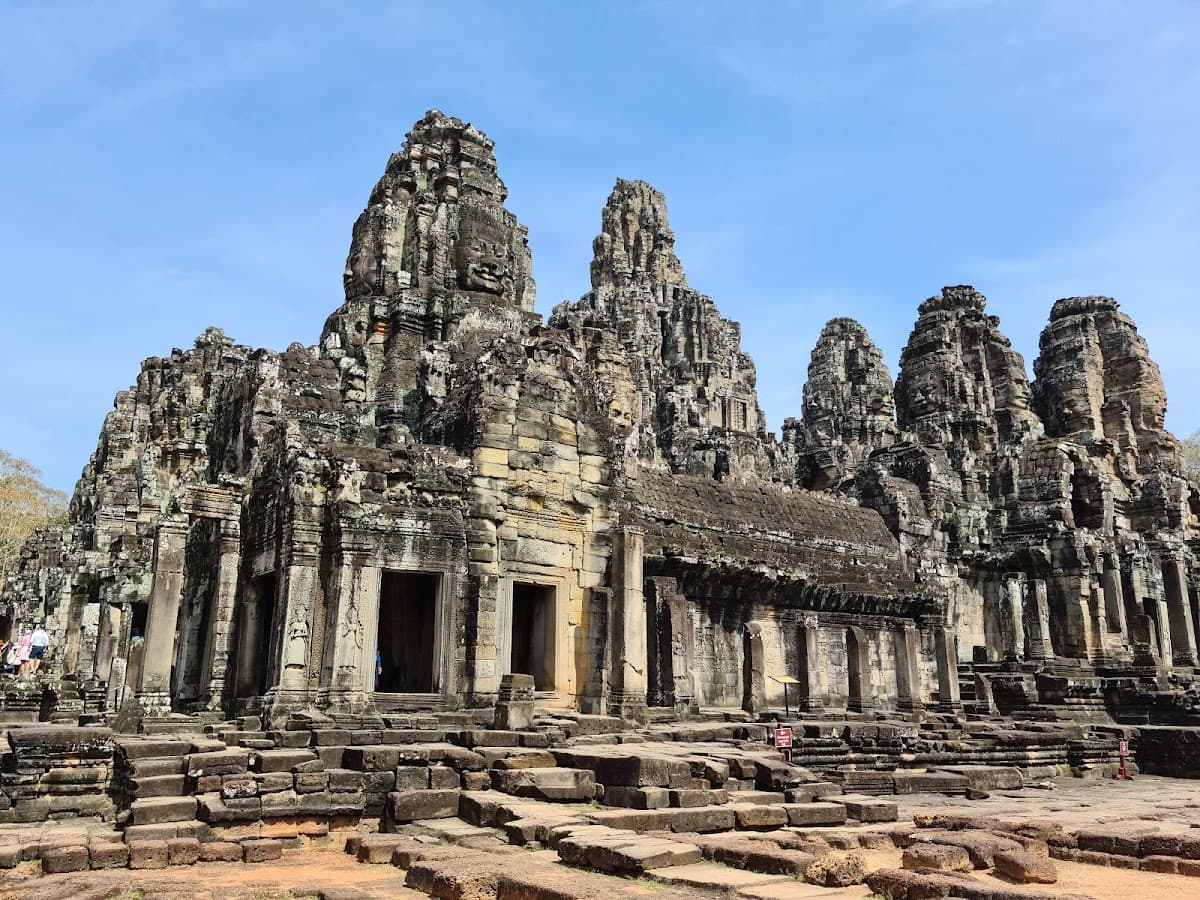
Nuestra opinión: El templo de los 216 rostros de piedra sonrientes es uno de los lugares más místicos y fotogénicos de todo el Sudeste Asiático.
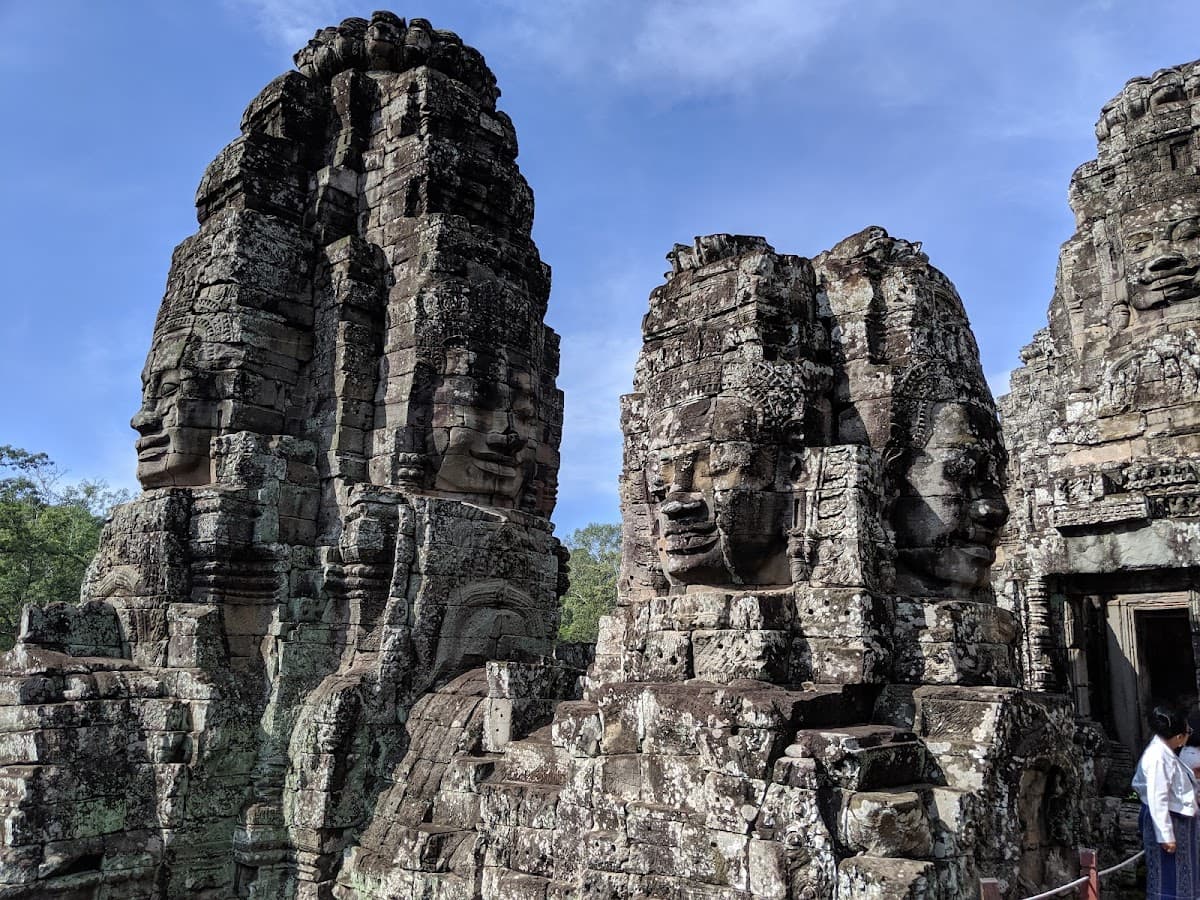
Bayon se sitúa en el centro exacto de Angkor Thom y es inmediatamente reconocible gracias a sus 54 torres góticas, cada una esculpida con cuatro rostros serenos y enigmáticos — 216 rostros en total. Construido por Jayavarman VII a finales del siglo XII, Bayon fue el último gran templo de Estado del Imperio Jemer. Los bajorrelieves aquí son únicos porque representan la vida cotidiana en lugar de la mitología: escenas de mercado, peleas de gallos, pesca y procesiones militares. Visita a primera hora de la mañana (7:00 a 8:30), cuando la luz es suave y la multitud escasea — a las 9:00 los autobuses turísticos llegan en masa. La terraza superior, donde te encuentras cara a cara con los rostros gigantes de piedra, es el momento culminante.
3Ta Prohm
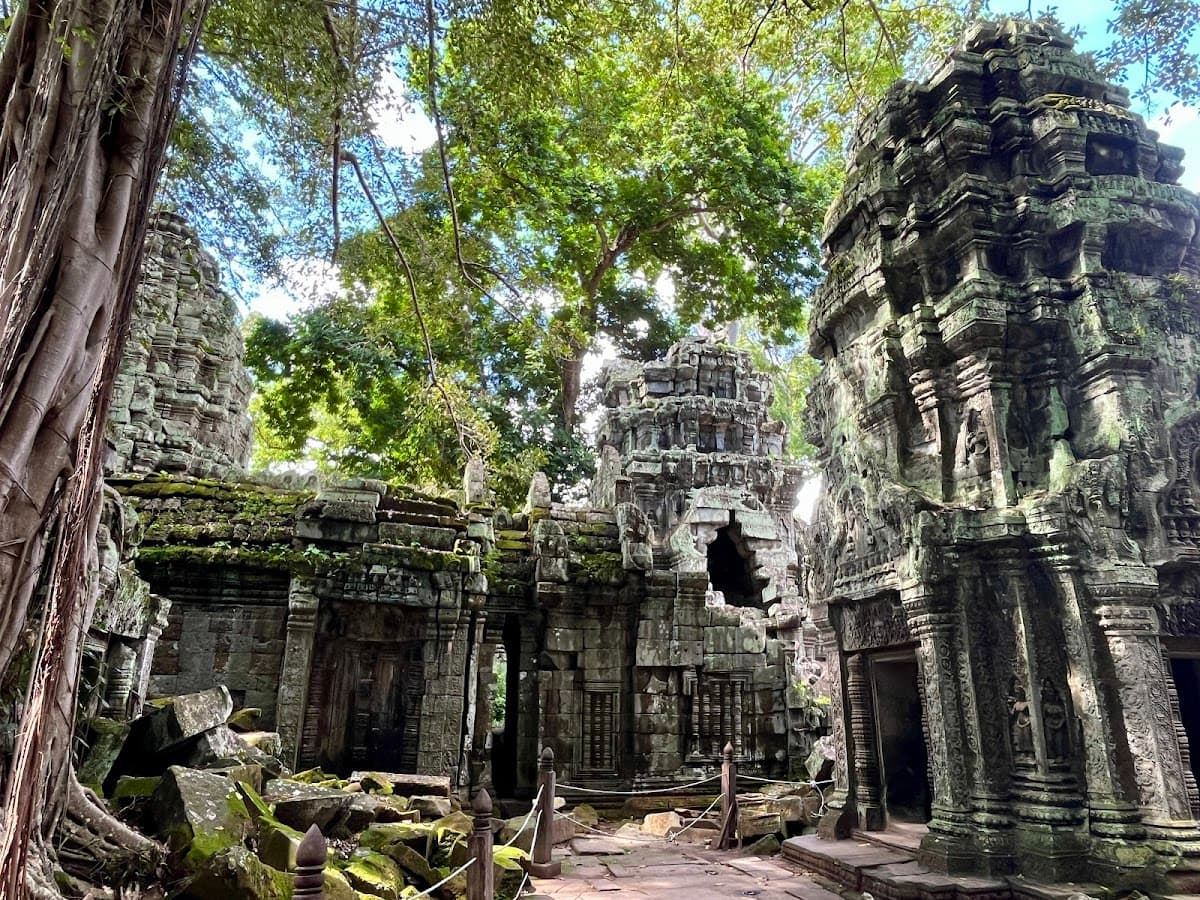
Nuestra opinión: El célebre templo de Tomb Raider donde la naturaleza recupera lentamente sus derechos sobre la piedra ancestral — absolutamente inolvidable.
Ta Prohm es el templo que hizo famosa a Angelina Jolie (o al revés). Dejado en gran parte sin restaurar, este monasterio budista es devorado progresivamente por enormes higueras y ceibas cuyas raíces caen en cascada por los muros y separan los bloques de piedra. El efecto es de una belleza hipnótica — naturaleza y arquitectura entrelazadas en un abrazo a cámara lenta. Construido en 1186 por Jayavarman VII para su madre, Ta Prohm albergaba en su día a 12.640 personas y se sostenía gracias a 3.140 aldeas. Para evitar lo peor de la multitud, llega antes de las 8:00 o después de las 15:30.
4Banteay Srei
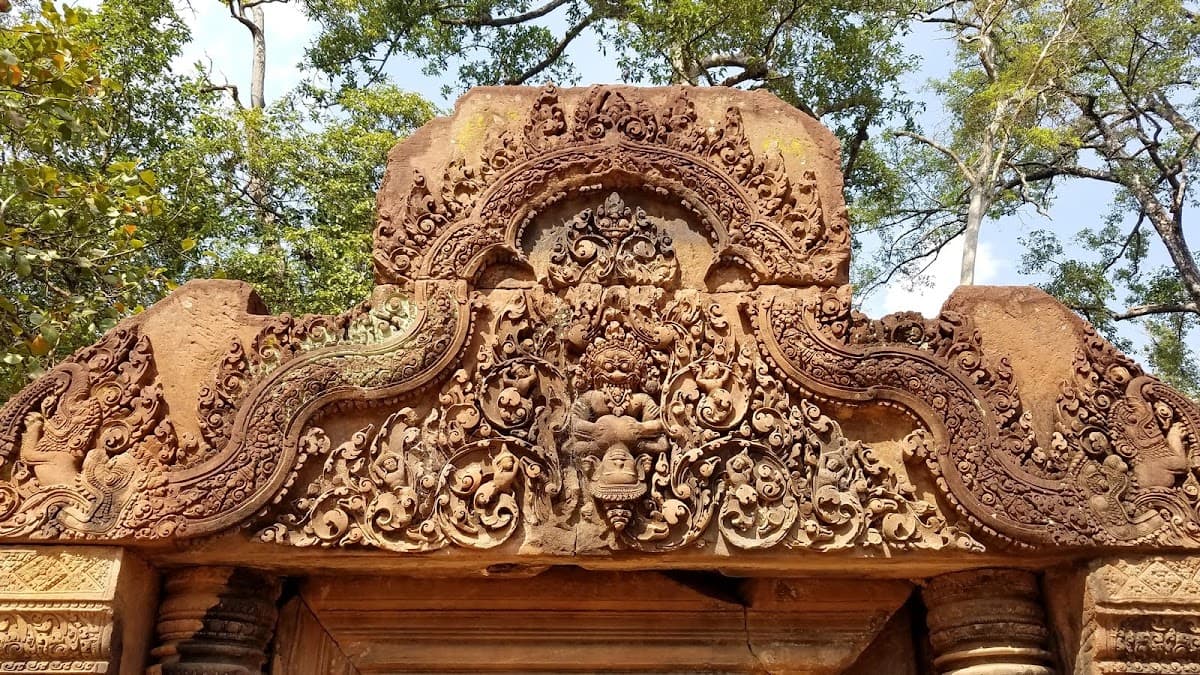
Nuestra opinión: La joya de Angkor — esculturas en arenisca rosa de una finura inigualada en todo el mundo jemer.
Banteay Srei es pequeño pero perfecto. Situado a 25 kilómetros al noreste del complejo principal de Angkor, este templo hindú del siglo X está esculpido en arenisca rosa con un nivel de detalle que supera a todos los demás templos de Camboya. Los dinteles y frontones presentan escenas de la mitología hindú con una precisión que parece casi mecánica. El templo es compacto y se puede explorar en una hora, pero lleva una lupa para apreciar las esculturas en miniatura. La arenisca rosa irradia con la luz de la mañana. Combínalo con Banteay Samré a la vuelta. El trayecto de 45 minutos desde Siem Reap atraviesa un bonito campo — organiza un tuk-tuk de ida y vuelta (20 a 25 $).
5Preah Khan
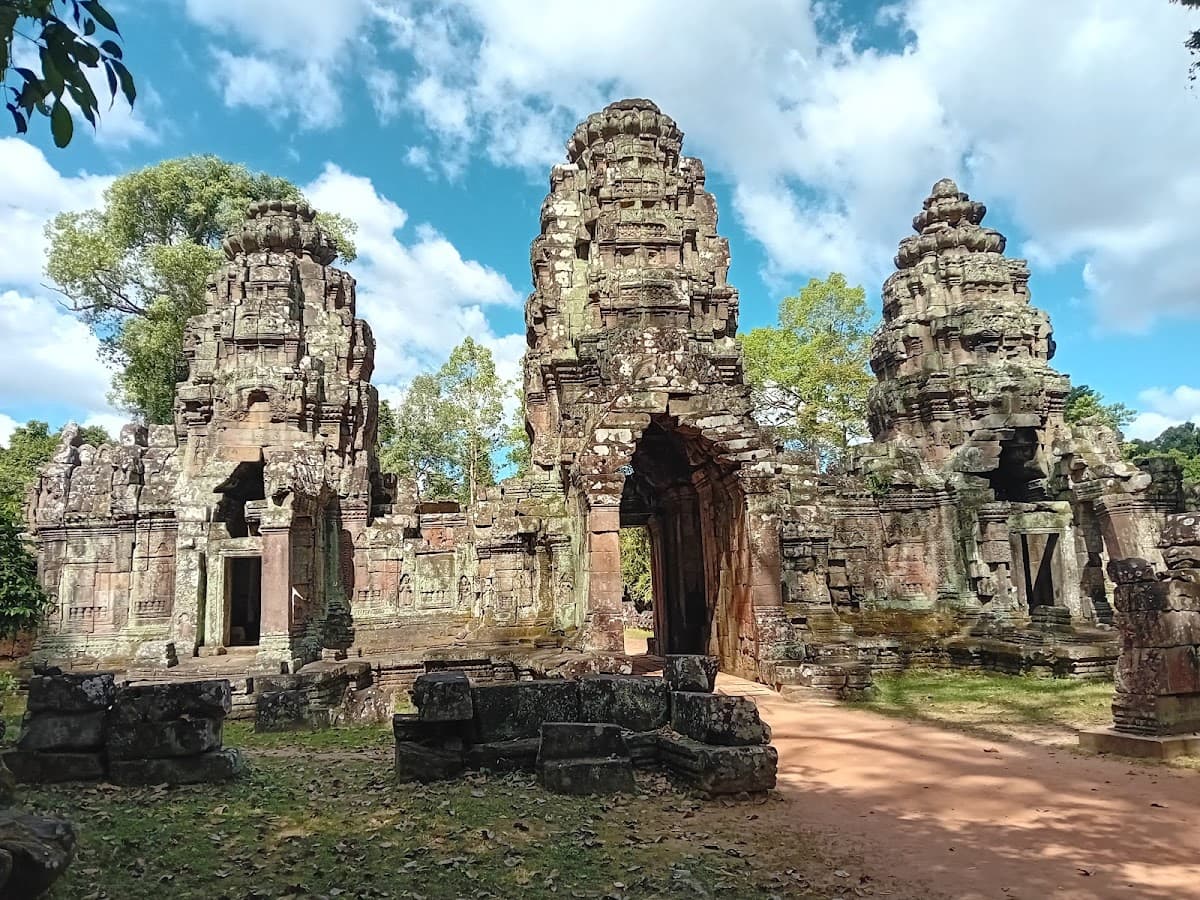
Nuestra opinión: Un vasto complejo atmosférico que rivaliza con Ta Prohm en belleza pero con una fracción de la afluencia.
Preah Khan es el templo que adoran los apasionados de la arqueología y que los turistas ocasionales ignoran — que es exactamente la razón por la que deberías visitarlo. Este complejo masivo, construido por Jayavarman VII en 1191, servía de universidad budista y albergaba a 100.000 funcionarios y servidores. Los largos corredores crean efectos de luz y sombra espectaculares. Preah Khan está en el Gran Circuito y se combina perfectamente con Neak Pean y Ta Som. Calcula una a dos horas.
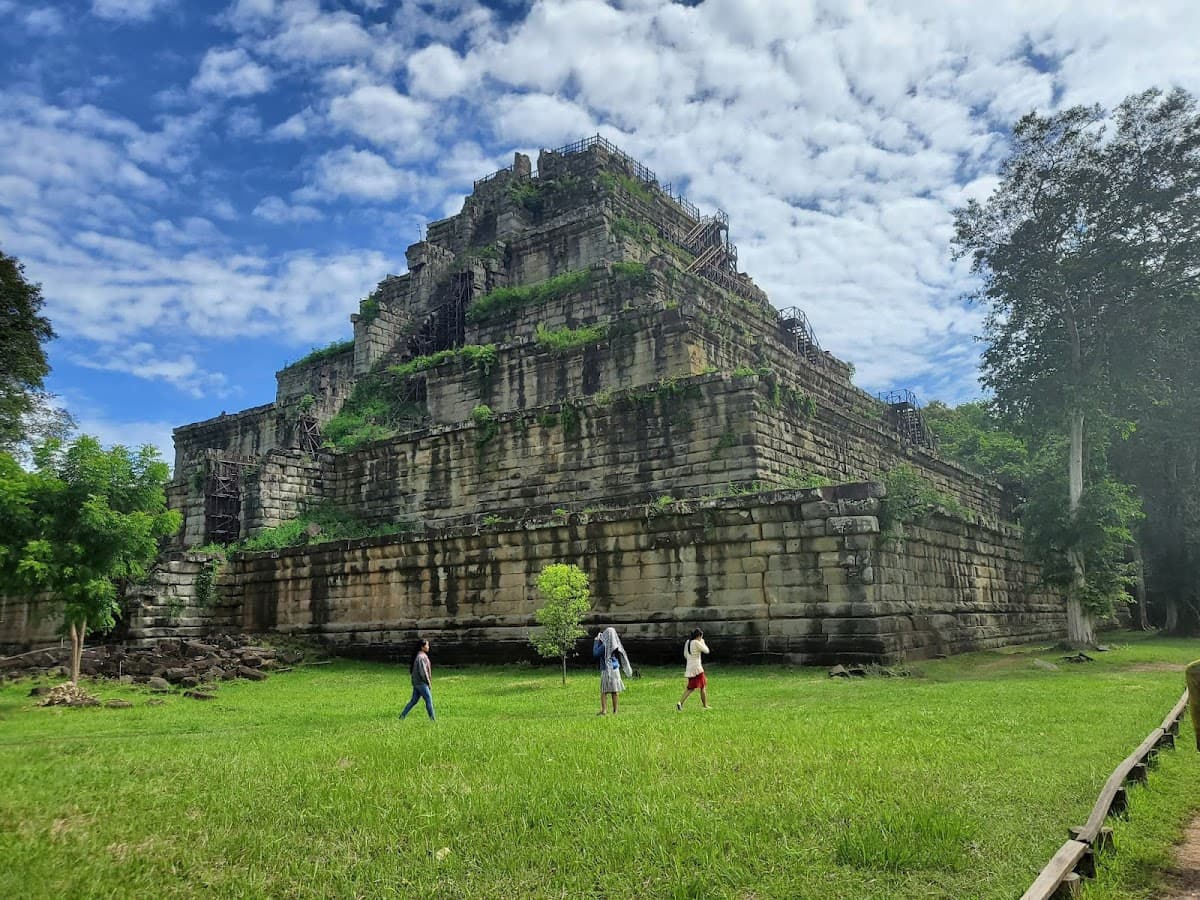
6Ta Keo
Nuestra opinión: Un templo-pirámide inacabado que ofrece subidas empinadas y vistas increíbles — para los aventureros.
Ta Keo es el templo que Angkor nunca terminó. La construcción se abandonó a comienzos del siglo XI. El resultado es una pirámide sin pulir de cinco niveles, sin decoración, que da una sensación visceral de cómo se construían estos templos. La subida hasta la cima es empinada y expuesta (sin barandillas), pero las vistas desde la cumbre merecen el esfuerzo. Ta Keo está en el Pequeño Circuito entre Ta Prohm y Thommanon. Lleva un buen calzado con agarre.
7Banteay Kdei
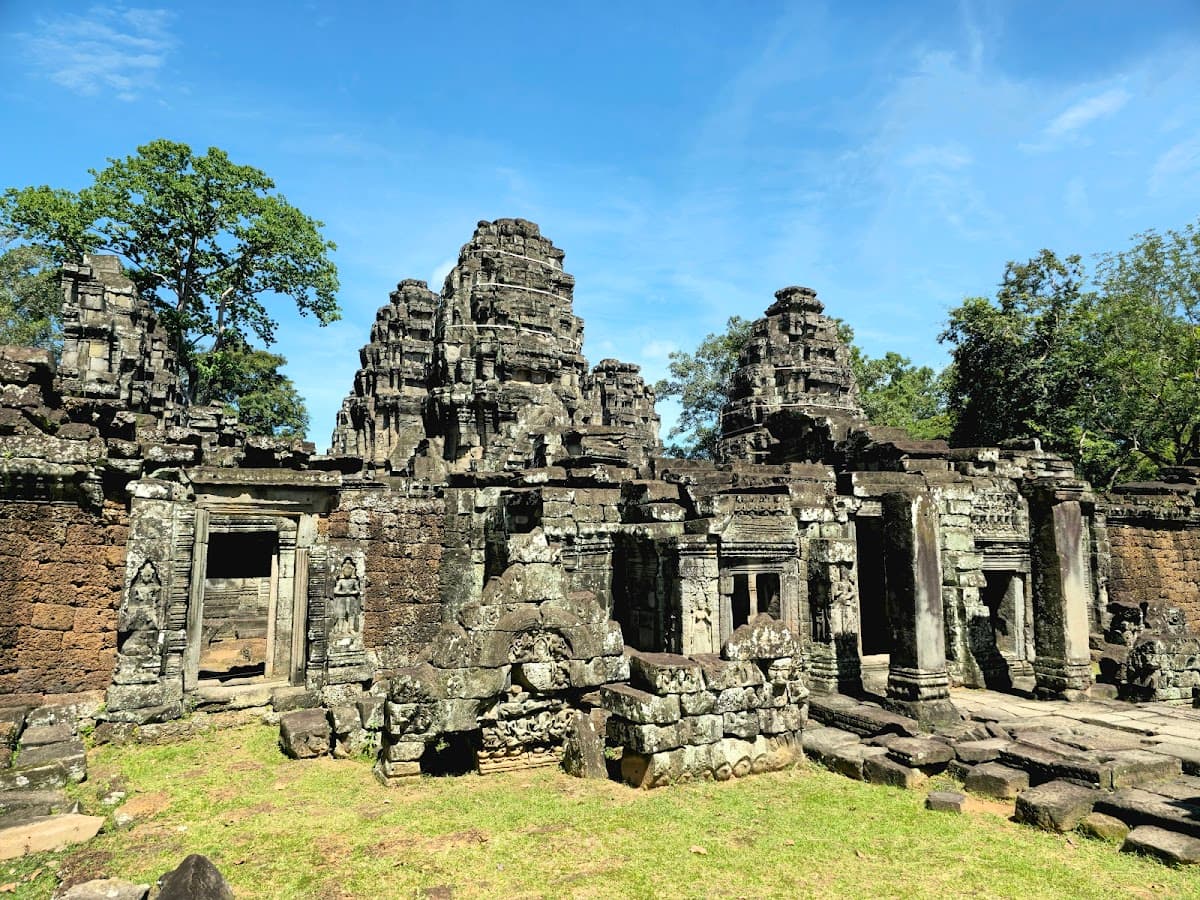
Nuestra opinión: Un monasterio apacible y fotogénico que se combina perfectamente con el embalse Srah Srang justo al lado.
Banteay Kdei es la alternativa tranquila a Ta Prohm — misma época, estilo similar, pero sin la fama Tomb Raider y sin las multitudes. Este monasterio budista presenta hermosas devatas esculpidas y largos corredores cubiertos de musgo. La Sala de las Bailarinas es lo más destacado. Cruza hasta Srah Srang, el estanque real — un lugar magnífico para el atardecer. Banteay Kdei está en el Pequeño Circuito y se visita en 45 minutos a una hora.
8Pre Rup
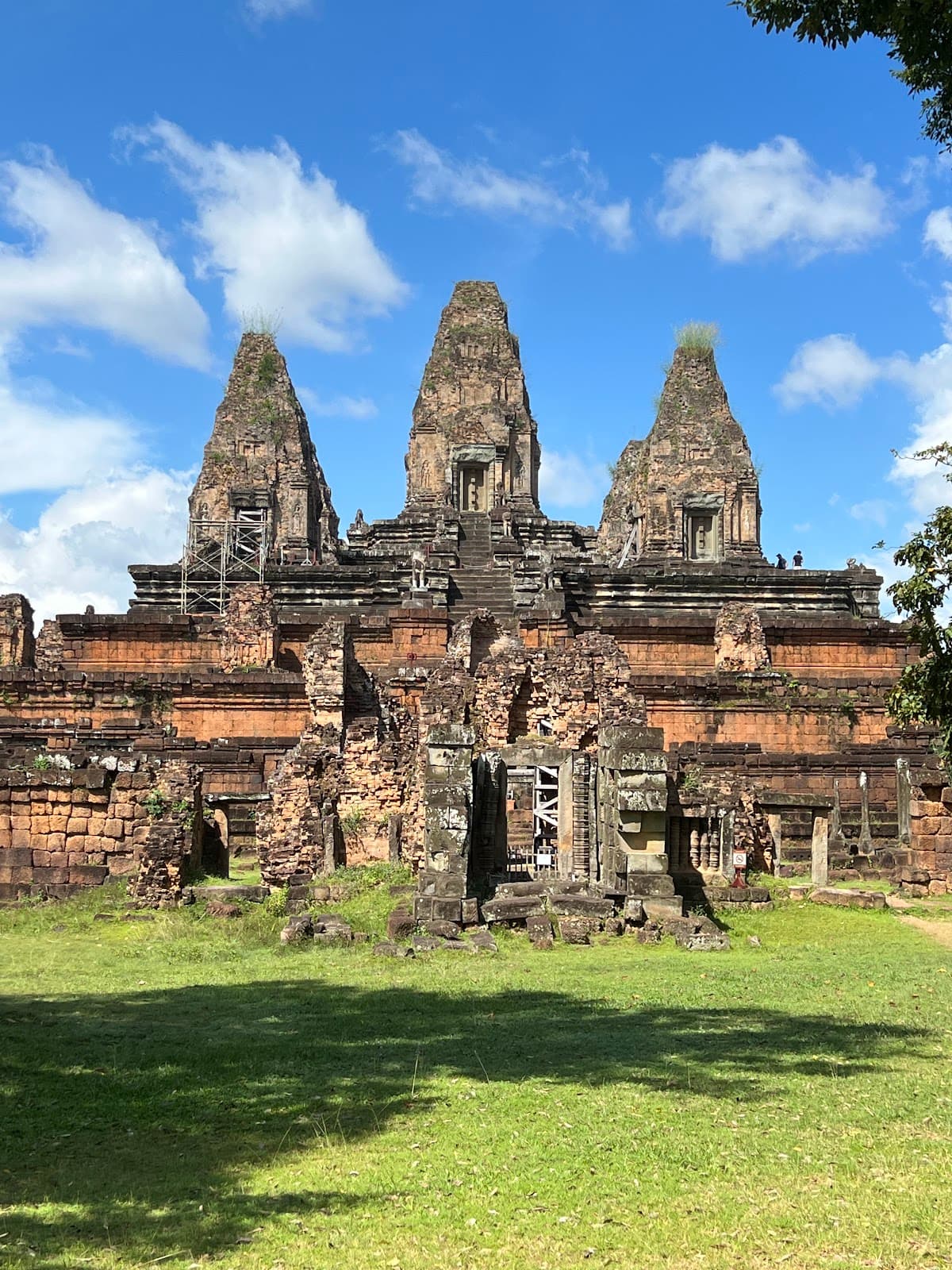
Nuestra opinión: Un templo espectacular para el atardecer con vistas panorámicas del dosel desde sus niveles superiores.
Pre Rup es un templo hindú del siglo X que servía como crematorio real — su nombre significa literalmente «girar el cuerpo». Los tres niveles están construidos en ladrillo y laterita, lo que da un color cálido que irradia dorado al atardecer. Sube a la cima para tener vistas de 360 grados de la llanura de Angkor. Pre Rup está en el Gran Circuito y constituye una de las mejores alternativas a Phnom Bakheng para el atardecer, con mucha menos gente. Calcula 30 a 45 minutos.
9Phnom Bakheng
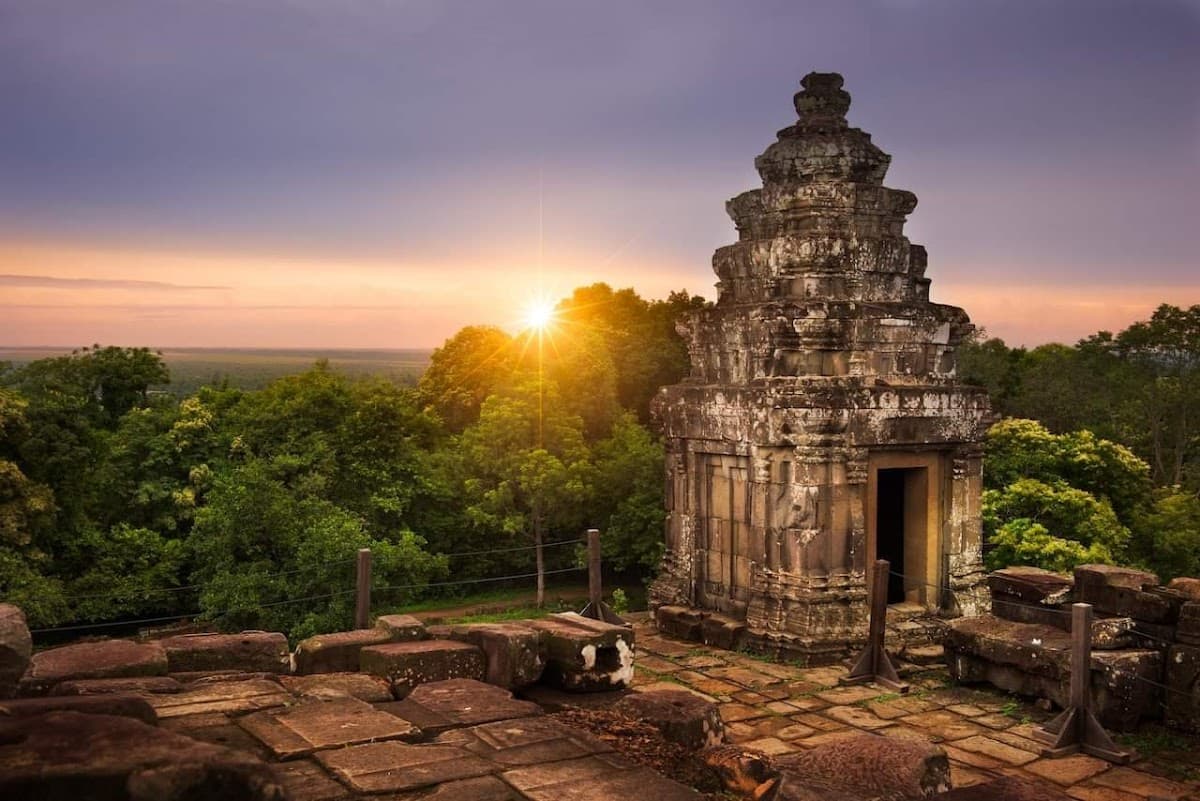
Nuestra opinión: El spot clásico del atardecer en Angkor — llega pronto y prepárate para la multitud, pero la vista vale la pena.
Phnom Bakheng es un templo-montaña del siglo IX construido sobre una colina natural, lo que lo convierte en el punto más alto de la zona de Angkor. La vista de Angkor Wat desde la cima al atardecer es icónica, pero la multitud también lo es — el acceso está limitado a 300 personas. La subida de 20 minutos lleva a una pirámide de cinco niveles con 108 torres. Para los fotógrafos, Phnom Bakheng es más interesante al amanecer cuando la plataforma está casi vacía.
10South Gate of Angkor Thom
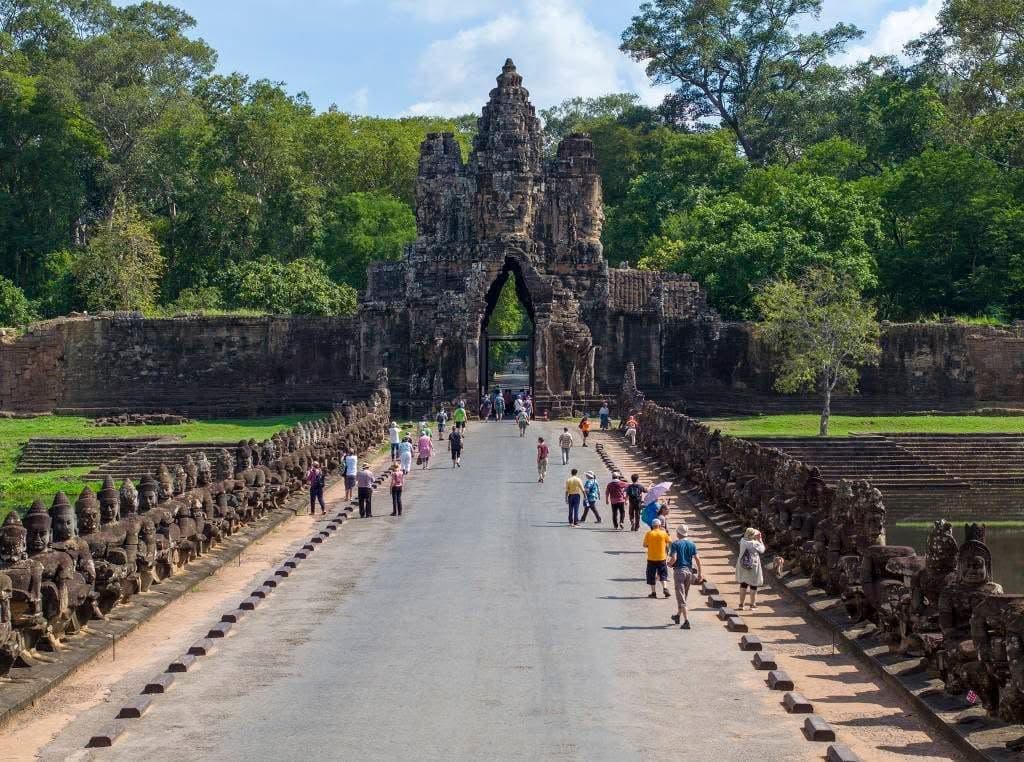
Nuestra opinión: La puerta más fotografiada de Camboya — la calzada bordeada de dioses y demonios es una introducción inolvidable a Angkor Thom.
La Puerta Sur de Angkor Thom no es un templo independiente, sino la entrada grandiosa a la ciudad fortificada de Angkor Thom. La carretera de aproximación está flanqueada por 54 figuras de piedra a cada lado — devas a la izquierda y asuras a la derecha — todas tirando de un gigantesco naga. La torre de la puerta presenta cuatro rostros enormes de Avalokiteshvara. Aparca tu tuk-tuk antes de la calzada y recorre los 200 metros completos a pie para apreciar la escala y el simbolismo.
Otros templos por descubrir
Más allá del top 12 y de las joyas escondidas, el parque arqueológico de Angkor y sus alrededores esconden decenas de otros templos que merecen el desvío. Estos 13 templos adicionales van desde pequeños santuarios-joyero del Pequeño Circuito hasta las ruinas preangkorianas de Sambor Prei Kuk. La mayoría reciben muy pocos visitantes, ofreciendo un contraste apacible con los lugares principales.
13Neak Pean
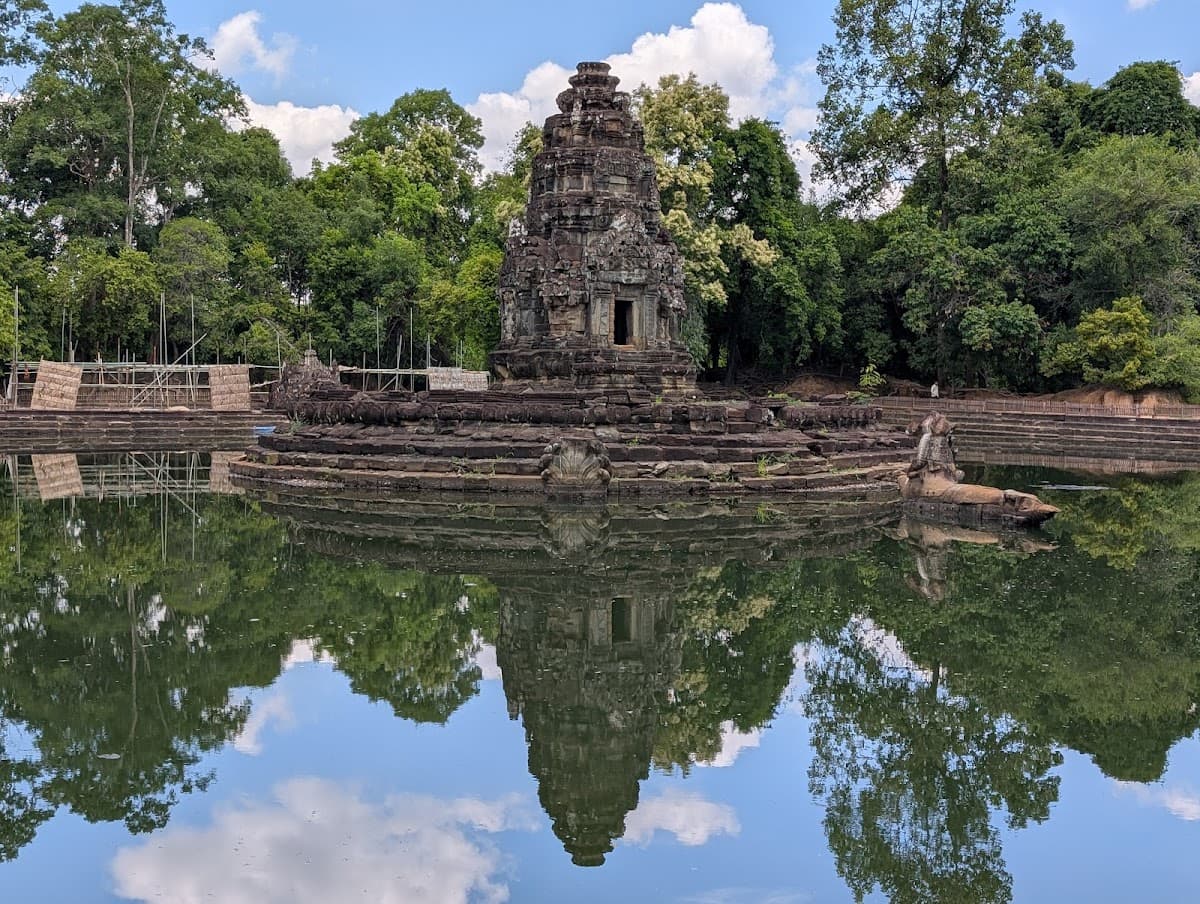
Nuestra opinión: Un templo-isla único en medio de un embalse — sereno y místico, una de las creaciones más originales de Jayavarman VII.
Neak Pean es un pequeño templo budista construido sobre una isla artificial en el centro del Jayatataka Baray, un embalse hoy seco en el Gran Circuito. Construido por Jayavarman VII a finales del siglo XII, representa el lago mítico himalayo Anavatapta. El templo descansa sobre una isla circular rodeada de cuatro estanques más pequeños, cada uno con una fuente en forma de gárgola (humano, elefante, caballo, león). Se accede por un largo pontón de madera sobre el agua. La visita solo lleva 30 minutos pero la atmósfera es incomparable. Combínalo con Ta Som y East Mebon para un trío del Gran Circuito.
14East Mebon
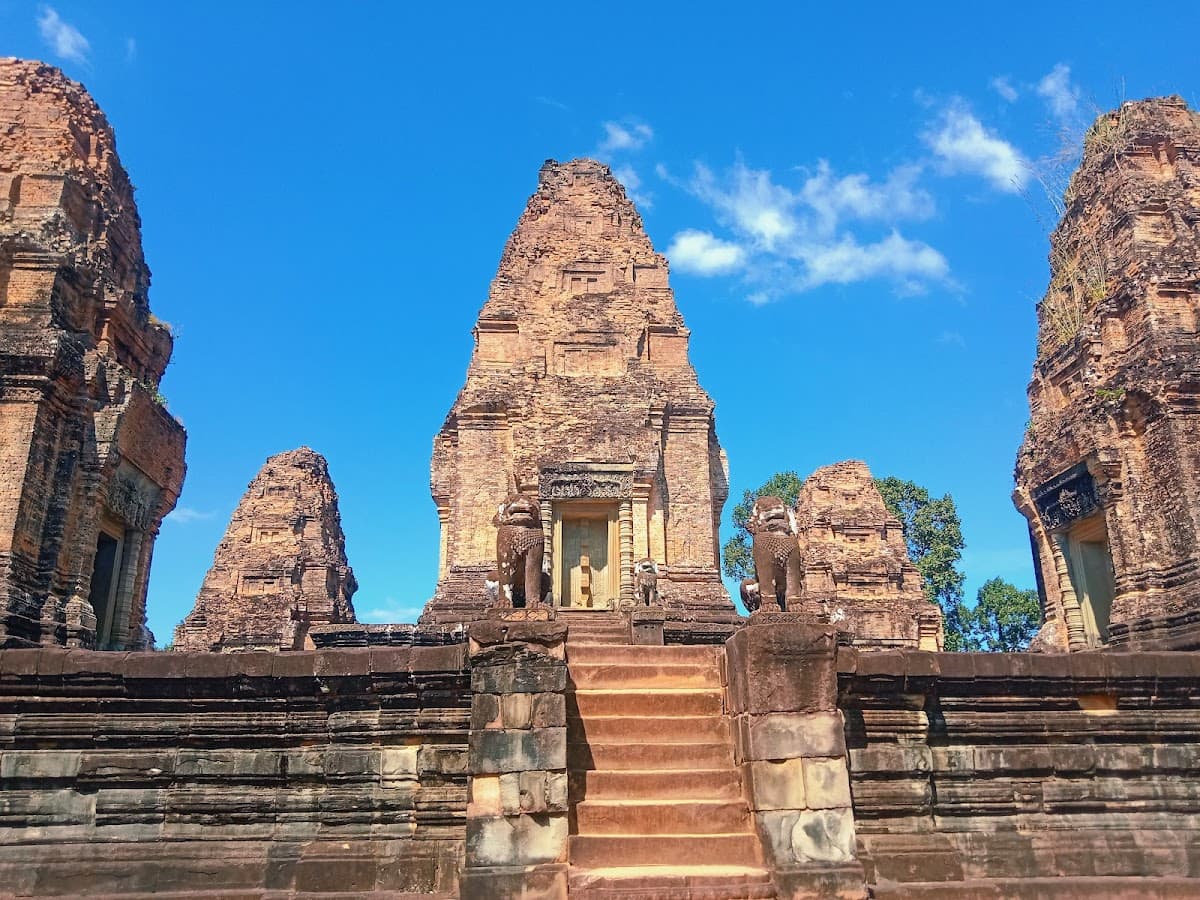
Nuestra opinión: Un templo del siglo X de hermosa simetría rodeado de elefantes de piedra — un imprescindible del Gran Circuito a menudo olvidado.
East Mebon fue construido en 953 por el rey Rajendravarman como templo hindú dedicado a Shiva. Antaño se alzaba sobre una isla hoy seca del inmenso embalse East Baray. El templo es famoso por sus elefantes de piedra a tamaño natural en cada esquina de los dos primeros niveles y su disposición perfectamente simétrica de cinco torres. Los dinteles esculpidos y las puertas falsas se cuentan entre los más bellos ejemplos del arte jemer del siglo X. Calcula 30-45 minutos, raramente con multitud. Se sitúa en el Gran Circuito entre Pre Rup y Ta Som.
15Ta Som
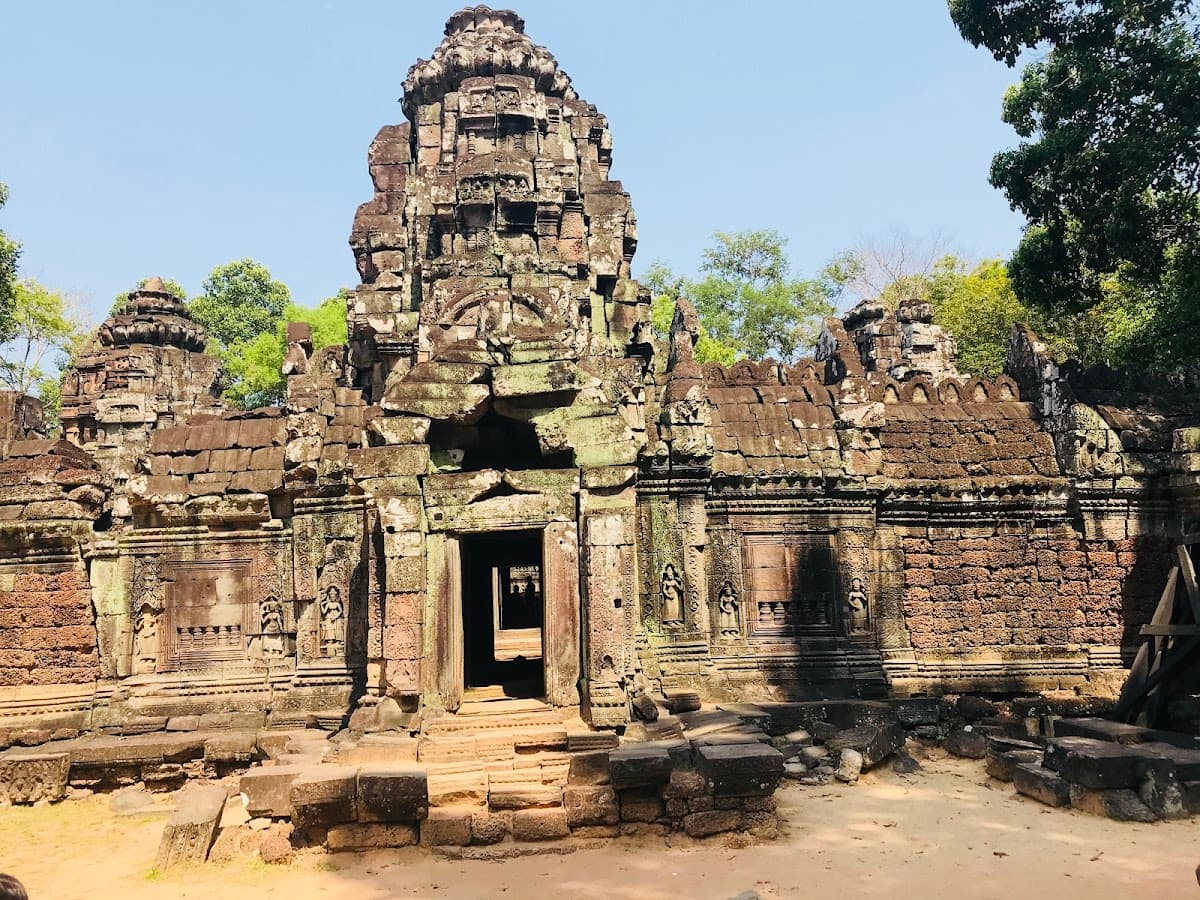
Nuestra opinión: Una joya apacible del Gran Circuito con una higuera estranguladora espectacular sobre el gopura este — el momento más fotogénico después de Ta Prohm.
Ta Som es un pequeño templo elegante construido a finales del siglo XII por Jayavarman VII, dedicado a su padre. Su gopura oriental está casi enteramente envuelto por las raíces de una inmensa higuera estranguladora, creando uno de los entornos más fotografiados de Angkor. El templo sigue una planta plana similar a Ta Prohm y Banteay Kdei pero a menor escala. Visita en 30 minutos. Se encuentra en el extremo este del Gran Circuito y recibe muy pocos visitantes. Combínalo con Neak Pean y East Mebon.
16Thommanon
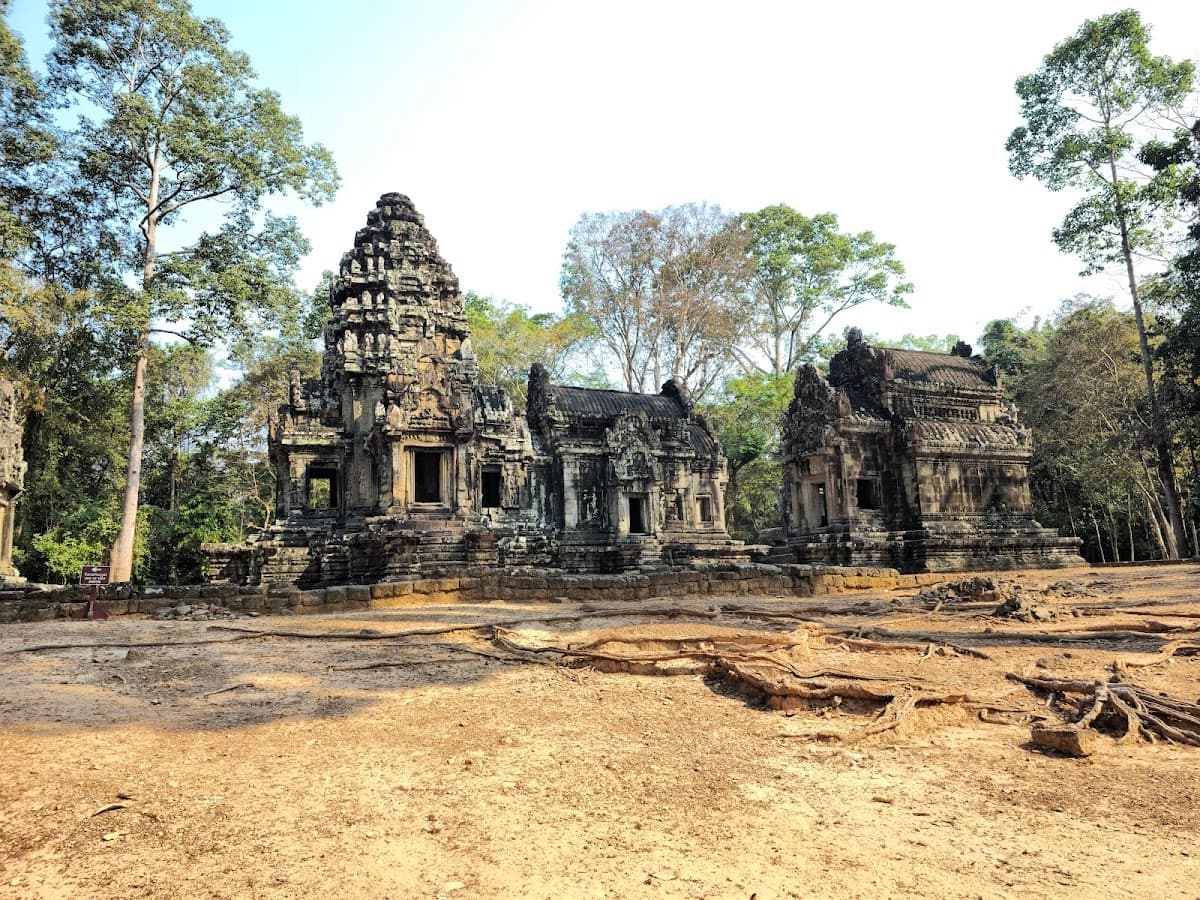
Nuestra opinión: Un diminuto templo-joyero con esculturas exquisitas — fácil de visitar como parada rápida en el Pequeño Circuito.
Thommanon es un pequeño templo hindú magníficamente decorado, construido a comienzos del siglo XII bajo el reinado de Suryavarman II, el mismo rey que construyó Angkor Wat. Se encuentra justo al este de la Puerta de la Victoria de Angkor Thom, frente a su templo gemelo Chau Say Tevoda. A pesar de su pequeño tamaño, la calidad de sus devata rivaliza con Angkor Wat. Restaurado por la EFEO, está en excelente estado. Una visita de 20 minutos basta, a combinar con Chau Say Tevoda justo enfrente.
17Chau Say Tevoda
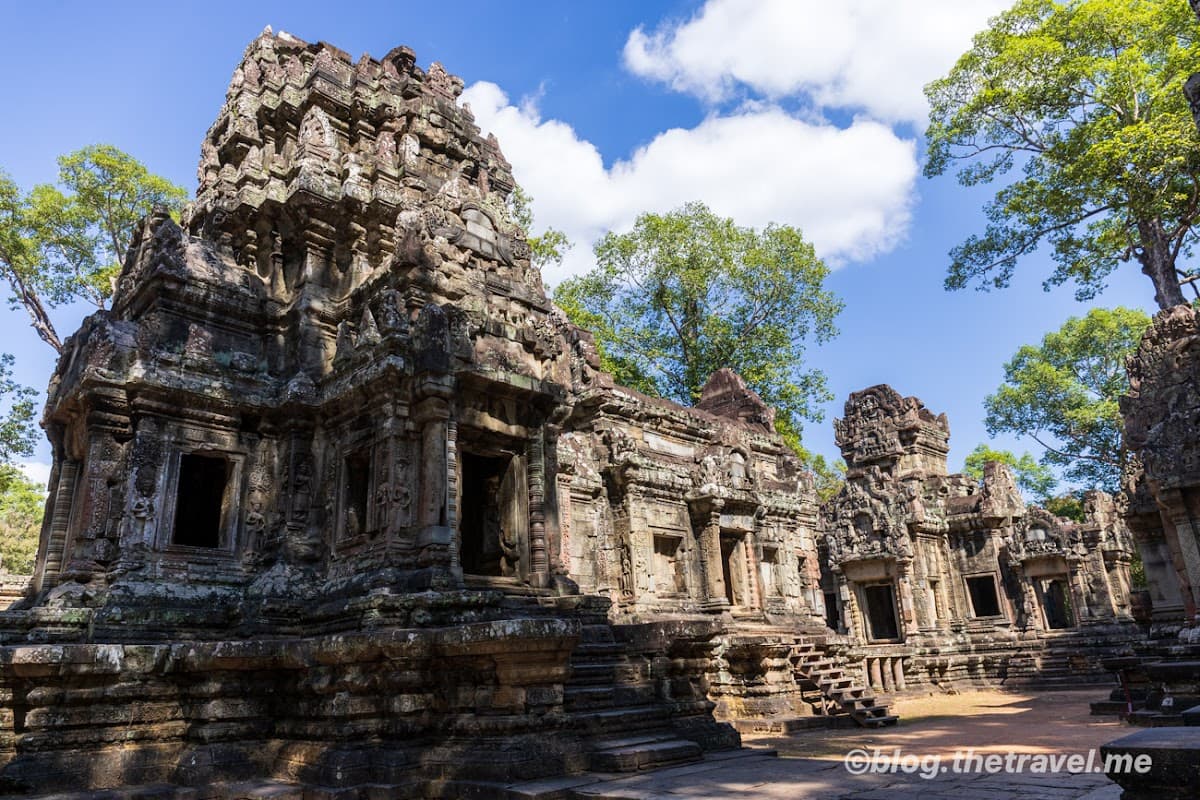
Nuestra opinión: El gemelo de Thommanon — un pequeño templo magníficamente restaurado que la mayoría de los visitantes ignora.
Chau Say Tevoda se encuentra directamente frente a Thommanon y se construyó en la misma época (comienzos del siglo XII). Estaba dedicado a Vishnu y Shiva. Tras años de abandono y un casi-derrumbe, ha sido minuciosamente restaurado por un equipo chino y reabierto en 2012. El templo presenta hermosos frontones que representan la mitología hindú y elegantes devata. Visita en 20 minutos, casi sin multitud a pesar de su posición en el Pequeño Circuito. Visita los dos junto a Thommanon — la pareja lleva menos de una hora.
18Banteay Samré
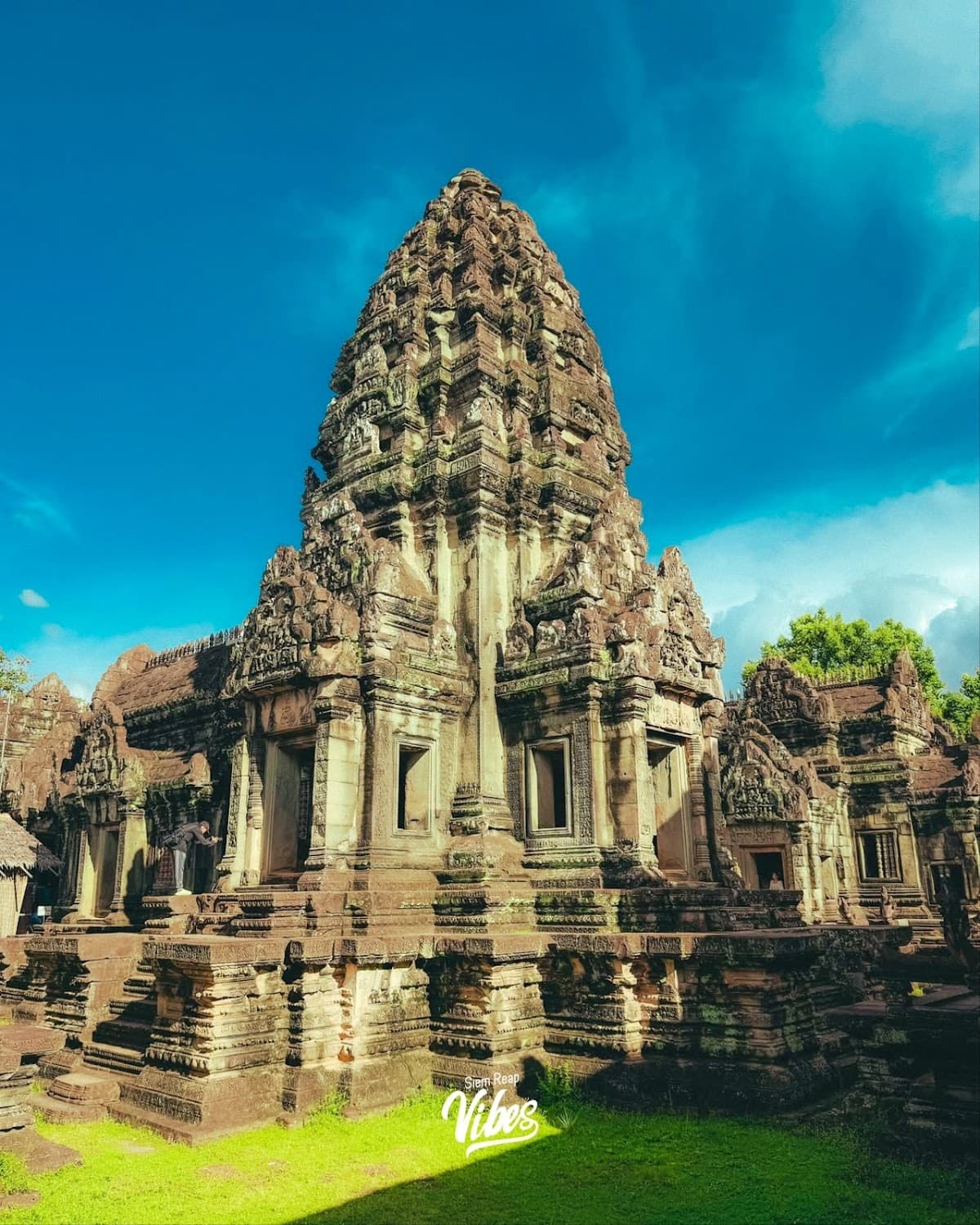
Nuestra opinión: Un templo exterior bien conservado con bellos fosos y galerías — una de las experiencias más infravaloradas de Angkor.
Banteay Samre es un templo hindú de comienzos del siglo XII, construido en el mismo estilo que Angkor Wat pero alejado de los circuitos principales. Llamado así por el pueblo Samre, posee un patio interior enmarcado por galerías cubiertas, un santuario central elevado y fosos que aún retienen agua durante la temporada de lluvias. Las esculturas se conservan notablemente bien gracias a una restauración completa por anastilosis. Situado a unos 5 km al este del Baray oriental, recibe muy pocos visitantes. Calcula 45 minutos a una hora.
19Srah Srang
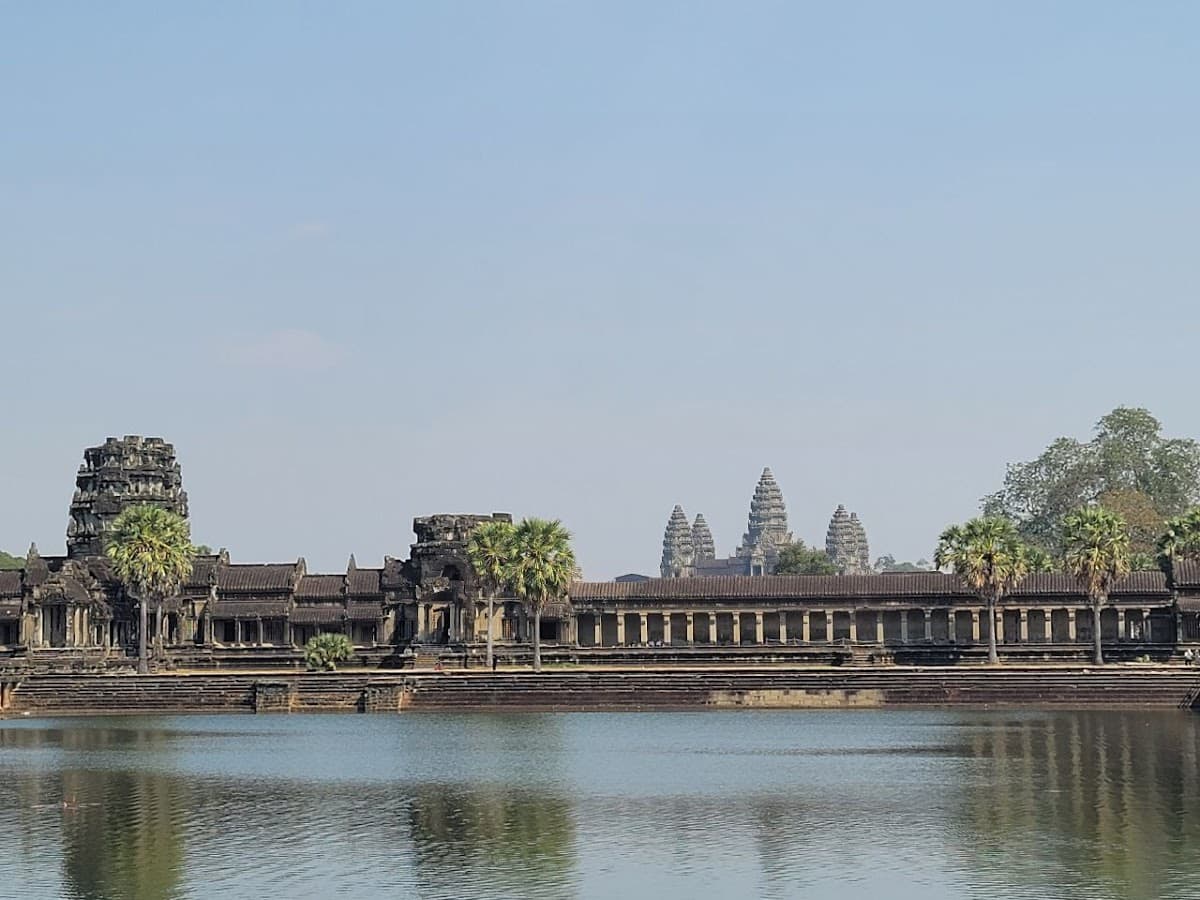
Nuestra opinión: Un estanque real apacible frente a Banteay Kdei — el mejor spot alternativo para el amanecer, casi sin multitud.
Srah Srang es un gran embalse (700 por 300 metros) construido en el siglo X y modificado más tarde por Jayavarman VII. Un embarcadero de arenisca con balaustradas naga mira al este, ofreciendo un spot de amanecer alternativo sublime con muchos menos visitantes que Angkor Wat. El agua refleja magníficamente el cielo al alba. Los locales aún utilizan el embalse para bañarse y pescar. Se encuentra justo al este de Banteay Kdei. Calcula 20 minutos. Combínalo con Banteay Kdei y Prasat Kravan.
20Bakong
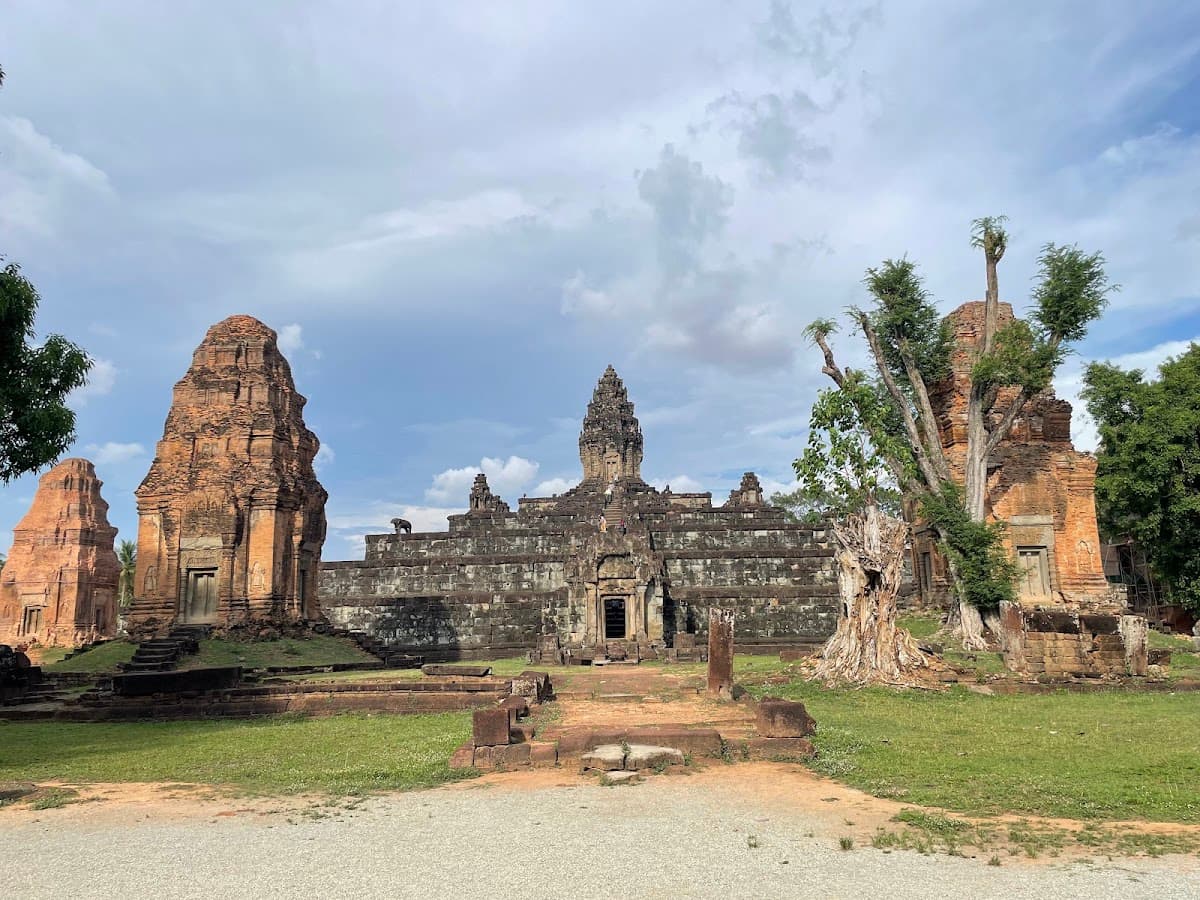
Nuestra opinión: La más antigua y la más grande pirámide del grupo Roluos — la cuna de la arquitectura jemer clásica.
Bakong es la pieza maestra del grupo Roluos, un conjunto de los templos más antiguos de la era angkoriana situado a 13 km al este de Siem Reap. Construido en 881 por el rey Indravarman I, es el primer templo-montaña en arenisca y servía de templo de Estado de la capital Hariharalaya. La pirámide de cinco niveles está coronada por una sola torre y rodeada por ocho torres de ladrillo más pequeñas decoradas con estuco. Elefantes de piedra guardan las esquinas. Estableció el modelo arquitectónico que evolucionaría hacia Angkor Wat 250 años más tarde. Calcula 45 minutos. Combínalo con Preah Ko y Lolei para una mañana completa en el grupo Roluos.
21Preah Ko
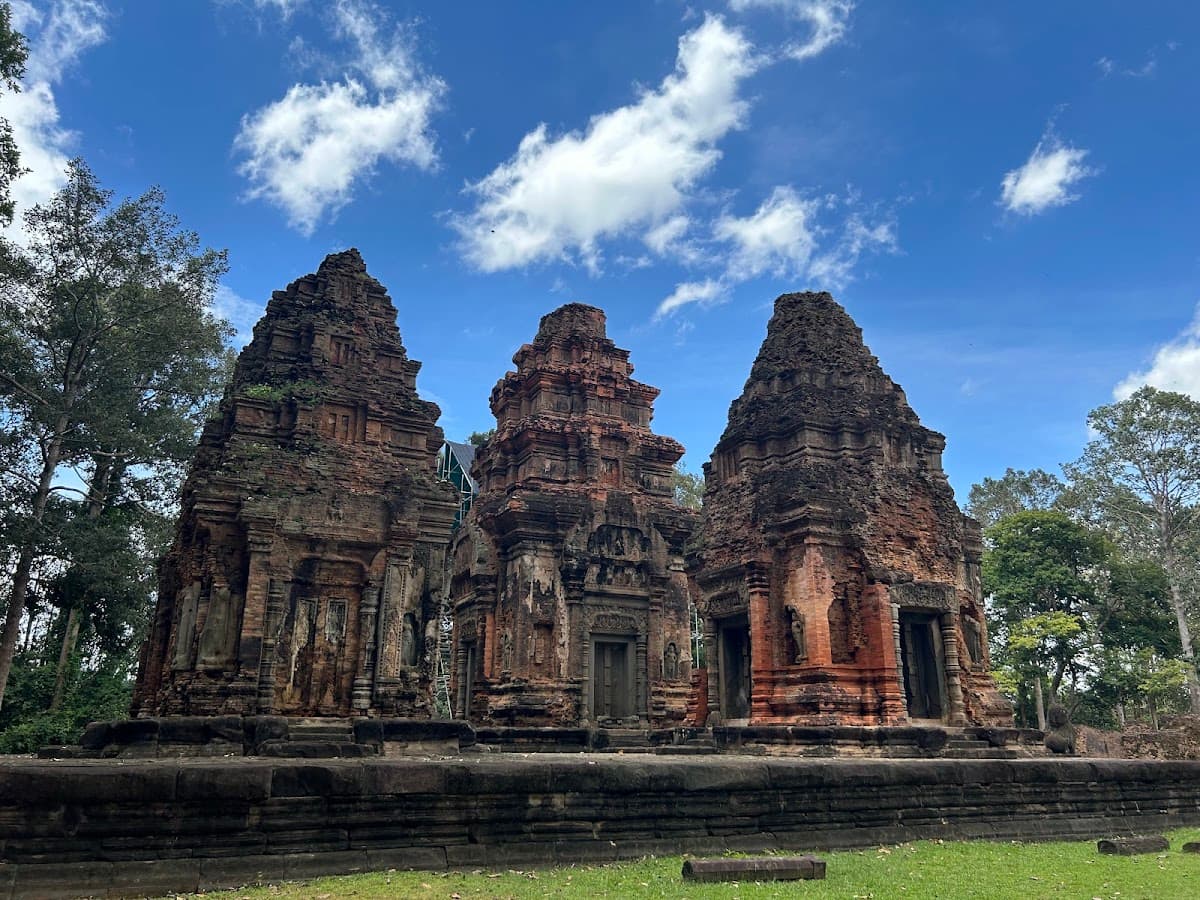
Nuestra opinión: Seis graciosas torres de ladrillo con las inscripciones angkorianas más antiguas — un imprescindible para los apasionados de la historia.
Preah Ko (Toro Sagrado) fue el primer templo construido en el grupo Roluos en 879, dedicado por Indravarman I a sus antepasados y a Shiva. Las seis torres de ladrillo se disponen en dos hileras y aún conservan fragmentos de su decoración original en estuco — entre los enlucidos decorativos más antiguos de la región de Angkor. Toros sagrados (nandi) bordean la aproximación. El templo es compacto y se visita en 30 minutos. Situado justo al sur de Bakong en el grupo Roluos, a 13 km de Siem Reap. Casi ningún turista, una experiencia maravillosamente apacible.
22Lolei
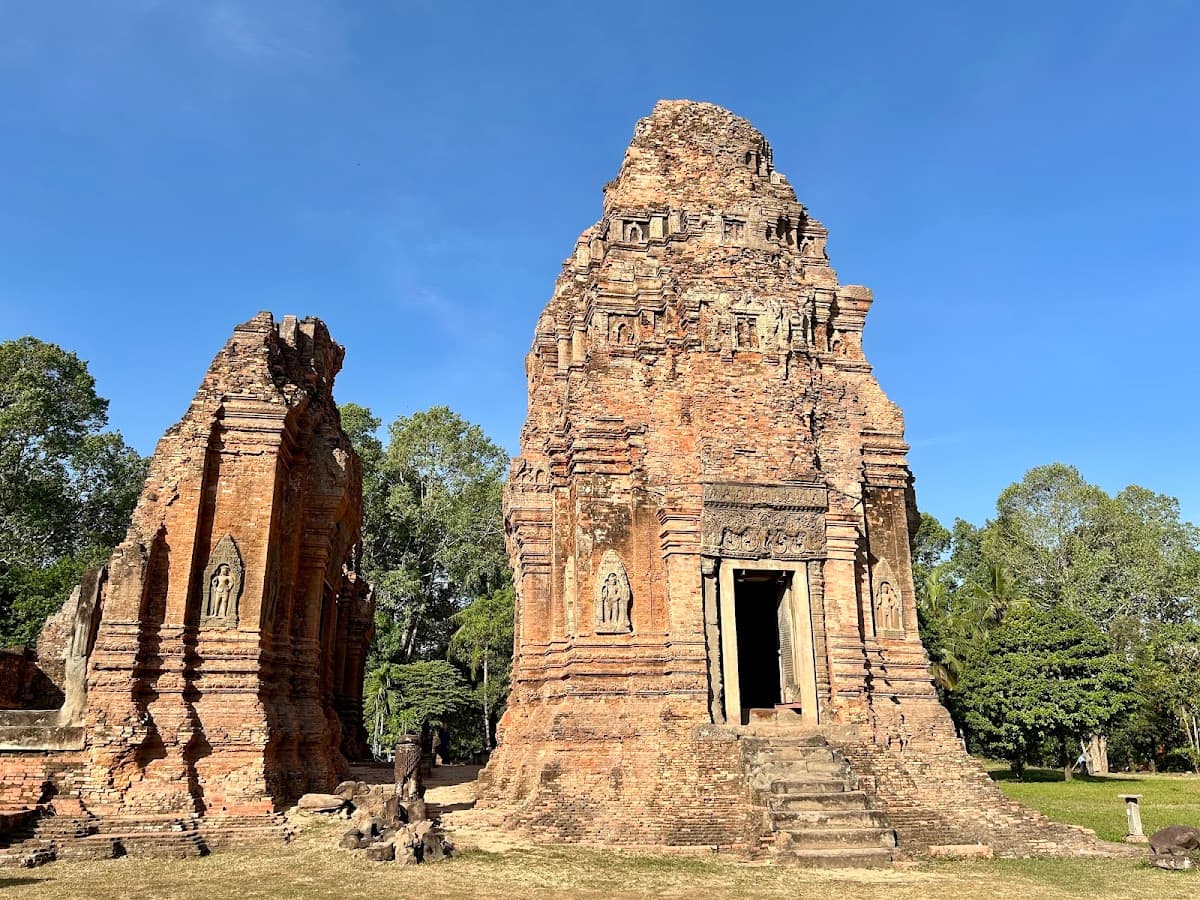
Nuestra opinión: El último templo del grupo Roluos, construido sobre una isla de embalse hoy seco — una nota a pie de página tranquila a los orígenes de Angkor.
Lolei fue construido en 893 por Yasovarman I sobre una isla en medio del Baray Indratataka (hoy seco). Sus cuatro torres de ladrillo están dedicadas a los padres y abuelos del rey. Las esculturas de los dinteles son notablemente detalladas para su edad e incluyen finas inscripciones en sánscrito. Un monasterio budista moderno ocupa hoy el lugar, dándole al sitio una atmósfera viva. Calcula 20-30 minutos. Es el templo más al norte del grupo Roluos. Visita los tres templos Roluos en una sola mañana desde Siem Reap.
23Prasat Kravan
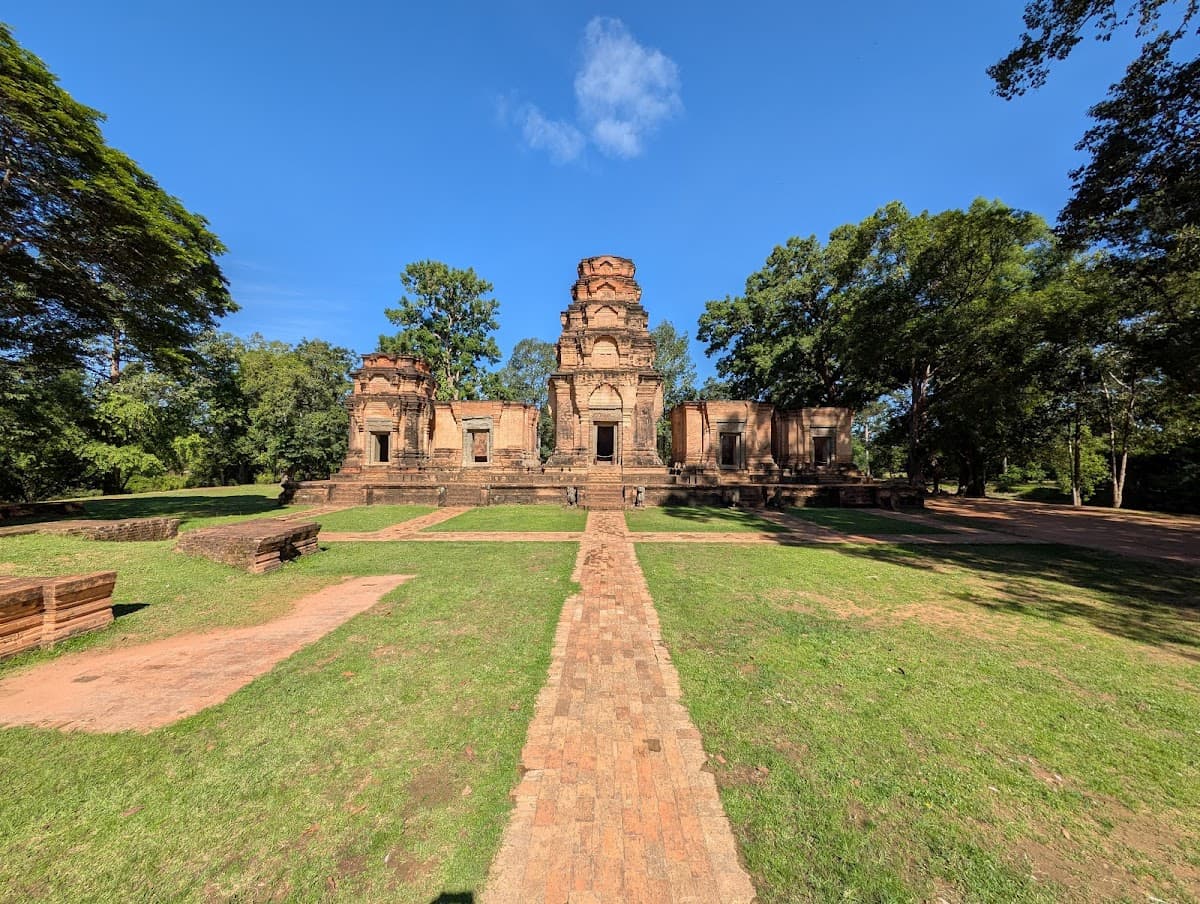
Nuestra opinión: El único templo de Angkor con bajorrelieves en ladrillo — cinco pequeñas torres con esculturas interiores únicas de Vishnu.
Prasat Kravan es un pequeño templo hindú construido en 921, notable por ser el único templo de Angkor con bajorrelieves esculpidos directamente en los muros de ladrillo de su interior. Las cinco torres de ladrillo están alineadas de norte a sur. La torre central contiene un notable relieve de Vishnu cabalgando el océano, mientras que la torre norte presenta esculturas de Lakshmi. El templo fue restaurado por los franceses en los años 1960 con ladrillos originales y de reemplazo (marcados CA por conservación). Situado en el Pequeño Circuito entre Ta Prohm y Srah Srang, 15-20 minutos bastan pero la experiencia es única.
24Sambor Prei Kuk
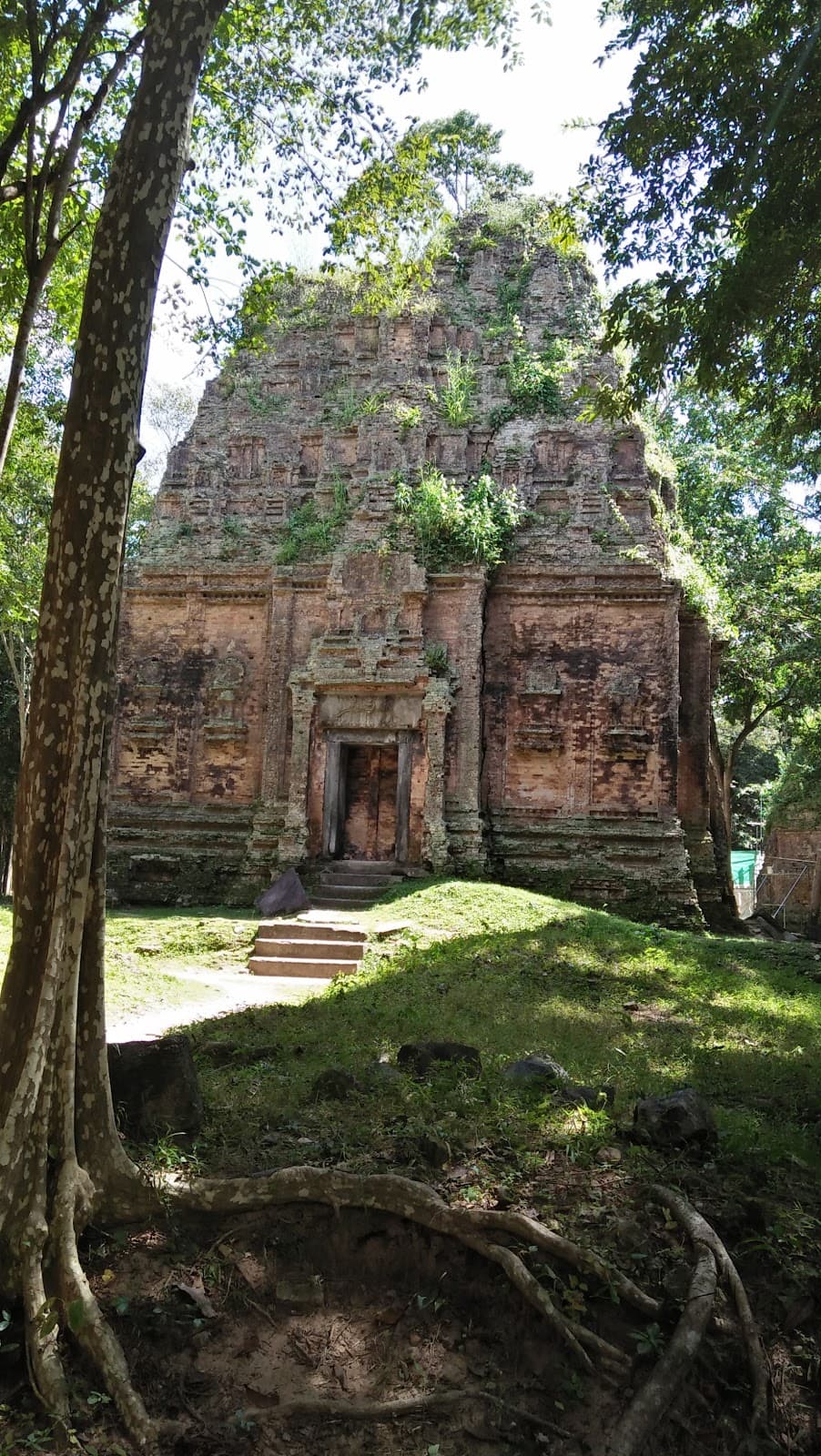
Nuestra opinión: Un sitio UNESCO preangkoriano a 3 horas de Siem Reap — el complejo de templos más antiguo de Camboya y una fascinante excursión de un día.
Sambor Prei Kuk es el segundo sitio del patrimonio mundial de la UNESCO en Camboya (inscrito en 2017), anterior a Angkor en varios siglos. Construido en el siglo VII como Isanapura, capital del imperio Chenla, contiene más de 100 templos repartidos en tres grupos principales por el bosque. Los templos octogonales y las esculturas de palacios voladores son únicos en la arquitectura del Sudeste Asiático. Situado a unos 200 km de Siem Reap (3 horas en coche vía Kampong Thom), es una excursión enriquecedora para quienes disponen de un día adicional. Calcula 2-3 horas para los grupos principales.
25Phimeanakas
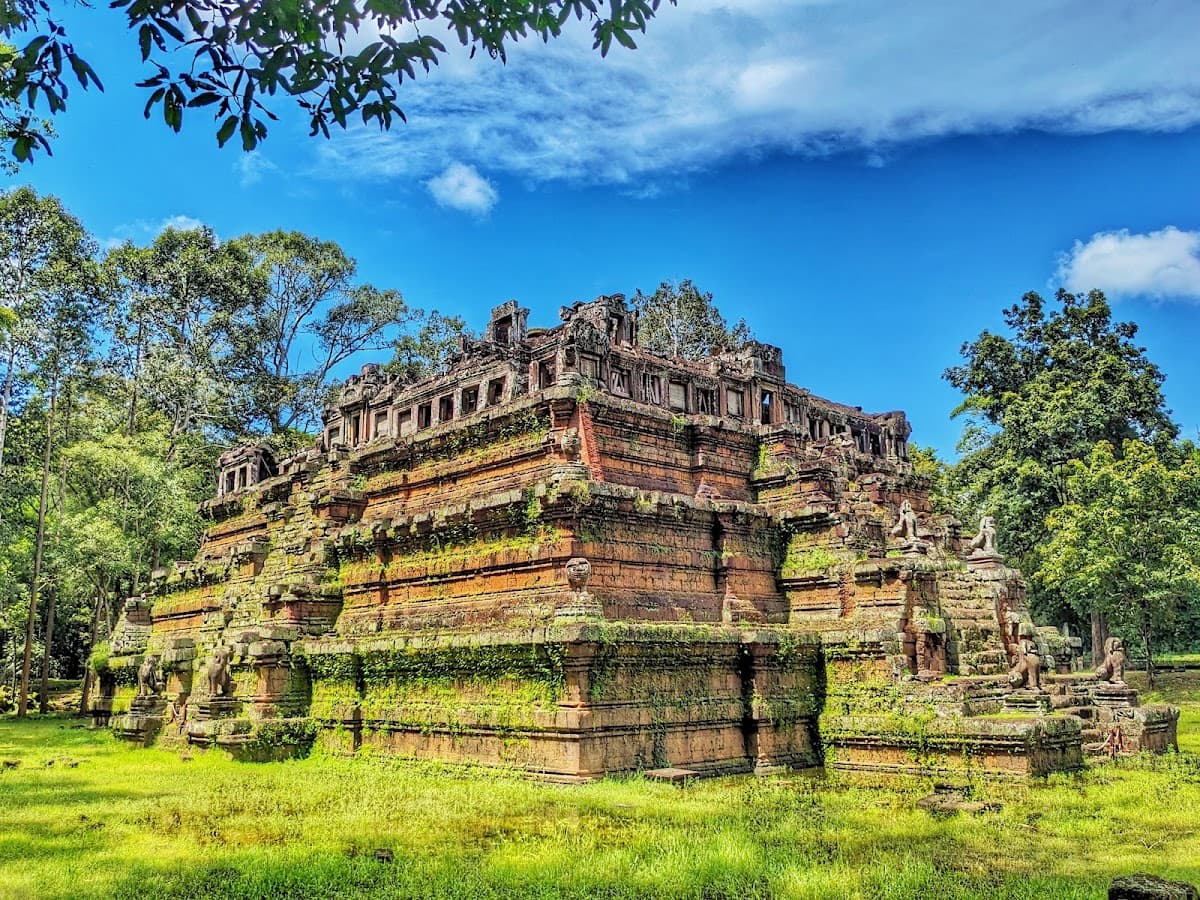
Nuestra opinión: Una pirámide escondida en el recinto del Palacio Real de Angkor Thom — una subida empinada recompensada con vistas al dosel.
Phimeanakas es un pequeño templo piramidal de tres niveles dentro del recinto del Palacio Real de Angkor Thom, construido a finales del siglo X por Rajendravarman y modificado más tarde por Jayavarman VII. Según la leyenda, el rey jemer debía dormir cada noche en la torre dorada de la cima del templo con un espíritu naga — no presentarse significaba el desastre para el reino. La subida empinada ofrece vistas a la jungla y a los muros del palacio circundantes. Se pasa por alto fácilmente porque los visitantes pasan corriendo hacia el Baphuon o la Terraza de los Elefantes. Calcula 20-30 minutos y combínalo con los estanques del Palacio Real cercanos.
Itinerarios sugeridos
1Itinerario 1 día — Lo esencial
5:00 — Angkor Wat para el amanecer. 6:30 — Explora el interior. 8:30 — Puerta Sur de Angkor Thom. 9:00 — Bayon. 10:30 — Baphuon y Terraza de los Elefantes. 11:30 — Almuerzo. 13:00 — Ta Prohm. 14:30 — Banteay Kdei y Srah Srang. 16:00 — Ta Keo (opcional). 17:00 — Atardecer en Pre Rup o Phnom Bakheng. Sal pronto e hidrátate constantemente.
2Itinerario 2 días — La experiencia completa
Día 1 — Pequeño Circuito a ritmo relajado. Más tiempo en Angkor Wat y Ta Prohm. Día 2 — Gran Circuito + Banteay Srei: 6:00 Preah Khan, 8:00 Neak Pean, 8:30 Ta Som, 9:30 Mebon oriental, 10:00 Pre Rup, 10:30 ruta hacia Banteay Srei, 11:30 Banteay Srei, 13:00 vuelta a Siem Reap.
3Itinerario 3 días — La ruta del explorador
Día 1 — Pequeño Circuito. Día 2 — Gran Circuito. Día 3 — Templos exteriores: 6:00 salida hacia Beng Mealea (1h30), 8:00 exploración con guía local, 10:00 continuación hacia Koh Ker, 11:30 subida a la pirámide Prasat Thom, 13:00 picnic, 14:00 vuelta. La experiencia Angkor definitiva.
Presupuesto — Lo que cuesta de verdad
| Concepto | Económico | Gama media | Lujo |
|---|---|---|---|
| Pase Angkor (1 día) | 37 $ | 37 $ | 37 $ |
| Transporte | 15 $ (tuk-tuk) | 35 $ (coche con A/A) | 80 $ (guía privado + coche) |
| Almuerzo | 3-5 $ | 8-15 $ | 25-40 $ |
| Agua y snacks | 2 $ | 5 $ | 10 $ |
| Guía (opcional) | 0 $ | 25 $ | 50 $+ |
| Pañuelo/camisa | 2 $ (mercado) | 0 $ | 0 $ |
| TOTAL por día | 59-61 $ | 110-117 $ | 202-217 $ |
Mejor época — Mes a mes
| Mes | Tiempo | Afluencia | Veredicto |
|---|---|---|---|
| Enero | Fresco y seco, 25-32 °C | Temporada alta | Best |
| Febrero | Seco y caluroso, 26-34 °C | Temporada alta | Best |
| Marzo | Caluroso, 28-36 °C | Moderada | Good |
| Abril | Muy caluroso, 29-38 °C | Temporada baja | Avoid |
| Mayo | Caluroso, primeras lluvias, 28-36 °C | Temporada baja | Avoid |
| Junio | Lluvioso, 27-34 °C | Temporada baja | Avoid |
| Julio | Lluvioso, 27-33 °C | Temporada baja | Avoid |
| Agosto | Lluvioso, 27-33 °C | Temporada baja | Avoid |
| Septiembre | Lluvioso, jungla verde, 27-32 °C | Muy escasa | Good |
| Octubre | Últimas lluvias, exuberante, 26-32 °C | Escasa | Good |
| Noviembre | Fresco, comienzo seco, 25-31 °C | En aumento | Best |
| Diciembre | Fresco y seco, 24-30 °C | Temporada alta | Best |
Entradas, horarios y código de vestimenta
El Pase Angkor es la entrada única para todo el parque arqueológico. Precios en 2026: pase 1 día 37 $, pase 3 días 62 $ (válido 10 días), pase 7 días 72 $ (válido un mes). Cómpralo en la taquilla oficial Angkor Enterprise en la carretera de Apsara — abre a las 5:00.
Pago en efectivo (USD) o con tarjeta. Los niños menores de 12 años entran gratis. Código de vestimenta: hombros y rodillas deben estar cubiertos en el nivel superior de Angkor Wat.
El parque abre a las 5:00 y cierra a las 17:30. Lleva tu pase contigo en todo momento.
Cómo llegar y moverse
El tuk-tuk es la experiencia clásica de Angkor: 15-20 $ al día por el Pequeño Circuito, 25-30 $ por el Gran Circuito, 35-45 $ por los templos exteriores. Tu conductor espera en cada templo. Coche privado con aire acondicionado: 35-50 $ al día.
Las bicis y scooters eléctricos (8-15 $ al día) son cada vez más populares. Las bicis clásicas (3-5 $) funcionan bien para el Pequeño Circuito pero son agotadoras para el Gran Circuito. Deja una propina de 3-5 $ a tu conductor si hace un buen trabajo.
Pequeño Circuito vs Gran Circuito
El Pequeño Circuito es un bucle de 17 kilómetros que cubre Angkor Wat, Angkor Thom, Ta Keo, Ta Prohm y Banteay Kdei. Es el itinerario esencial de un día. El Gran Circuito añade 26 kilómetros con Preah Khan, Neak Pean, Ta Som, Mebon oriental y Pre Rup.
El Circuito Exterior cubre Banteay Srei, Beng Mealea y Koh Ker. La mayoría hace el Pequeño Circuito el día 1 y el Gran Circuito el día 2. Si solo tienes un día, haz el Pequeño Circuito — verás los tres grandes.
Amanecer en Angkor Wat — La guía completa
Ver salir el sol detrás de las cinco torres de Angkor Wat es una de las grandes experiencias de viaje en la Tierra. Horas de salida: 5:30 (diciembre) a 6:00 (junio). Llega a la taquilla a las 5:00.
Sitúate a la izquierda del estanque de reflejo. Los mejores meses son de noviembre a febrero. Las fechas de los equinoccios (21 de marzo y 23 de septiembre) son especiales: el sol sale directamente detrás de la torre central.
Lleva un trípode y un frontal. Una vez que la multitud se dispersa hacia las 6:30, tendrás Angkor Wat prácticamente para ti durante la hora siguiente.
Guía fotográfica — Las mejores tomas
Angkor Wat se fotografía al amanecer (reflejo en los fosos) y al final de la tarde (luz dorada). Bayon exige un gran angular para los rostros a las 7:00. Ta Prohm es un paraíso de luz natural: las raíces de los árboles crean encuadres espectaculares antes de las 9:00 o después de las 15:00.
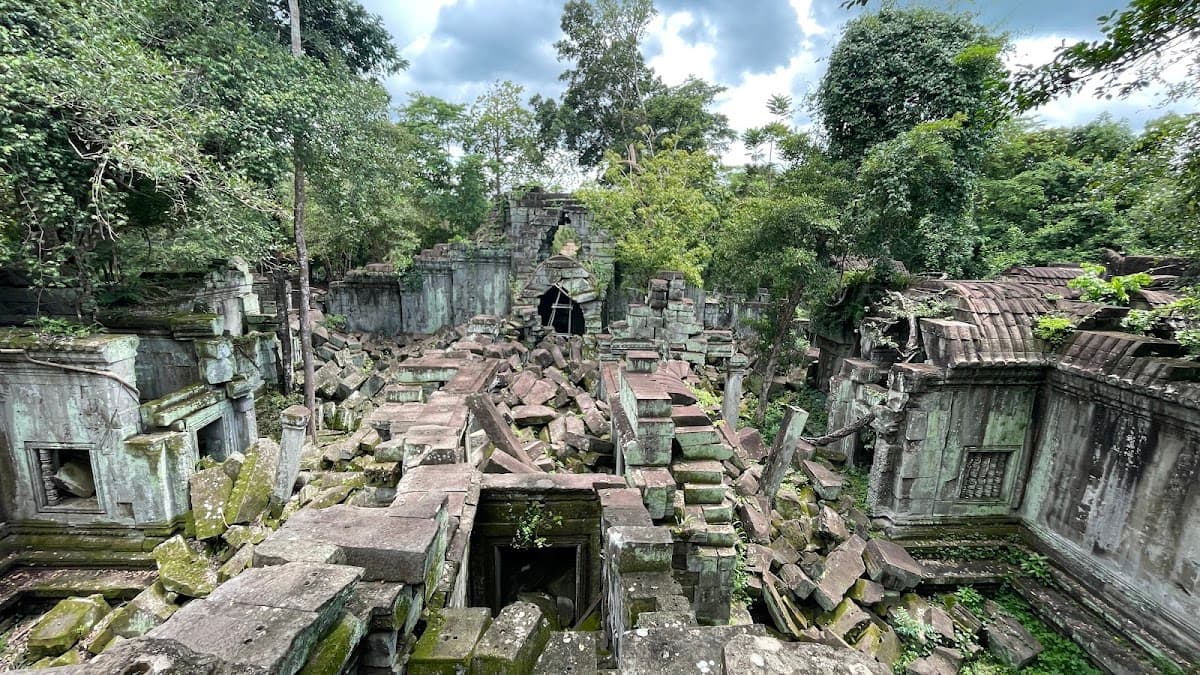
La arenisca rosa de Banteay Srei irradia por la mañana — lleva un macro. Pre Rup y Phnom Bakheng ofrecen panoramas al atardecer. Para Beng Mealea, un gran angular capta la escala de las galerías derrumbadas.
La fotografía con dron está estrictamente prohibida. Los trípodes están permitidos pero no en las galerías centrales de Angkor Wat.
Visitar los templos con niños
Angkor con niños es totalmente factible si planificas en función de su energía. Angkor Wat al amanecer — los niños adoran la aventura matinal. Bayon gusta gracias a los rostros gigantes de piedra.
Ta Prohm es el templo definitivo para niños — encontrar la escultura de dinosaurio es una excelente caza del tesoro. Evita Ta Keo (demasiado empinado) y Phnom Bakheng (demasiado abarrotado). Lleva snacks, agua, crema solar SPF 50, sombreros y un ventilador portátil.
La mayoría de los niños menores de 8 años estarán cansados después de tres templos. Los niños menores de 12 años entran gratis.
Estafas, seguridad y errores habituales
Los templos de Angkor suelen ser muy seguros, pero persisten algunas estafas. Desconfía de los guías no oficiales. Nunca compres antigüedades — son falsas o saqueadas ilegalmente.
Ten cuidado por dónde caminas: piedras irregulares, escaleras empinadas y musgo resbaladizo. Lleva un frontal para el amanecer. Mantente hidratado: el golpe de calor es habitual de marzo a mayo.
Los monos en Angkor Wat son frecuentes — no los alimentes. El error más grande es intentar ver demasiados templos en un día.
Breve historia de Angkor
El Imperio Jemer se fundó en el año 802 d. C. cuando Jayavarman II se proclamó monarca universal en el Phnom Kulen. Durante los seis siglos siguientes, los reyes sucesivos construyeron templos-montaña cada vez más ambiciosos.
Suryavarman II construyó Angkor Wat a comienzos del siglo XII. Jayavarman VII convirtió el imperio al budismo y construyó Angkor Thom, Bayon, Ta Prohm y Preah Khan. Ayutthaya saqueó Angkor en 1431 y la capital se trasladó a Phnom Penh.
El explorador francés Henri Mouhot llevó Angkor a la atención de Occidente en 1860, y la restauración prosigue desde entonces.
Publicado por Siem Reap Hub
La guía comunitaria para expatriados y viajeros en Siem Reap, Camboya.
Sitio creado por un ingeniero francés instalado en Siem Reap desde 2025, que combina análisis de IA (Claude, pipelines RAG) y datos de Google Maps para construir el directorio local más completo — más de 5.300 comercios verificados. Sin colocaciones patrocinadas, sin contenido remunerado.
¿Estás planeando tu viaje a Siem Reap?
Explora nuestra guía completa de actividades en Siem Reap — más allá de los templos.
50+ actividades que hacerPreguntas frecuentes
¿Cuánto cuesta el Pase Angkor?
El pase de 1 día cuesta 37 $, el pase de 3 días 62 $ (válido 10 días) y el pase de 7 días 72 $ (válido 1 mes). Los niños menores de 12 años entran gratis.
¿A qué hora abre Angkor Wat?
El parque abre a las 5:00 para los visitantes del amanecer y cierra a las 17:30.
¿Es necesario un guía?
No estrictamente, pero un buen guía transforma la experiencia. Calcula 25-50 $ por un guía acreditado a la jornada.
¿Cómo vestirse?
Hombros y rodillas deben estar cubiertos. Lleva una camisa ligera o un pañuelo. Calzado de marcha cómodo es esencial.
¿Se puede usar dron?
No. La fotografía con dron está estrictamente prohibida en todo el parque arqueológico de Angkor.
¿Cuántos días hacen falta?
Un día para lo esencial. Dos días para un ritmo cómodo. Tres días para la experiencia definitiva con los templos exteriores.
¿Es Angkor accesible en silla de ruedas?
La planta baja de Angkor Wat y la calzada de la Puerta Sur son relativamente accesibles. Los niveles superiores no lo son.
¿Cuál es la mejor época?
De noviembre a febrero para el mejor tiempo. Septiembre-octubre están infravalorados con menos gente y una jungla exuberante.
¿Se puede comprar el pase online?
En 2026, el Pase Angkor debe comprarse en persona en la taquilla Angkor Enterprise. Se aceptan efectivo (USD) y tarjetas.
¿Merece la pena el amanecer?
Sin duda. Llega a las 5:15 y sitúate a la izquierda del estanque de reflejo para el mejor ángulo.
¿Cuánto dejar de propina?
3-5 $ además de la tarifa acordada por una jornada completa de templos.
¿Se puede salir y volver a entrar?
Sí. El pase de 1 día es válido toda la jornada de 5:00 a 17:30.
¿Está incluido Beng Mealea en el pase?
Sí, Beng Mealea y Koh Ker están incluidos en el Pase Angkor principal.
¿Dónde comer cerca de los templos?
Varios restaurantes cerca de Angkor Thom (5-10 $ la comida). Para mejor relación calidad-precio, come en Siem Reap.
¿Y la temporada de lluvias?
Tormentas por la tarde pero mañanas secas. Menos turistas, jungla verde, fosos llenos y nubes espectaculares para la foto.